

 EN










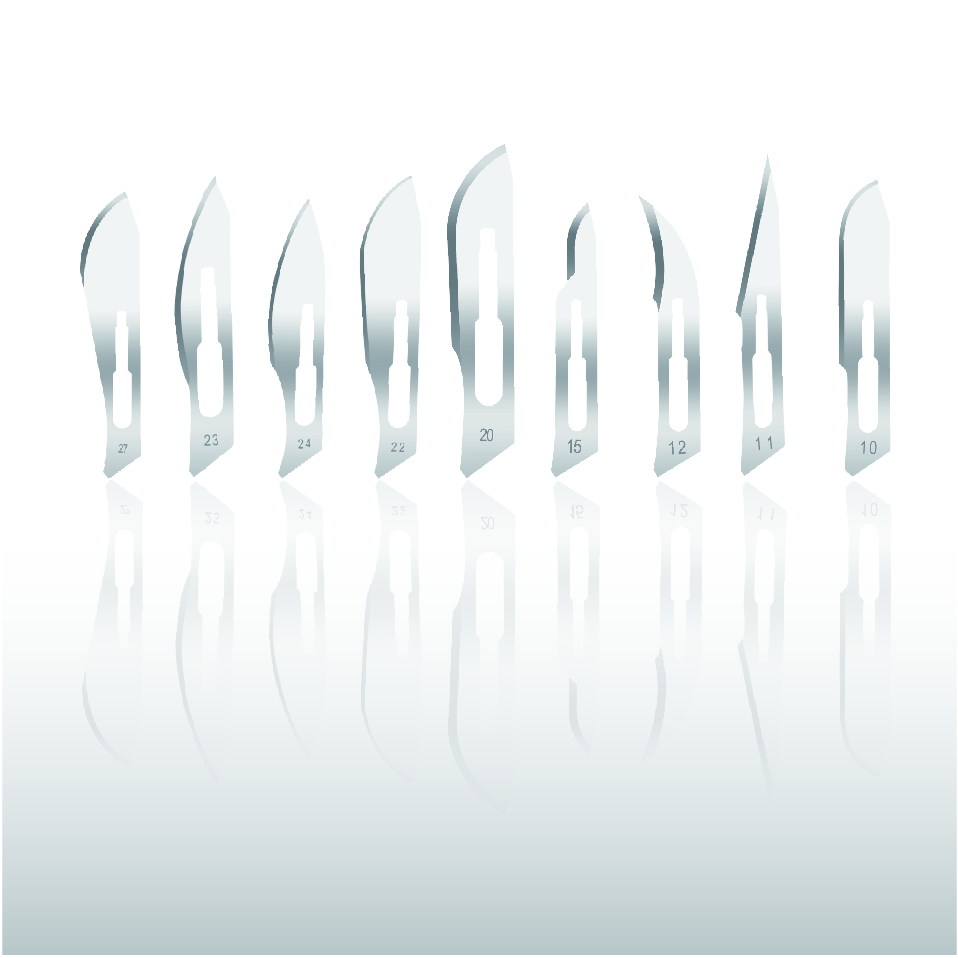


A puncture path is the short route followed by a lancet from launch through skin contact and return. Stability means that the route remains close to its intended alignment, without avoidable sideways movement, rotation, or changes in housing position during the event.
We focus on path stability because comfort cannot be explained by needle thinness alone. The drive mechanism, selected depth, grip, activation direction, device-lancet interface, and contact angle all influence where the sharp travels. A stable path makes these parameters behave more predictably.
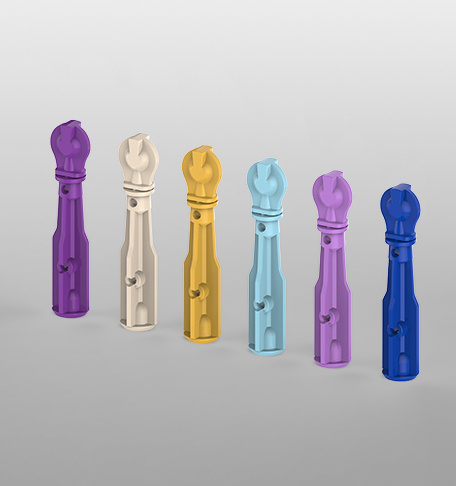
Define the Path from Housing to Sampling Site
Before launch, the blood lancet remains retained inside its device, where its path begins. Alignment at rest, seating in the holder, and the relationship between the lancet and guide establish the starting axis before spring force or user activation introduces motion.
During launch, the intended movement is forward toward the skin. Depth controls how far that movement continues, whereas gauge describes needle diameter. These values influence different dimensions and should remain distinct in both setup and evaluation.
Return completes the path in devices that draw the lancet back after puncture. Smooth launch and return can limit unnecessary changes of direction during the brief cycle, while the operator's grip maintains the housing around the same contact point.
Instability may appear as lateral vibration, tilted contact, rotation under trigger force, loose component fit, or repositioning at the moment of release. Identifying the source is more useful than describing the entire event only as comfortable or uncomfortable.
A path can be geometrically direct yet still use an unsuitable depth, which is why stability and penetration setting must be evaluated together. Control means preserving the intended configuration, not simply minimizing visible movement.
Trace How Stability Influences the Sampling Experience
A stable blood lancet path concentrates movement along the route required to obtain capillary blood. Unintended movement can broaden or redirect that route, potentially altering how the puncture feels even when gauge and nominal depth have not changed.
Path stability also supports repeatability. When alignment, depth, and activation remain consistent, observed differences are less likely to arise from avoidable mechanical variation. Individual skin and sensation still differ, so repeatability should not be mistaken for identical outcomes.
Sample adequacy belongs in the same assessment. A shallow or poorly aligned puncture may not yield the intended volume, creating pressure to repeat the procedure. Comfort is better judged across the complete sampling attempt than from the first contact alone.
Hand movement can reinforce or undermine mechanical control. Secure contact, a suitable grip, and an activation direction that fits the working angle allow the internal mechanism to follow its designed path without an external shift at release.
Consistent contact pressure provides a reference surface for the mechanism. We distinguish that positioning force from excessive squeezing of the fingertip, which can alter the sampling context without improving the device's internal alignment.
Connect Product Structures to Different Parts of the Path
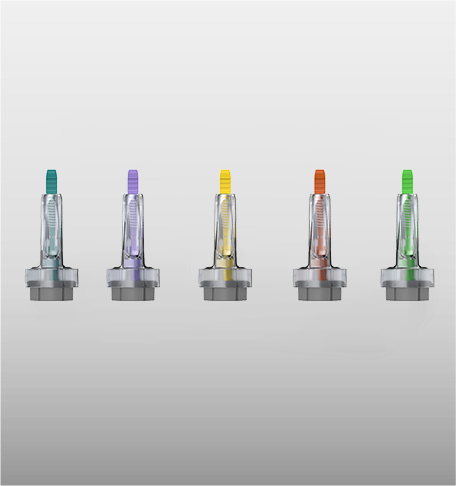
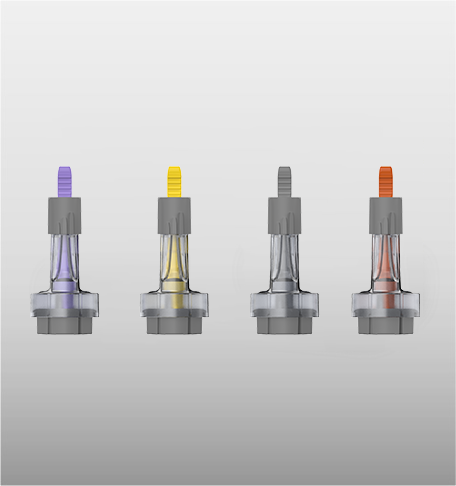
Our blood lancet system at SteriLance includes Soft and SoftSure lancets for LDE4 and most mainstream reusable devices. The available 33G, 30G, 28G, and 26G options provide defined diameters for use within a compatible drive system.
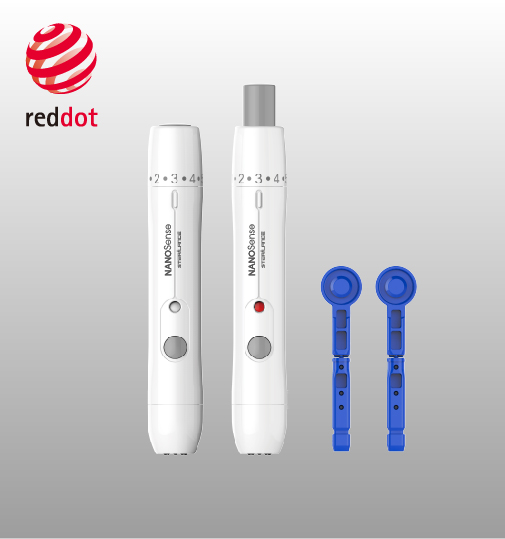
Within LDE4, the patented Soft-Stop-Control (SSC) stabilizes the lancet at launch and is designed to reduce vibration. Its nine depth settings regulate forward travel, while single-hand operation can reduce repositioning once contact has been established.
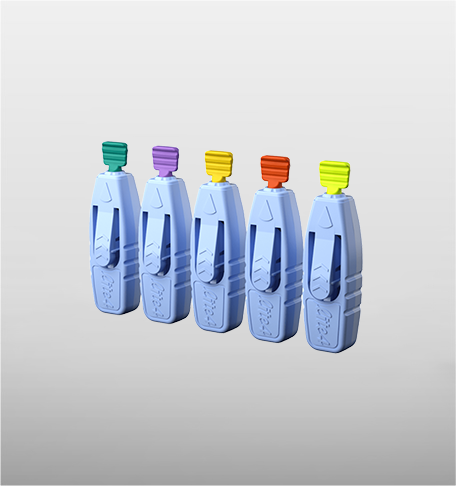
Safety-lancet designs address other path interfaces. A twin-spring mechanism accompanies the rear-button trigger on Elite. Elite Pro's T-shaped grip pads accompany a double-spring system and selectable depths of 1.3, 1.8, and 2.3 mm.
Press uses a non-slip square body and pressure activation, creating a cap-off, press, and collect sequence without a separate button press. A compact ImPress body supports an easy grip and one-step pressure activation.
Each product structure controls only part of the route. Accordingly, we separate component fit, launch behavior, housing grip, trigger direction, depth, and return instead of assigning the broad term stability to one feature.
Preserve Alignment from Setup Through Sample Collection
Using a blood lancet within a stable path requires the correct component, documented depth, secure seating, consistent contact, and an activation movement that does not disturb alignment. None of these actions should override the product instructions or an appropriate care plan.
Specifications for each example in our SteriLance portfolio include gauge ranges, LDE4 depth adjustment and SSC stabilization, and the grip, trigger, spring, and depth structures of named safety models. We keep those facts attached to their exact products.
An evaluation record can pair configuration and technique with sample adequacy and observed comfort. If a result changes, the record gives reviewers several variables to examine instead of assuming that the needle diameter alone caused the difference.
A stable puncture path matters because it keeps necessary travel direct and makes the chosen gauge and depth operate under controlled alignment. Comfort then rests on a coherent sampling event: suitable geometry, restrained motion, secure handling, and an adequate sample achieved without avoidable repetition.
Path-focused troubleshooting begins with the observable sequence: installation, setting, contact, activation, return, and sample. Our records can then isolate where alignment changed before any product or technique conclusion is drawn. This preserves a reproducible reference for troubleshooting.
Disclaimer: This content is provided for general health education and informational purposes only. It does not constitute medical advice, diagnosis, or treatment. Individual health conditions vary, and no health education article can replace a face-to-face consultation with a qualified healthcare professional or licensed medical institution. If you have specific health concerns or feel unwell, please seek care from a licensed medical facility and do not delay treatment because of content on this platform.