

 EN












Yes, needle movement can influence how controlled a puncture feels, but the relevant question is what kind of movement occurs. Forward travel is required to penetrate the skin; sideways motion, vibration, housing shift, or poor alignment adds movement that is not part of the intended path.
Our explanation separates motion into direction, amplitude, timing, and mechanical source. That distinction prevents every comfort difference from being attributed to gauge. Diameter and depth matter, yet the device must still launch, guide, and stop the sharp while the user's hand keeps the housing stable.
Separate Intended Travel from Unintended Motion
An activated blood lancet needle is supposed to move primarily along an axial path toward and away from the sampling site. That necessary travel creates the puncture. Lateral displacement or oscillation can change the contact path and make the brief event feel less controlled.
Movement can originate inside or outside the device. Internal sources include how the lancet is retained, accelerated, guided, and stopped. External sources include grip change, housing rotation, uneven contact, or a trigger force that shifts the device at release.
Timing also matters. Motion before skin contact changes alignment, movement during penetration changes the path through tissue, and instability during return can affect the sensation after the point has reached its intended depth. These stages should not be collapsed into one general idea of vibration.
A motion-based explanation remains cautious because perceived comfort is individual. Mechanical stability can reduce avoidable movement, but it cannot predict sensation for every skin type, sampling frequency, or health condition.
Direction is especially important because equal travel measured along different axes does not have the same meaning. Axial displacement performs the puncture; sideways displacement changes the route and may increase contact beyond the intended line.
See How Fit and Launch Control Shape Motion
Device-lancet fit determines how a blood lancet needle is supported before launch. A compatible interface holds the component in the position expected by the drive mechanism, allowing the guide and spring structure to operate around a defined geometry.
LDE4 uses a patented Soft-Stop-Control structure intended to stabilize the lancet at launch and reduce vibration. Any change in fingertip discomfort remains individual and cannot be inferred from the mechanism alone. Nine depth settings regulate intended travel, while stabilization addresses unwanted motion; the two functions answer different engineering questions.
One-handed handling may support alignment by reducing repositioning immediately before activation. The benefit depends on correct seating and contact because a stable internal launch cannot correct a housing that is deliberately placed at an unsuitable angle.
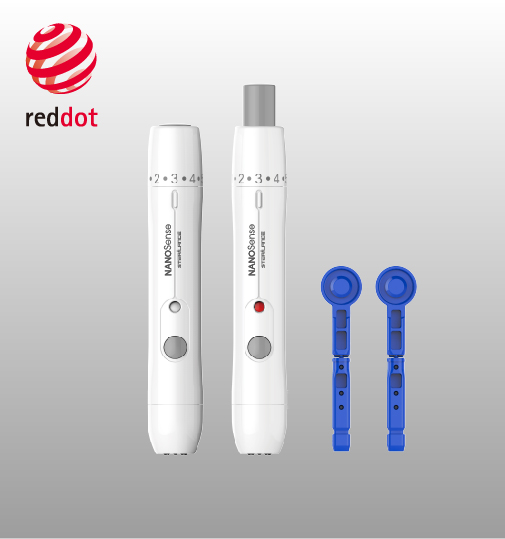
A dedicated lancet-device interface can define the component position more specifically than broad compatibility alone. This controlled pairing defines the interface rather than relying on broad compatibility. SoftSense is available in 33G, 30G, 28G, and 26G, keeping gauge choice separate from the locking relationship.
Component wear, incorrect assembly, or residue can change device behavior over time. This method keeps cleaning, replacement, and preparation within the applicable instructions so motion observations are not based on an uncontrolled device condition.
Compare Motion-Control Structures Across Product Types
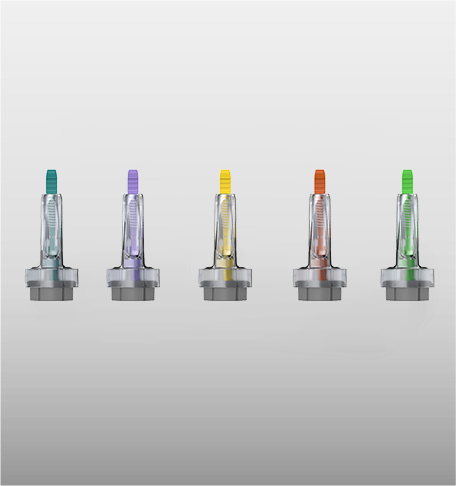
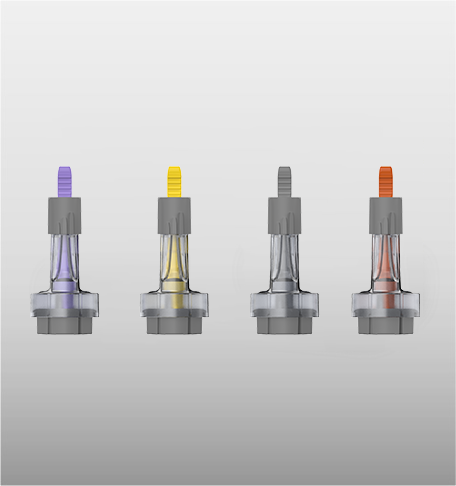
Interface-controlled motion can be studied through our reusable-system blood lancet needle options at SteriLance: Soft and SoftSure in 33G, 30G, 28G, and 26G. The applicable compatibility includes LDE4 and other compatible reusable lancing devices, with fit confirmed for the specific setup.
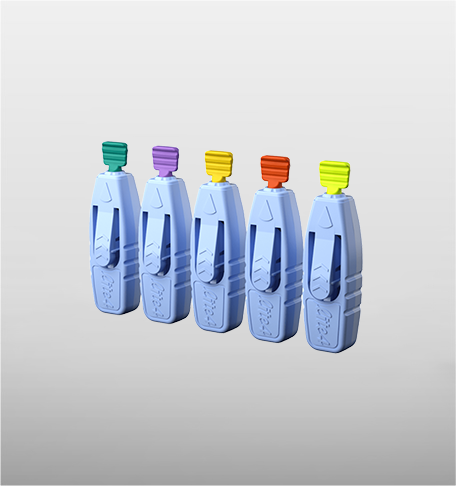
Integrated safety models control motion through their own housings. Elite's trigger sits at the rear and works with a twin-spring mechanism. The trigger defines the user's activation movement, while the spring system concerns internal puncture behavior.
Elite Pro couples T-shaped grip pads and a double-spring system with the rear-button design. Grip pads address external stability around the housing; the double-spring architecture addresses the launch and return mechanism. These features act at different interfaces.
Motion controls are compared by function rather than by marketing intensity. A locking fit, launch stabilizer, grip surface, or spring system should be connected to the motion it is designed to influence, then examined within the named product.
Soft and SoftSure use the same four listed gauge choices, but gauge equivalence does not prove identical motion across every device. The mechanism and interface still determine how each compatible lancet is accelerated and guided.
Interpret Comfort Through a Controlled Motion Record
Testing a blood lancet needle can record seating, depth setting, contact angle, housing movement, activation success, sample adequacy, and perceived comfort. Video or instrumented analysis may support engineering work, while routine evaluation can use structured observations without claiming laboratory precision.
The reusable-system range we document at SteriLance identifies SSC stabilization in LDE4, dedicated SoftSense locking in NANOSense, and twin- or double-spring structures in Elite and Elite Pro. Our product facts allow each observed movement to be associated with a specific configuration.
Gauge remains relevant because diameter changes the sharp's physical cross-section, and depth remains relevant because it changes travel into the skin. Motion control complements these parameters; it does not erase or replace them.
Needle movement affects comfort most clearly when it departs from the intended forward-and-return path. Stable fit, guided launch, secure grip, suitable depth, and consistent alignment narrow that departure, creating a more controlled puncture without making an absolute promise about sensation.
A structure-to-motion explanation requires a plausible mechanism and product evidence for the exact configuration. A comfort report alone cannot reveal whether a sensation arose from alignment, depth, diameter, or another factor.
Disclaimer: This content is provided for general health education and informational purposes only. It does not constitute medical advice, diagnosis, or treatment. Individual health conditions vary, and no health education article can replace a face-to-face consultation with a qualified healthcare professional or licensed medical institution. If you have specific health concerns or feel unwell, please seek care from a licensed medical facility and do not delay treatment because of content on this platform.