

 EN
EN 

















Puncture discomfort does not originate from one specification. Needle diameter, penetration depth, launch motion, vibration, skin condition, sampling site, technique, and the need for repeat attempts can all shape the experience. A claim about a fine needle remains incomplete unless the rest of the puncture system is considered.
The mechanical event provides the path for explaining discomfort, without turning design intent into a painless claim. The discussion moves from needle geometry to depth, launch control, grip, activation, and user matching. Individual responses vary, so product features describe design intent and control variables, not guaranteed sensations or medical outcomes.
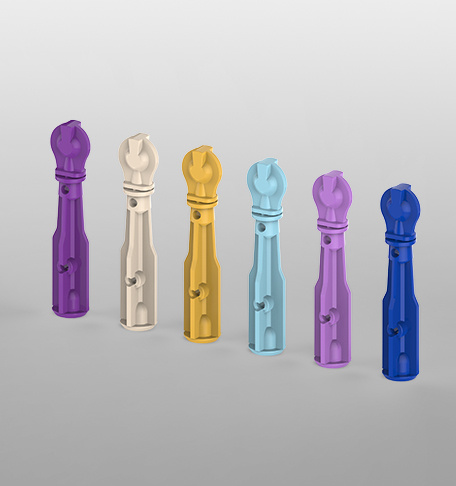
Begin with Needle Diameter, but Do Not Stop There
The gauge of a blood lancet describes needle diameter, and a higher gauge number generally indicates a finer needle. Finer options can be relevant to a lower-discomfort design discussion, yet diameter alone does not determine what a person feels or whether the required specimen is obtained.
Tip condition and movement also matter during skin entry. A sterile single-use lancet provides a fresh puncturing element for the intended event, while the launching device or self-contained mechanism controls acceleration and travel. This method avoids reducing this combined interaction to a simple finer-is-always-better rule.
Sample need sets the practical boundary. A configuration must support the intended procedure, and an inadequate sample may lead to repeated handling or another attempt. Product instructions, technique, site selection, and professional guidance therefore belong beside gauge whenever comfort and specimen adequacy are discussed.
Frequency makes the issue more noticeable because small differences recur. For people who check glucose often, compatibility, a repeatable setting, predictable preparation, and access to the approved consumable may matter as much as a single nominal dimension. The whole routine shapes the cumulative experience.
Control Penetration Instead of Assuming a Universal Depth
Depth determines another part of the blood lancet puncture event. Too little or too much cannot be judged from a general article because skin characteristics, site, sample requirement, and individual guidance differ. The useful design question is whether penetration can be specified or adjusted in a controlled way.
Reusable lancing devices may offer several positions while the disposable lancet provides gauge. Fixed-depth safety lancets carry a documented gauge-depth pair in each unit. Adjustable safety models place several penetration choices on the disposable body. These architectures provide different routes to matching the approved configuration.
A greater number of settings does not guarantee greater comfort. The selected position must be understandable, reproducible, and appropriate for the intended use. We focus on how depth is located and controlled, without treating the shallowest label or widest adjustment range as a universal recommendation.
Review records should preserve gauge and depth as a pair. A family may offer 30G at one depth and 28G or 26G at another. Combining the finest gauge from one code with the shallowest depth from another can create a nonexistent configuration and an inaccurate account of the product's design.
Look at Launch Motion, Grip, and Activation
A blood lancet does not move itself; either a reusable lancing device or an integrated safety mechanism activates the lancet. Stability and vibration can influence how smoothly the needle moves during activation. Structures intended to steady the needle address a different variable from gauge and depth, so all three deserve separate attention.
Grip and activation affect positioning. Pressure activation, rear or side buttons, and one-handed body designs create different movements before launch. A mechanism that fits the user's dexterity and workflow may support consistent placement, but no trigger style guarantees lower discomfort across every person or setting.
For the SteriLance examples relevant here, our LDE4 provides nine depth settings and uses a patented SSC structure intended to stabilize the needle at launch and reduce vibration. Soft and SoftSure are listed as compatible with LDE4 and most mainstream lancing devices, with 33G, 30G, 28G, and 26G options.
SoftSure is specifically positioned for frequent glucose checks and safe, low-pain fingertip sampling. We present that intended design within the complete reusable-device system: the sterile lancet supplies gauge, LDE4 supplies depth adjustment and launch control, and correct use remains governed by instructions and appropriate healthcare guidance.
Interpret Less Painful as a Matched System
A lower-discomfort discussion about a blood lancet should retain four layers: needle geometry, controlled depth, stable launch, and user-compatible handling. Each layer can be evaluated, but none supports an absolute painless claim. Comfort is an outcome experienced by an individual, not a fixed property printed on a box.
Our SteriLance safety range supplies concrete gauge-depth references. ImPress and Elite list 30G at 1.5 mm and 28G or 26G at 1.8 mm. Fixed-depth models Press, Press Plus, Lite3, and Lite4 list 30G, 28G, and 26G at 1.8 mm, allowing comparisons within defined configurations.
Selectable positions of 1.3, 1.8, and 2.3 mm are added by Elite Pro and Flex3. In this analysis, we use these values to show where matching can occur, not to prescribe a setting. Site, sample need, skin characteristics, technique, instructions, and professional judgment remain necessary when the options are applied.
Less discomfort is most plausibly supported when a suitable gauge and depth are combined with stable motion, controlled placement, and a routine that avoids preventable repeat attempts. One feature alone cannot carry that burden. The meaningful design advantage comes from coordination across the entire puncture event.
Disclaimer: This content is provided for general health education and informational purposes only. It does not constitute medical advice, diagnosis, or treatment. Individual health conditions vary, and no health education article can replace a face-to-face consultation with a qualified healthcare professional or licensed medical institution. If you have specific health concerns or feel unwell, please seek care from a licensed medical facility and do not delay treatment because of content on this platform.