

 EN
EN 

















For a lancet used as part of a repeated testing routine, a low-pain claim has to be unpacked into diameter, travel, motion, fit, and reproducibility. Needle diameter, actual penetration, launch motion, device compatibility, testing frequency, and the ability to repeat a suitable setup all contribute. One adjective on a package cannot describe that complete interaction.
Comfort-oriented products are evaluated through an evidence chain that replaces the unsupported promise with measurable variables. The chain begins with gauge, moves through depth and mechanical stability, and ends with the operating system in which the lancet is used. Individual sensation varies, so technical features remain design factors, not guaranteed outcomes.
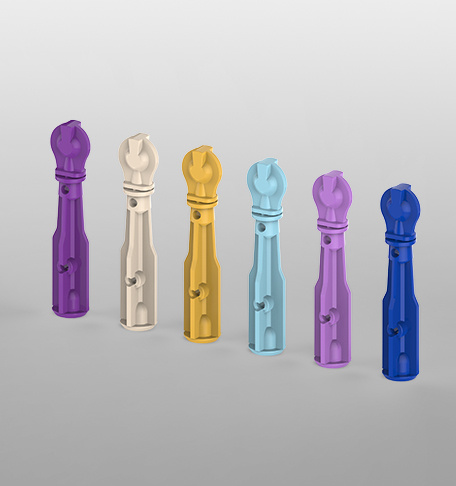
Translate Comfort Language into Measurable Variables
A buyer reviewing blood sugar lancets can begin by separating subjective outcome language from specifications. Gauge identifies needle size, and a higher gauge number indicates a thinner needle. Under otherwise comparable conditions, a finer needle creates a smaller entry area and may require less penetration force than a substantially larger-diameter alternative, but neither relationship predicts one person's experience.
Penetration depth adds another measurable field. Two products with the same gauge may travel to different listed depths, while a lancing device may change depth without changing the disposable lancet. Comfort analysis becomes unreliable if gauge from one configuration is compared with depth from another.
Launch motion is less visible on the box but remains part of the event. A system intended to stabilize the needle and reduce vibration addresses how the puncture is delivered. We distinguish that mechanical design from needle diameter so one feature does not receive credit for the entire experience.
Frequency gives these variables practical weight. Small differences in preparation, setting reproduction, compatibility, or motion can recur across routine glucose checks. A complete repeated-use pathway must be described, because one successful sample cannot stand as evidence for every future use.
Check Whether Gauge and Depth Can Be Reproduced
Consistency among blood sugar lancets begins with an exact product code and an understood depth-control method. In a reusable system, gauge belongs to the sterile consumable and penetration is selected on the reusable lancing device. In a safety lancet, the gauge-depth pair may be fixed or the disposable body may offer several positions.
A large range of settings has value only when the chosen position can be identified and used appropriately. Markings, control movement, instructions, and user training affect reproducibility. Neither the shallowest setting nor the finest gauge can be assumed to suit every comfort and sample requirement.
Required blood volume creates a boundary around comfort claims. The chosen configuration must support the intended procedure; otherwise, another attempt may be needed. Even when lower discomfort is the purchasing objective, product dimensions remain connected to site, technique, timing, specimen handling, and professional guidance.
Compatibility is equally concrete. A lancet that looks suitable for a reusable device may lack stated support for that holder. Buyers can compare the named lancet family, gauge, holder model, depth positions, loading fit, and instructions as one approved arrangement before drawing conclusions from samples.
Review Real Configurations Instead of Isolated Claims
Published blood sugar lancets should retain gauge, depth location, device architecture, and intended use in the same record. Representative products can then be compared under consistent conditions. Mixing a 33G reusable-device lancet with the fixed depth of an unrelated safety product would create a specification that does not exist.
Gauge breadth is visible in our range at SteriLance: Soft and SoftSure are available in 33G, 30G, 28G, and 26G, with listed compatibility for LDE4 and most mainstream reusable devices. SoftSure is positioned for safe, low-pain fingertip sampling and frequent glucose checks, while the compatible device supplies the selected penetration depth.
Nine adjustable depths are provided by our LDE4, which uses a patented SSC system intended to stabilize launch and reduce vibration. This architecture lets the reusable lancing device supply depth control while the disposable lancet supplies gauge. Comfort-related evidence is reported at system level so the holder and disposable lancet remain connected.
Self-contained alternatives show other combinations. Fixed-depth Press and Press Plus list 30G, 28G, or 26G at 1.8 mm; ImPress and Elite include 30G at 1.5 mm and 28G or 26G at 1.8 mm. Those values illustrate why the exact product code matters.
Build the Buying Decision Around Repeatable Fit
A defensible specification for blood sugar lancets records gauge, actual depth, launch structure, compatible device, intended testing frequency, package identity, and the process for reproducing an approved setting. Comfort-oriented language can then be tied to design facts without becoming an absolute clinical promise.
Our adjustable safety lancet range includes Elite Pro in 28G, 26G, and 23G with 1.3, 1.8, or 2.3 mm positions; Flex3 also provides those three depths. Across our portfolio, depth adjustment is provided either by a reusable lancing device or within an adjustable safety lancet. Across our portfolio, adjustment sits either on a lancing device or on a complete single-use safety unit.
Sampling trials should keep other variables as stable as practical and remain within instructions. A change in gauge should not be confused with a simultaneous change in depth, launch mechanism, site, or technique. We document what actually differed so the resulting assessment has a clear technical basis.
For low-pain use, reproducibility is the test: the selected gauge, depth, motion, and compatible device must continue to form a suitable configuration. Gauge begins the discussion, depth and motion refine it, and compatibility keeps it operational. The best-supported choice is the system whose relevant variables can remain controlled over repeated use.
Disclaimer: This content is provided for general health education and informational purposes only. It does not constitute medical advice, diagnosis, or treatment. Individual health conditions vary, and no health education article can replace a face-to-face consultation with a qualified healthcare professional or licensed medical institution. If you have specific health concerns or feel unwell, please seek care from a licensed medical facility and do not delay treatment because of content on this platform.