

 EN
EN 

















Needle length is visible on the label, yet it functions inside a larger injection technique. A listing for a 4 mm, 5 mm, 6 mm, or 8 mm pen needle also specifies its gauge, tip design, hub structure, and applicable instructions. Treating the millimeter value as a standalone ranking leaves most of the device unexplained.
Our discussion defines the measurement, shows which variables travel with it, and explains how product families package those choices. It does not identify an individual user's correct length; that decision belongs with qualified healthcare guidance, the prescribed injection technique, the pen system, and the product instructions.
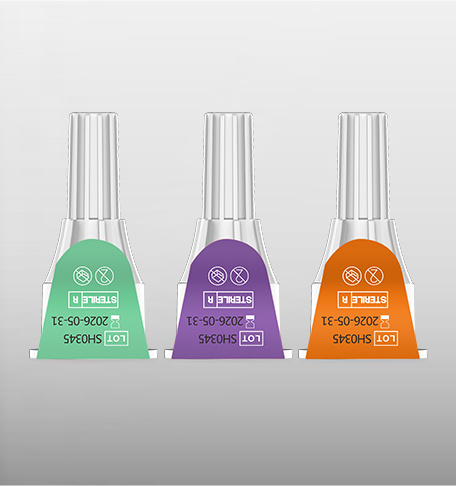
Understand What the Length Number Does and Does Not Mean
Published insulin pen needles sizes identify the cannula length in millimeters and the diameter through gauge. Shorter and longer options are not simply lower- and higher-quality versions. They provide different geometries that must be considered with injection method, the individual situation, and the supported use of the complete product.
Gauge follows an inverse numbering convention: a higher gauge number indicates a thinner needle. Consequently, 32G × 4 mm contains two independent dimensions. Comparing only 4 mm with 8 mm ignores the accompanying 32G or 30G diameter and any change in wall construction or tip geometry.
Bevel count may vary even within one gauge-length combination. Bevel variants with three or five facets should remain distinct in quotations, samples, and packaging. We avoid assuming that identical dimensions make the tip structure identical or that a nominal size predicts the complete insertion experience.
An educational size chart cannot prescribe technique. Injection angle, site, preparation, individual anatomy, and healthcare instructions may influence how a length is used. We aim to make the available specifications clear enough for a qualified decision rather than replace that decision with a generic rule.
Read Length Together with the Skin Interface
Hub and skin-contact platform design belong in a comparison of insulin pen needles sizes. A platform intended to support controlled penetration changes the interface through which the listed length is used. Its presence does not make length irrelevant; it adds another design feature to the complete mechanism.
Lateral hub stability addresses force and alignment at the connection, not needle length itself. A wider hub may be designed to reduce bending or breakage during injection. We separate that structural purpose from assumptions about comfort, suitability, or compatibility, which require their own supporting information.
Cap ergonomics affect preparation before the cannula is used. Larger inner and outer caps can provide an easier gripping surface, while protective shields add a different post-use sequence. These details may guide the choice between families even where two products share a similar length.
Compatibility remains a threshold question. Compatibility depends on the named pen system and its instructions. Length, gauge, and hub features should be evaluated on the actual configuration, not transferred from a visually similar needle or a different version within the catalog.
Compare Available Lengths Within Named Families
The meaning of insulin pen needles sizes becomes concrete when each value is attached to a product family. A 4 mm option in a wide-hub design, a 5 mm option with shielding, and a 6 mm option with classic cannula construction represent different bundles even before individual technique is considered.
Length-to-family mapping is visible in the portfolio we maintain at SteriLance: the Plus Series lists 32G × 4 mm in three-bevel and five-bevel versions. It uses Hextra Tech with a wider hub for lateral stability, a skin-contact platform described as 12 times larger than a standard pen needle, and enlarged easy-grip inner and outer caps.
Our Safety range lists 31G × 5 mm, 30G × 8 mm, and 30G × 5 mm. The safety shielding is intended to reduce needlestick risk from either end, while the hub and larger skin-contact platform concept address separate structural roles. Length selection does not replace review of that protective sequence.
Classic products list 32G × 4 mm, 31G × 5 mm, and 31G × 6 mm, with three-bevel and five-bevel variants. Their stated construction includes an austenite extra-thin-walled design, cobalt-60 gamma sterilization, optimized bevel geometry, and medical-grade silicone coating on both ends.
Document a Length Decision Without Overgeneralizing
A sound review of insulin pen needles sizes records the exact length and gauge, then adds bevel, wall design, hub, skin platform, cap, shielding, sterilization, coating, compatibility, and intended instructions. This keeps a single millimeter figure from standing in for the whole device or the user's technique.
Across the portfolio we develop at SteriLance, 4 mm appears in Plus and Classic, 5 mm appears in Safety and Classic, 6 mm appears in Classic, and 8 mm appears in Safety. The surrounding designs differ, so our comparison remains at the product-code and family level, without merging equal lengths.
Qualified healthcare guidance can then connect the documented options to an individual's prescribed method. We refrain from declaring one length universally appropriate, including for groups that may appear similar. Clear product facts support that professional discussion without turning a manufacturer article into personalized medical advice.
The right length is the one selected within a compatible, fully specified pen-needle design and an appropriate injection plan. Millimeters narrow the options, but gauge, interface, safety mechanism, tip structure, and technique complete the decision. That is why length belongs in context, not at the top of a universal ranking.
Disclaimer: This content is provided for general health education and informational purposes only. It does not constitute medical advice, diagnosis, or treatment. Individual health conditions vary, and no health education article can replace a face-to-face consultation with a qualified healthcare professional or licensed medical institution. If you have specific health concerns or feel unwell, please seek care from a licensed medical facility and do not delay treatment because of content on this platform.