

 EN













Price differences usually accumulate across several small specification decisions, so the total cannot be assigned to one visible feature. Needle range, housing, trigger, springs, adjustment, traceability, packaging, development work, order volume, and delivery scope can all change what a supplier must produce and support.
We explain the cost logic without assigning unsupported monetary values. The useful method is to hold the purchasing baseline constant, identify each engineering or service difference, and confirm through a quotation whether that difference actually changes the offered price.

Begin with the Product Architecture and Needle Range
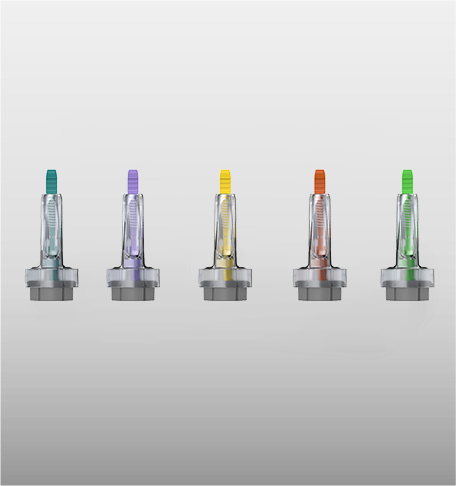
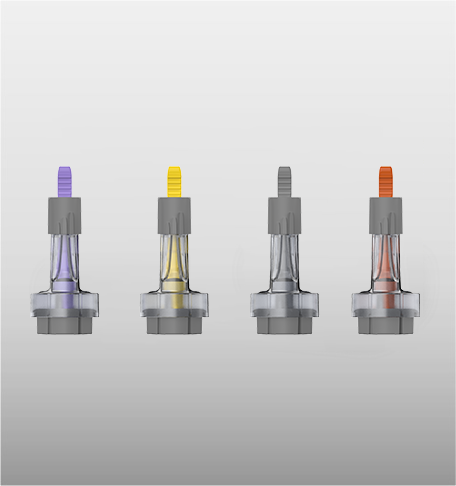
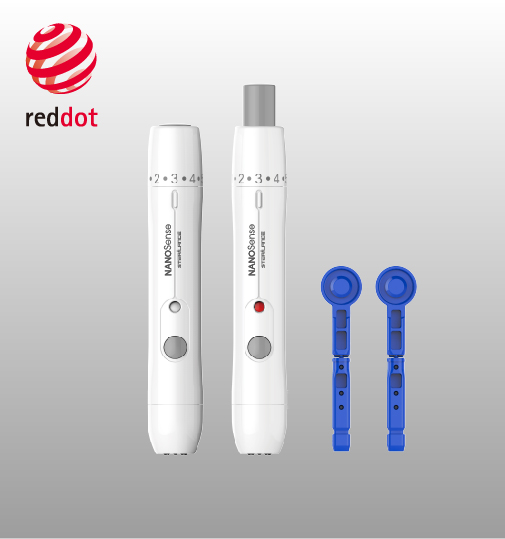
Conventional disposable lancets such as Soft and SoftSure are sterile components for reusable lancing devices. They are offered in 33G, 30G, 28G, and 26G, giving purchasers several needle diameters within a relatively simple consumable architecture.
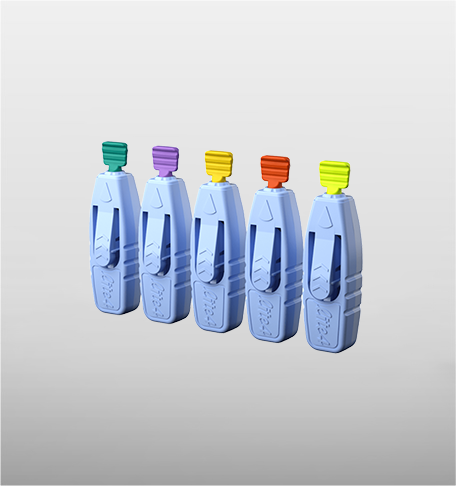
Safety products incorporate the activation mechanism into a single-use housing. Added components, assembly stages, inspection points, and functional requirements may alter manufacturing content, although their monetary effect cannot be inferred without a quotation.
Gauge and depth also define separate specifications. Equal gauge does not guarantee equal penetration depth or device setting, while products sharing a category name may use fixed or adjustable depth.
Product-code review comes first, followed by needle gauge, depth, intended device relationship, and basic architecture. This prevents a self-contained safety model from being treated as a direct equivalent of a component used in a reusable device.
Appropriate performance remains the first boundary. Paying less for a configuration that does not match the required sampling method or blood amount is not a saving if it creates repeat attempts, substitution, or unused stock.
Material and dimensional tolerances may affect production requirements even when catalog descriptions look similar. Those details should be verified through specifications and supplier evidence, not inferred from the exterior housing or a general product label.
Identify Which Handling and Control Features Are Added
Feature content in disposable lancets can include trigger type, grip geometry, spring structure, state indication, depth selection, cap design, and printed traceability. Each addition addresses a different stage and should be evaluated separately.
Pressure-activated Press combines its trigger path with a non-slip square body. On Press Plus, a one-touch spring design is joined by shell-printed lot and expiration information, extending both mechanism and individual-device identification.
ImPress offers three cap styles and a compact grip. Rear-button Elite includes twin springs and a status indicator, while Elite Pro combines T-shaped grip pads, double springs, and 1.3, 1.8, and 2.3 mm depth selection.
Flex3 also supplies three depth settings in a one-step format. Adjustment can cover varying depth requirements within a gauge version, but it adds setting control and training to the use sequence.
Each feature is tested against a documented need. Unused capability can still add complexity or cost, whereas a well-matched handling, traceability, or adjustment feature may justify a different quotation for the intended workflow.
Identification features have operational value only when the relevant information remains available at the stage where it is needed. Shell printing, box labeling, and carton records can be assessed as different levels, not treated as one undifferentiated label feature.
Account for Packaging, Volume, and Customization
Commercial scope affects the price of disposable lancets even when the device specification is unchanged. Box count, carton count, order volume, label and artwork requirements, destination documentation, delivery terms, and forecast stability shape production and supply assumptions.
Packaging for our Soft and SoftSure products at SteriLance is listed at 100 pieces per box and 5,000 per carton. Common Press, Press Plus, Elite Pro, and Flex3 listings use 100 per box and 1,000 per carton.
Elite uses 50 per box and 1,000 per carton, whereas ImPress uses 100 per box and 2,000 per carton. Quote normalization must convert box and carton offers to the same piece quantity while retaining logistics differences.
OEM/ODM service adds another layer. Our support can extend from concept through finished-product realization, with possible work in structural design, tooling, verification, labeling, packaging, documentation, and transfer to production.
Customization costs need clear ownership and timing. Development or tooling charges may be nonrecurring, while special materials, packaging, inspection, or documentation can remain within the recurring unit scope.
Turn Price Differences into an Auditable Comparison
A quotation matrix for disposable lancets should hold constant the product code, gauge, depth, trigger, features, pieces per box and carton, order quantity, customization, market evidence, delivery terms, and included services.
In this set of SteriLance product examples, we do not list public unit prices for the models discussed. The resulting price differences are assessed through current quotations tied to the requested configuration and commercial conditions, not through a generic category estimate.
Higher and lower offers should be reconciled line by line. One may include adjustable depth, shell-printed lot and expiration information, a different pack unit, smaller volume, project support, or special documentation that another supplier has excluded.
A higher-priced configuration is not automatically the most valuable, and the lowest unit price is not automatically the lowest total burden. A sound decision links every price difference to a specified product, process, package, or service that the intended use actually requires.
A total-cost review may also track training, storage, expiry, repeat sampling, complaint handling, and change-management effort. These outcomes should be measured separately from purchase price so assumptions about operational savings do not become hidden deductions in the quotation comparison.
Disclaimer: This content is provided for general health education and informational purposes only. It does not constitute medical advice, diagnosis, or treatment. Individual health conditions vary, and no health education article can replace a face-to-face consultation with a qualified healthcare professional or licensed medical institution. If you have specific health concerns or feel unwell, please seek care from a licensed medical facility and do not delay treatment because of content on this platform.