

 EN





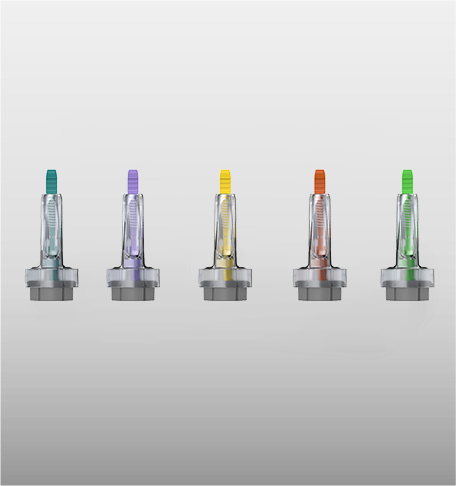
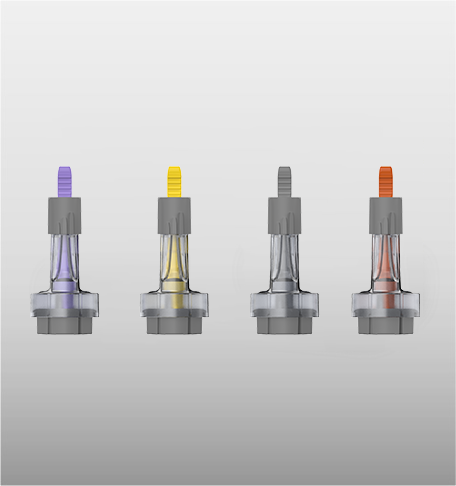

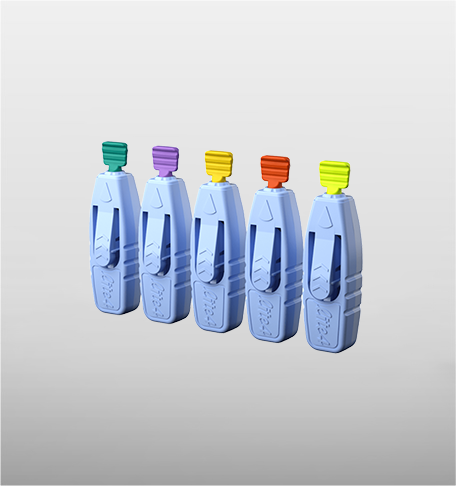






Purchasing language such as low-pain becomes meaningful only after it is translated into controllable design variables and an adequate sampling result. Several variables, including needle diameter, penetration depth, launch motion, grip, activation, and individual response, contribute to the experience.
Our assessment starts with the physical sources of discomfort, then tests whether added engineering changes the actual workflow. Because no unit-price premium is published for these features, value must be assessed through matched quotations and a controlled, site-specific evaluation.
Break Comfort Claims into Testable Variables
Comfort-related review of a safety lancet needle separates gauge from penetration depth. Gauge numbers rise as needles become thinner, while the millimeter value describes travel into the skin; neither variable predicts sensation by itself.
Launch motion provides another dimension. Forward travel that is stable may reduce unnecessary vibration, whereas housing movement, contact angle, skin condition, and operator technique can change the experience even when the nominal specifications match.
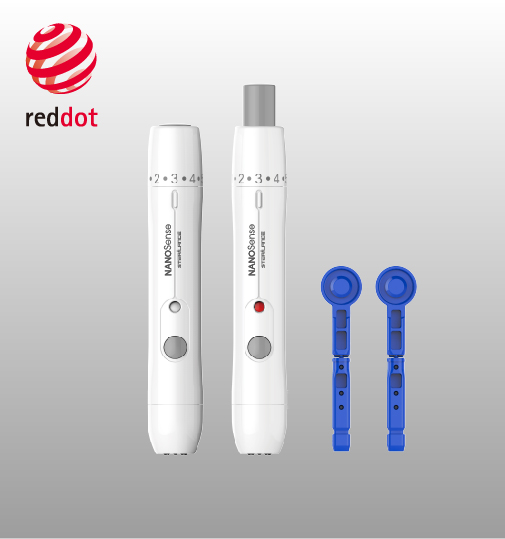
LDE4 illustrates motion control in a reusable system through its Soft-Stop-Control structure, which is intended to stabilize the needle at launch and reduce vibration. Nine depth settings provide a separate way to adjust puncture depth for fingertip blood sampling.
Subjective ratings need a consistent scale and context. The trial records site, configuration, depth, gauge, device, operator conditions, blood amount, and whether another attempt was required instead of asking only whether a puncture hurt.
Because sensation is individual, a small trial cannot prove a universal outcome. It can reveal whether a specified configuration produces a repeatable improvement for the intended users and procedure under controlled conditions.
Order and expectation can influence subjective reporting. Where appropriate, a trial can alternate the sequence of candidate configurations and use consistent instructions, while still recording the exact product so observations remain traceable.
Connect Gauge and Depth to Sample Adequacy
Without an adequate sample, a safety lancet needle has no practical comfort advantage even if the selected geometry feels less noticeable. Insufficient blood can lead to manipulation or another puncture, changing both the perceived discomfort and the operating cost.
Common Elite configurations list 30G at 1.5 mm and 28G or 26G at 1.8 mm. ImPress uses the same common gauge-depth pattern with pressure activation, so gauge and depth change together across those particular options.
Elite Pro makes 1.3, 1.8, and 2.3 mm selectable depths available in 28G, 26G, and 23G versions. Flex3 supplies the same three depth settings with one-step activation.
Adjustment can match more than one approved sampling condition, yet the setting introduces a decision that needs training and verification. Deeper is not automatically better, and a setting change should follow the sampling requirement and documented observations.
This comparison reports adequate-sample rate beside sensation and activation success. A lower average discomfort score is meaningful only when the device still performs its intended sampling function without avoidable repeat attempts.
Examine Whether Handling Preserves the Intended Puncture
The handling path of a safety lancet needle can support or undermine its stated geometry. Grip stability, trigger direction, contact pressure, access angle, and glove use influence whether the device remains aligned at activation.
Within our range at SteriLance, Elite Pro combines T-shaped grip pads, a rear-button trigger, double springs, and adjustable depth. Twin springs accompany Elite's rear button, while its common configurations distinguish 30G/1.5 mm from 28G or 26G/1.8 mm.
Pressure-activated ImPress creates another force path. Its compact grip and the act of pressing against the site should be evaluated under the positions in which the product will actually be used.
A smooth internal mechanism cannot correct unstable external placement. We observe housing movement, trigger reach, premature activation, completion recognition, and the transition to disposal so the comfort result remains connected to a controlled procedure.
Single-use handling and a suitable sharps container remain part of the workflow. Added comfort features do not replace cap checks, date checks, the prohibition on reuse, or safe post-use transfer.
User preference and operator control should not be merged automatically. A device may be preferred because of grip or trigger familiarity even when the needle configuration is unchanged, so the trial records those reasons separately.
Decide Value Through a Controlled Cost-and-Outcome Trial
The business case for a safety lancet needle compares a simpler baseline with the proposed lower-pain configuration using the same gauge and depth where possible, or clearly documents every specification that differs.
Current-quotation logic applies to our SteriLance portfolio: we do not publish a unit-price premium for these features. The comparison relies on current quotations tied to product code, gauge, depth, trigger, packaging, volume, documentation, and delivery conditions.
Trial outcomes may include sensation, adequate-sample rate, repeat attempts, activation consistency, housing movement, setting errors, time, user acceptance, and disposal flow. Each measure explains a different part of the value claim.
A higher quotation is justified only where the added engineering produces an outcome the intended workflow values and can maintain. The answer is conditional: lower-pain features are worth more when they deliver adequate sampling with measurably better control, not merely when the package carries a comfort description.
The cost analysis can include product price, training, inventory, repeat attempts, time, and disposal-related costs, but each assumption should remain visible. An unmeasured comfort benefit should not be converted into a hidden financial saving.
Disclaimer: This content is provided for general health education and informational purposes only. It does not constitute medical advice, diagnosis, or treatment. Individual health conditions vary, and no health education article can replace a face-to-face consultation with a qualified healthcare professional or licensed medical institution. If you have specific health concerns or feel unwell, please seek care from a licensed medical facility and do not delay treatment because of content on this platform.