

 EN
EN 

















The moment after puncture deserves its own risk analysis. Sampling may be complete, yet the operator still has to recognize the device state, withdraw it, keep the sharp inaccessible, and transfer the used unit into an appropriate container. Extra manipulation during that interval creates avoidable exposure opportunities.
We work backward from disposal to identify which product and workflow controls protect each handoff. Retraction or other model-specific safety mechanisms, visible status where provided, single-use identification, lot traceability, activation sequence, and container access serve different purposes. Practical value depends on the connection among these controls; isolated safety labels cannot represent the route. Device design and local behavior need separate review: the mechanism can create a safer state, while staffing, workstation layout, and waste policy determine whether that state is carried directly into controlled disposal.
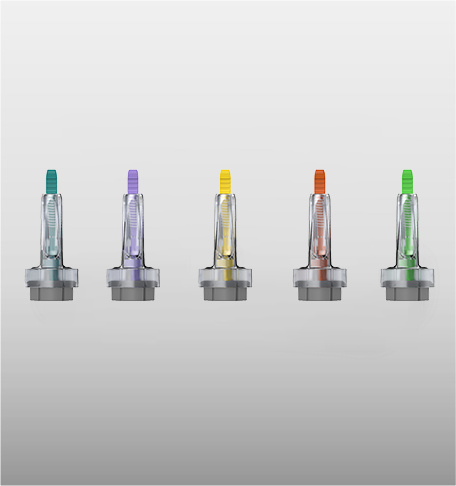
Trace Exposure Opportunities After the Sample
Once disposable safety lancets have fired, the first question is whether the needle becomes inaccessible without another user action. Automatic retraction moves the sharp back into the housing, while an irreversible lock is intended to keep it there. The two mechanisms describe movement and final state separately.
Recapping, bending, or manually handling a needle introduces additional contact with the sharp. A self-contained design is intended to avoid the need for those post-puncture steps.. Staff still need to follow the supplied instructions because protective architecture does not authorize informal handling.
Device-state recognition affects what happens next. A clear visual or mechanical cue can indicate that activation has occurred, reducing hesitation or attempts to trigger the same unit again. Status information complements containment; it cannot replace a locked, inaccessible sharp.
Distance and access to the sharps container shape the remaining handoff. The safest mechanical state can be undermined by carrying the used unit through a crowded area or placing it temporarily on a surface. Workflow observation continues until disposal is complete. Reviewers can count hand transfers, temporary placements, direction changes, and the time a used unit remains outside the container. Those observations turn a broad post-use concern into specific, correctable process evidence.
Check the Controls That Begin Before Use
Post-use performance of disposable safety lancets depends partly on correct pre-use selection. A product with a previously removed cap or an exceeded use-by date falls outside the stated instructions. Package integrity, unit identity, and date checks establish the starting condition for the intended safety sequence.
A single-use label creates a clear endpoint for the device. Reuse would conflict with that boundary even if the housing appears intact. Training and stock control should make unused and spent units easy to distinguish so the latter cannot return to an available supply area.
Traceability during investigation and rotation can draw on lot and expiration information linked to the exact product. Shell-level visibility may shorten access to those fields at the point of use, but receiving records and outer packaging still preserve the broader traceability chain.
Activation style also influences the motions that precede disposal. Contact-activated and button-activated designs may require different activation motions. A representative trial can record whether the operator changes grip after puncture and whether the used state is recognizable before the unit leaves the site.
Compare Features by Their Post-Use Function
Post-use control can be traced through the disposable safety lancets range we develop at SteriLance: Press and Press Plus activate through contact pressure, while ImPress uses one-step pressure activation. These designs combine placement and release through force against the sampling site before the contained unit moves toward disposal.
Rear-button operation and a status indicator define Elite. Lite3 uses side-button activation, while Lite4 uses a launch button; Elite Pro adds adjustable puncturing depth. The record keeps trigger, state recognition, and configuration control as separate fields because each affects a different part of handling.
Press and ImPress are packed 100 units per box, whereas Elite is packed 50 units per box. Box quantity does not change needle containment, but it affects replenishment, opening frequency, and the number of used units generated before a box is replaced.
All named mechanisms should remain attached to their exact models. A status indicator documented for Elite cannot be presumed on another button product, just as adjustable depth should not be transferred to every rear-triggered option. Accurate feature mapping supports accurate training.
Qualify the Full Route to the Sharps Container
A handing review for disposable safety lancets can observe cap removal, placement, activation, withdrawal, state recognition, hand position, travel distance, and release into the container. Recording the sequence exposes hidden touches that a specification-only comparison cannot reveal.
Our SteriLance instructions state that the devices are single-use, should not be reused, and should be discarded into a suitable sharps container after capillary sampling. Our product discussion preserves those boundaries and does not treat retraction as permission to delay disposal.
Procurement can combine the handling trial with box quantity, expected daily consumption, lot control, use-by management, and sharps-capacity planning. In practice, the device and disposal system meet at the same workstation, so evaluating one without the other leaves the final transfer untested.
Lower post-use risk results from a continuous route: the sharp retracts, the mechanism locks, the used state is understood, no manual needle step is added, and the unit reaches disposal directly. That complete handling route, rather than a single safety label, is the relevant selection consideration.
Disclaimer: This content is provided for general health education and informational purposes only. It does not constitute medical advice, diagnosis, or treatment. Individual health conditions vary, and no health education article can replace a face-to-face consultation with a qualified healthcare professional or licensed medical institution. If you have specific health concerns or feel unwell, please seek care from a licensed medical facility and do not delay treatment because of content on this platform.