

 EN
EN 

















Infection control depends on an uninterrupted series of barriers. An unused sharp must remain protected, the device must be identifiable and within its use-by period, puncture must occur without unintended exposure, reuse must be prevented, and the spent unit must reach an appropriate container.
We assess lancet safety by following that barrier chain from package to disposal. Single-use design, concealed sharp architecture, retraction, irreversible locking, labeling, traceability, instructions, and quality-system controls occupy different points in the chain. One feature alone cannot represent the whole infection-control process. We use the chain to locate both device evidence and facility responsibilities, preventing a strong mechanism at one stage from concealing a weak handoff at another. A barrier review also records who verifies each stage, when verification occurs, and what evidence remains available afterward.
Protect the Device Before the Puncture
Review of medical lancets starts with the condition of the unused supplied unit. A previously removed protective cap, damaged packaging, or an exceeded use-by date changes that condition. Visual inspection and identification come before evaluation of the trigger mechanism.
single-use is a design and procedural boundary. A device intended for one puncture should not be reprocessed or passed between people. Clear training must connect the label to action so a used or compromised unit is excluded before it can re-enter the workflow.
Traceability during stock rotation or a product investigation can draw on lot and expiration information. Their presence does not prove package integrity, and traceability does not replace correct storage. Each control answers a different pre-use risk. Receiving and storage audits can sample those controls before units reach clinical areas, while point-of-use checks confirm that protection survived distribution. Keeping the two checkpoints separate prevents a sound warehouse record from substituting for inspection of the individual unit.
Activation style also belongs in pre-use review because preparation differs among contact, rear-button, side-button, and adjustable products. The check should confirm that cap removal, orientation, and trigger access remain consistent with the specified model. Staff need the exact instructions for the specified model; familiarity with another device cannot establish the correct cap-removal or release sequence.
Contain the Sharp During and After Activation
Self-contained medical lancets keep the sharp concealed within their housings before use. After puncture, needle retraction removes the exposed point from the immediate handling space, and irreversible locking is intended to prevent subsequent exposure or another activation.
Retraction and locking are related but distinct. Retraction describes movement back into the body, while locking describes the resulting state. An assessment can verify both through product information and representative handling instead of treating the word safety as sufficient evidence.
Pressure activation places the release force against the site; button formats position the trigger elsewhere on the housing. These mechanisms affect hand movement, but infection-control value ultimately depends on maintaining the barrier, recognizing the used state, and avoiding manual sharp manipulation.
After firing, visible status information can support recognition of the device state. It does not replace physical containment or disposal, and it should not be assumed across an entire product family. Feature mapping must remain at model level so training describes only cues that actually exist.
Link Product Features with Documented Controls
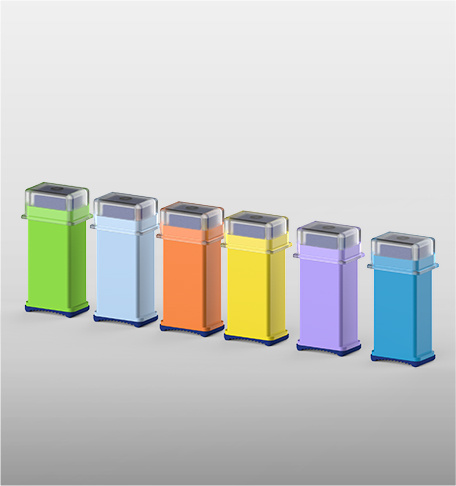
Barrier placement is visible across the medical lancets range we develop at SteriLance: pressure activation appears on Press, Press Plus, and ImPress. Elite and Lite use buttons; Elite also has an integrated status indicator. Adjustable-depth designs introduce a separate configuration check before activation.
Our disposable safety products are intended for capillary blood collection and single-use. Applicable instructions state that a unit should not be used if its protective cap has previously been removed or if it is beyond its use-by date, and used devices should be discarded into a suitable sharps container after sampling.
Manufacturing oversight forms another control layer. The stated quality system includes inline inspection and TPM systems, China Medical Device GMP System certification, EN ISO 13485:2016 certification, MDSAP Quality System certification, and UL 21 CFR Part 820 Medical Device Quality Management System certification.
Market authorizations and registrations listed for the range include China NMPA registration, FDA 510(k) for the United States, CE marking under the EU MDR, and additional registrations in the United Kingdom, Canada, India, and other markets. Those records are presented as documented controls, not as guarantees against infection.
Audit the Entire Barrier Chain
Infection-control review of medical lancets can use a sequence-based checklist: specified unit identity, intact protection, valid date, correct preparation, concealed sharp, single activation, post-puncture retraction, irreversible lock, recognizable used state, and immediate disposal route.
Our SteriLance product information supplies the feature and quality-system evidence relevant to that checklist. Our communication keeps device mechanisms separate from facility responsibilities such as storage, staff competency, environmental cleaning, exposure response, and sharps-container management.
Procurement documentation should preserve model, lot, use-by information, instructions, certification evidence relevant to the market, and the approved disposal pathway. Periodic observation can then test whether the intended barriers survive transport, storage, training, and daily clinical use.
Infection control is more robust when each handoff in the chain is explicitly defined. Protection before use, containment after puncture, prevention of reuse, traceability, manufacturing controls, and prompt sharps disposal must remain connected from the unopened unit to its final controlled destination.
Disclaimer: This content is provided for general health education and informational purposes only. It does not constitute medical advice, diagnosis, or treatment. Individual health conditions vary, and no health education article can replace a face-to-face consultation with a qualified healthcare professional or licensed medical institution. If you have specific health concerns or feel unwell, please seek care from a licensed medical facility and do not delay treatment because of content on this platform.