
 EN





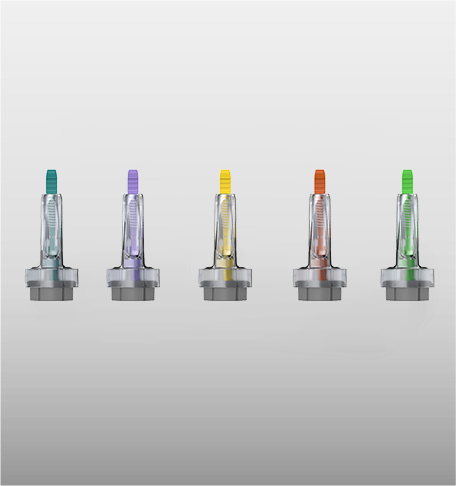
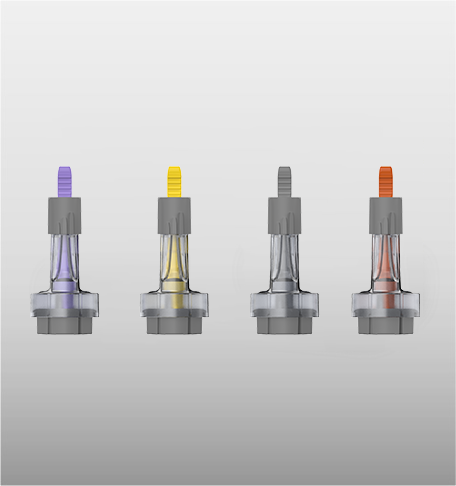

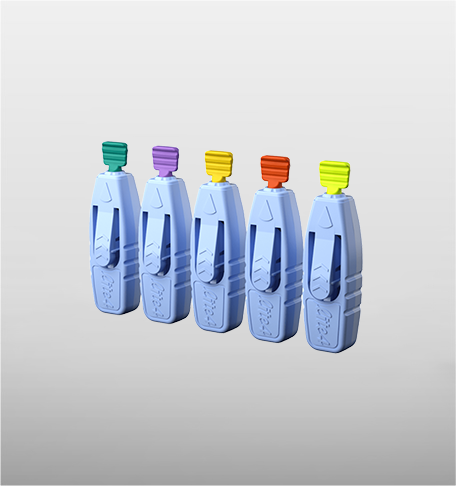






An accidental needlestick can arise from more than an exposed needle after sampling. Risk may begin with an uncertain grip, an unintended trigger movement, an unclear post-activation state, or a disposal route that requires the used device to be carried or repositioned. Prevention begins during preparation, before activation occurs.
Exposure-path mapping follows preparation, puncture, containment, and disposal. Concealed sharps, stable grip, predictable activation, status recognition, automatic retraction, irreversible locking, and one-way waste handling interrupt different parts of that pathway. Their combined sequence is more important than any isolated feature. Accidental activation and post-use exposure arise through different pathways: the first depends heavily on preparation and trigger control, while the second depends on containment, recognition, and disposal.
Control the Device Before the Needle Moves
Handling of safety blood lancets begins with an intact protective state and a secure grasp. A concealed sharp limits contact before use, while the cap-removal action, body shape, and finger position determine how the operator approaches the trigger.
Grip loss can redirect force or cause the housing to shift at the sampling site. Non-slip surfaces, compact easy-grip bodies, and dedicated pads address external control in different ways. These features do not change needle dimensions; they influence how the complete unit is held. Glove material, hand size, access angle, and patient positioning may change handling, so the assessment should reproduce expected use conditions; an ungloved desk demonstration is insufficient.
Trigger placement introduces another motion. Contact activation applies pressure toward the site, a rear button adds force along the body, and a side button uses fingertip pressure from another direction. Suitability depends on whether alignment remains stable through the specified action.
A representative handling trial can observe cap removal, finger migration, housing rotation, premature activation, and recovery after an interruption. These events reveal potential exposure routes that a list of specifications cannot show. We can add near-miss observations, such as a finger approaching the release area or a unit being redirected after a failed grip, without waiting for an actual injury to identify the weak transition.
Reduce Exposure Once Puncture Has Occurred
After firing, safety blood lancets should withdraw the needle into the housing immediately. Automatic retraction removes the exposed point from the usual hand space, and irreversible locking is intended to prevent renewed access or a second activation.
Status recognition guides the next action. A visible indicator can confirm that a model has fired, reducing uncertainty during withdrawal and disposal. It does not physically contain the sharp, so the cue and the lock should be verified separately.
Single-use instructions reinforce the mechanical endpoint. The activated device must not be reused or reintroduced among unopened stock. A one-way route to a suitable sharps container keeps the locked unit moving away from patient contact.
Container position affects the time spent handling the used product. If disposal requires walking, passing the unit, or temporary placement, exposure opportunities remain despite retraction. Station layout belongs in the needlestick review alongside the device. A container that is technically present but blocked, too distant, or scheduled for late replacement may prolong handling. The same representative trial should verify environmental readiness.
Match Named Features to Specific Exposure Points
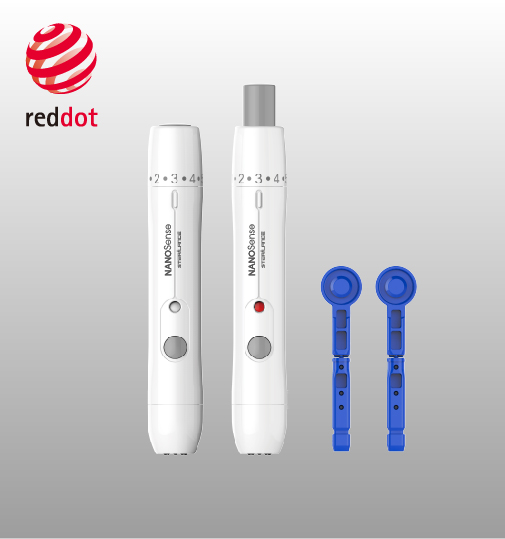
Press, part of our safety blood lancets portfolio at SteriLance, uses contact activation and a non-slip square body; Press Plus also supports one-handed use. These features address placement, grip continuity, and the motion used to release the needle.
ImPress combines one-step pressure activation with a compact easy-grip body. Rear-button operation, a twin-spring system, and a built-in status indicator characterize Elite. Its spring and status features address launch behavior and recognition through separate mechanisms.
Side buttons activate Lite3 and Lite4. Grip support on Elite Pro includes T-shaped pads, alongside a double-spring structure and selectable penetration depths of 1.3, 1.8, and 2.3 mm. Adjustment adds a configuration check before activation.
Every listed product remains single-use, with the sharp retracting and locking after puncture. We do not treat grip, trigger, springs, or depth as substitutes for that post-use containment; they control earlier exposure pathways.
Evaluate Prevention Across the Entire Workstation
Approval of safety blood lancets can combine product evidence with observation of opening, grasp, site contact, trigger force, fired-state recognition, withdrawal, handoff distance, and container entry. Incident and near-miss reports can identify which transition needs stronger control.
Our SteriLance instructions specify one use per device and direct the spent unit into a suitable sharps container. Our comparison keeps those requirements beside model-specific features so convenience claims cannot shorten or bypass the approved waste route.
Training should use the actual selected trigger and grip design. Model-level procurement records should preserve the approved gauge and depth, while infection-control teams can verify placement and capacity of waste containers. Prevention is shared across these responsibilities. This method keeps incident follow-up within the facility's established process and uses product-level evidence to clarify which control was expected at the point where an exposure or near miss occurred.
Accidental needlestick risk falls when the sharp is inaccessible until the intended moment, the device stays controlled during release, the needle disappears immediately afterward, and the spent unit reaches disposal without extra handling. That continuous exposure barrier is the practical goal.
Disclaimer: This content is provided for general health education and informational purposes only. It does not constitute medical advice, diagnosis, or treatment. Individual health conditions vary, and no health education article can replace a face-to-face consultation with a qualified healthcare professional or licensed medical institution. If you have specific health concerns or feel unwell, please seek care from a licensed medical facility and do not delay treatment because of content on this platform.