
 EN












Disposal risk is shaped by distance, time, and the number of actions performed after a puncture. A device may contain its sharp successfully yet still be carried across a room, set down temporarily, passed between staff, or placed near unused stock if the waste route is poorly arranged.
Disposal is treated as a designed workflow, extending beyond the instruction printed at the end of use. Mechanical containment creates a safer used state; container placement, capacity, exchange timing, staff training, and stock organization determine how quickly that state leaves the working environment. We evaluate those factors together because a reliable lock cannot compensate for a waste route that routinely forces delay.
Remove Unnecessary Actions from the Disposal Route
After disposable safety lancets complete a puncture, the intended movement is directly toward a suitable sharps container. Recapping, bending, disassembling, or manually touching the needle adds operations without improving the collected sample and may create new exposure points.
Following puncture, automatic retraction moves the sharp into the housing, and locking keeps it away from further access. These mechanisms reduce the need for sharp-directed handling, but the outer device still has to be held and released into the container according to instructions.
Temporary placement deserves special attention. A tray, countertop, pocket, or open waste bag can increase uncontrolled handling and expose another person to the used unit. The route should avoid intermediate destinations. If an interruption is likely, the procedure should define how the operator maintains control without setting the unit down or transferring it to another person. We observe this contingency during workflow trials, without assuming uninterrupted disposal.
Observation can record hand changes, carrying distance, door or lid actions, container height, and whether the operator's attention shifts before disposal. Such details show where a theoretically direct route becomes longer in practice. A route map can assign each motion to puncture completion, container access, lid operation, and release, making unnecessary steps visible without turning the review into a general efficiency score.
Size and Position the Sharps-Container System
Daily use of disposable safety lancets creates a predictable stream of units. Expected procedures per shift, the number of active stations, reserve capacity, and the facility's exchange policy can be translated into container demand without assuming that one location serves every workflow equally.
Container placement should support release from the normal working position while complying with local requirements. A unit that must travel through patient or staff movement zones remains in handling longer, even when its needle is already locked inside.
Fill level and exchange timing influence access. An overfilled or unavailable container can force delay or improvised placement. Waste planning needs named responsibility for capacity monitoring, container replacement, and continuity during exchange. Peak clinics and shift changes also enter our calculation because used-unit generation or responsibility handoffs may differ from the daily average.
Unused stock belongs on a separate route. Clear storage keeps new products protected and prevents a spent housing from being mistaken for an unopened unit. Distinct locations and one-way movement reinforce the product's single-use boundary. Labels, physical separation, and stock counts can support that boundary, but the spent unit should never depend on visual resemblance alone to remain outside usable inventory.
Relate Product Handling and Packaging to Waste Volume
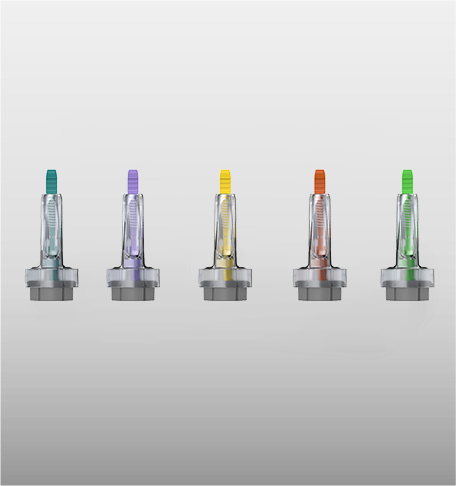
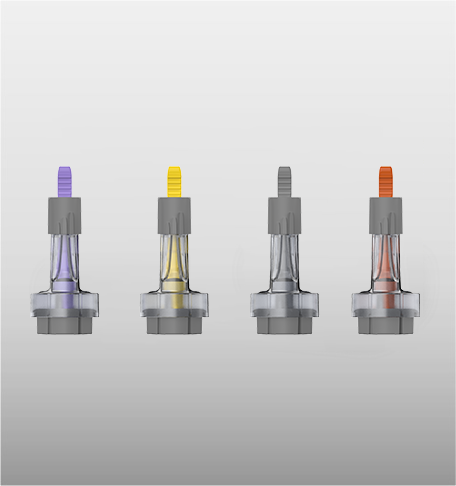
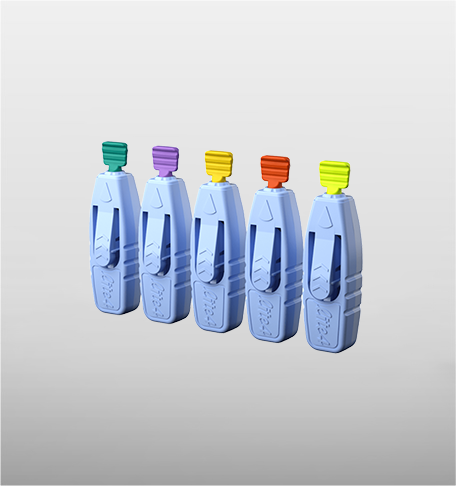
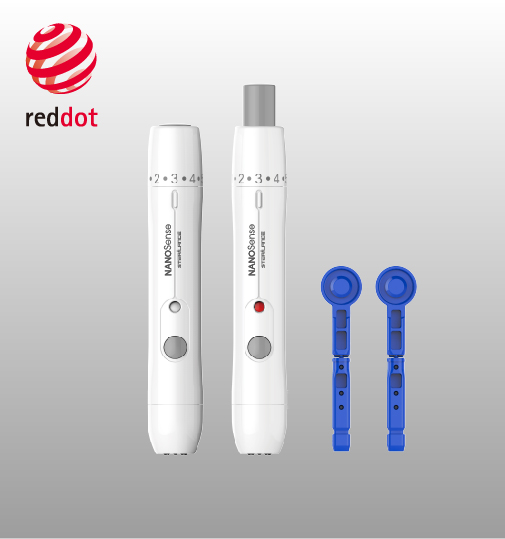
Disposal cues can be compared among the disposable safety lancets options we develop at SteriLance: Press uses one-step pressure activation and a non-slip body, while Press Plus supports one-handed use. ImPress is compact and easy to grip, and Elite includes a status indicator.
Side-button activation is used by Lite3, while Lite4 uses a launch button. These trigger and grip formats change the movements before and during puncture, while retraction and locking create the contained state that enters the waste route.
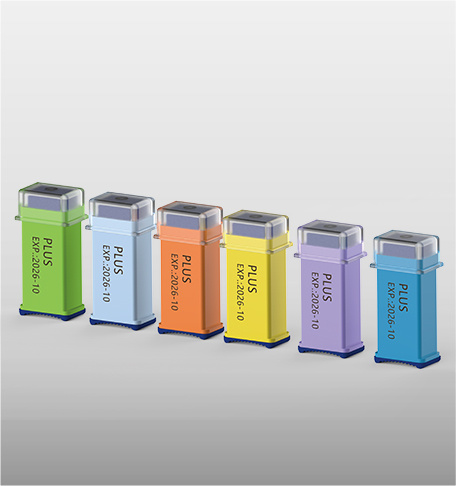
For Press, ten boxes make up a carton; each box holds 100 units, giving 1,000 units in the full carton. ImPress is packed 100 per box and 2,000 per carton; Elite is packed 50 per box and 1,000 per carton; Elite Pro is packed 100 per box and 1,000 per carton.
Packaging quantities can be combined with daily test volume to estimate used-unit generation, box-opening rhythm, storage demand, and container exchange. This approach keeps these calculations model-specific because a shared carton total can conceal different box counts and replenishment patterns.
Make Direct Disposal a Verifiable Routine
A disposal audit for disposable safety lancets can begin at the moment the device fires and end only when it is inside the suitable container. The record can include status recognition, hand position, distance, intermediate placement, container access, fill level, and final release.
Our SteriLance instructions state that the product is used once, must not be reused, and should be discarded into a suitable sharps container. Our workflow guidance preserves that simple direction while identifying the local conditions required to carry it out reliably.
Training can use the actual workstation, not a tabletop demonstration alone. Staff can rehearse the intended disposal path, recognize a fired device, respond to a full container, and maintain separation between usable stock and waste during interruptions.
Handling risk can be reduced when the used device moves promptly from its model-specific safety state to controlled disposal without unnecessary intermediate handling. The product removes the exposed sharp, the workstation removes unnecessary travel, and the waste plan prevents capacity failures from reintroducing manual handling.
Disclaimer: This content is provided for general health education and informational purposes only. It does not constitute medical advice, diagnosis, or treatment. Individual health conditions vary, and no health education article can replace a face-to-face consultation with a qualified healthcare professional or licensed medical institution. If you have specific health concerns or feel unwell, please seek care from a licensed medical facility and do not delay treatment because of content on this platform.