

 EN
EN 

















Frequent injection magnifies every interface in a pen-needle system. The hub must connect securely, the caps must be manageable, the needle must retain stability as force is applied, and the skin-contact geometry must support controlled depth. Small handling burdens can recur many times across a routine.
The comparison separates needle dimensions from bevel, wall, coating, hub, cap, contact platform, and safety-shield design. These features influence different stages from assembly to removal and disposal. The discussion explains mechanical considerations without prescribing an injection technique or making an individual treatment recommendation. Comfort, dose delivery, and needlestick protection should therefore be evaluated as separate aspects of the overall design.
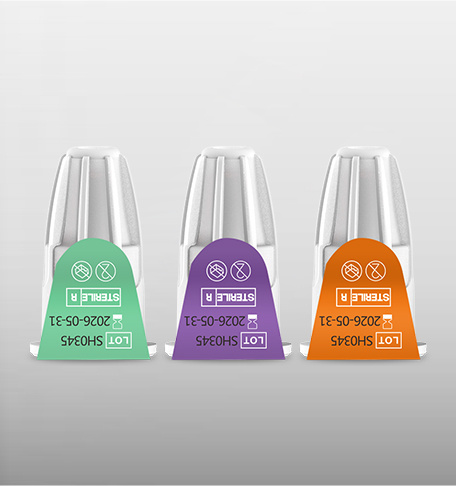
Map Each Feature to a Stage of Injection
Before using needles for insulin pen, the user has to identify gauge and length, connect the hub, and remove the protective components according to instructions. Oversized easy-grip caps address access and handling at this preparatory stage; needle dimensions do not change.
During insertion and delivery, lateral support at the hub can reduce unwanted bending forces. A larger skin-contact platform addresses how the assembly meets the body surface and can contribute to depth control. These structures work around the cannula, not in place of it. A task-based review can observe connection, cap removal, stability under representative force, skin contact, and removal as separate events. Each observation retains the exact product code so evidence about one hub is not transferred to another design.
Tip profile is shaped by bevel geometry, while wall design affects the internal passage within the needle. Medical-grade silicone coating concerns surface interaction. Each term identifies a specific construction choice, so none should become a universal shorthand for injection comfort.
Removal introduces exposure considerations at both ends of the needle. A safety shield is designed to reduce needlestick risk, whereas a conventional product relies on its cap and the required handling sequence. Disposal remains necessary after either architecture is used.
Read Gauge and Length as a Pair
Dimensions for needles for insulin pen are commonly written as gauge by millimeters. Gauge refers to diameter and length describes the physical needle length; one number cannot be interpreted as the other. Listed combinations should remain attached to their exact product family.
Frequent routines may make consistency of the supplied combination particularly important. A change from 32G × 4 mm to 31G × 5 mm alters both displayed fields, so observations cannot be attributed to gauge alone. Instructions and qualified healthcare guidance determine individual use.
Tip design adds another variable beyond size. A three-bevel and a five-bevel needle have different stated tip constructions, while an optimized bevel geometry describes another design approach. Comparative language should identify the named product, not generalize across the range.
Package quantity affects replenishment more than injection mechanics. A box count can be translated into days of supply using the established injection frequency, while case quantity informs purchasing and storage. Reserve stock should remain separate from routine consumption in the calculation. Storage conditions, expiry rotation, and the ability to distinguish similar gauge-length codes also belong in the supply review, especially where several people or locations draw from the same inventory.
Compare Conventional and Safety Architectures
Hub-to-skin interfaces can be compared within our needles for insulin pen range at SteriLance: Easydrip Plus uses the Hextra Tech hub for lateral stability and is designed to reduce needle bending or breakage risk. Its skin-contact platform is described as 12 times larger than that of a standard pen needle.
Easydrip Plus and Plus Pro are listed in 32G × 4 mm, 31G × 5 mm, and 31G × 6 mm, packed 100 pieces per box and 2,000 per case. Plus uses a three-bevel tip, whereas Plus Pro uses a five-bevel tip.
Easydrip Classic uses an extra-thin-wall austenitic needle, Cobalt-60 gamma sterilization, optimized bevel geometry, and medical-grade silicone coating on both ends. Classic and Classic Pro list the same three gauge-length combinations and the same 100-per-box, 2,000-per-case packaging.
Our safety pen needle uses a safety-shield hub and a skin-contact platform described as 12 times larger than standard. Listed configurations are 31G × 5 mm, 30G × 8 mm, and 30G × 5 mm, and the design addresses needlestick risk from either end.
Evaluate the Routine, Not a Single Specification
A review of needles for insulin pen can follow assembly force, cap grip, hub stability, contact with the skin, visible dimensions, bevel construction, removal, shield behavior where present, and disposal. Recording each stage prevents a positive feature at one interface from masking difficulty at another.
Our SteriLance portfolio covers Plus, Classic, and safety designs with different hubs, tips, materials, and protective structures. Exact product associations remain explicit in our materials; Hextra Tech, five-bevel construction, and safety shielding are not transferred to families where they are not stated.
Frequent use also makes supply continuity relevant. Gauge-length codes, box and case quantities, storage, product identification, and approved replacement practices should remain stable enough for the routine to be repeated without accidental substitution.
For frequent injection, dimensions, hub support, cap handling, tip construction, contact platform, and exposure controls should be considered together within the established routine. A reliable choice comes from that complete interface map, not from one isolated number.
Disclaimer: This content is provided for general health education and informational purposes only. It does not constitute medical advice, diagnosis, or treatment. Individual health conditions vary, and no health education article can replace a face-to-face consultation with a qualified healthcare professional or licensed medical institution. If you have specific health concerns or feel unwell, please seek care from a licensed medical facility and do not delay treatment because of content on this platform.