

 EN
EN 

















Lancet gauge uses an inverse scale: as the gauge number rises, needle diameter becomes smaller. That single fact prevents a common reading error, but it does not turn gauge into a complete product specification or a direct prediction of performance.
In this structured selection record, gauge remains one field among several. Diameter is interpreted first, then linked to puncture area, penetration force, depth, device compatibility, sample requirements, and use frequency. This prevents a convenient catalog number from absorbing questions that belong to other parts of the sampling system.
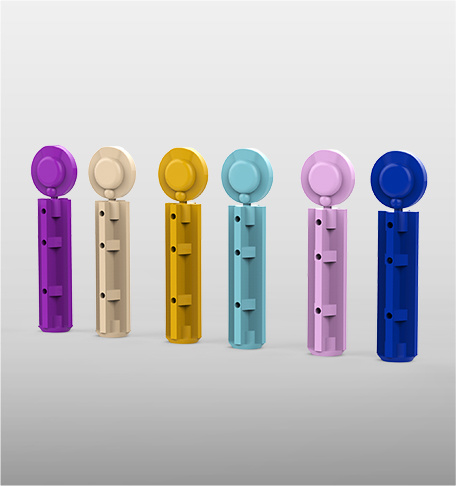
Read the Gauge Number in the Correct Direction
For a blood lancet needle, 33G is thinner than 30G, 28G, or 26G because gauge number and diameter move in opposite directions. Buyers who assume that a larger number means a larger needle can reverse the intended comparison and shortlist the wrong configuration.
Finer needles create a smaller puncture area and require less penetration force than substantially larger-diameter alternatives. Those physical relationships are relevant to repeated fingertip testing, but they do not establish sample volume, comfort, or suitability on their own. Each outcome depends on additional variables.
Gauge should be copied exactly across specification, quotation, sample label, box, carton, and purchase order. A transposed number can change the physical needle size while leaving the surrounding product description apparently familiar. Dimensional verification functions as an identity check and belongs before final packaging approval.
The intended puncture site and procedure establish the context for the number. A generic gauge comparison cannot prescribe an individual configuration. Product instructions, specimen needs, technique, and qualified healthcare guidance determine how the available sizes are applied.
Connect Diameter to Depth and Sample Requirements
A blood lancet needle reaches the sampling site through a defined or selected penetration depth. Gauge describes diameter; depth describes travel. Product selection needs both because the same gauge can appear at different depths, and different gauges may be paired with a common depth within one family.
Required blood volume is not encoded in the gauge label. Site preparation, technique, skin characteristics, depth, launch stability, and downstream handling also affect sample adequacy. A comparison record therefore needs to state which of those conditions were held constant. We avoid using a finer or larger-diameter option as a standalone promise about the collected specimen.
In reusable-device systems, the lancing device may supply depth while the lancet supplies gauge. Self-contained safety products can publish fixed gauge-depth codes or provide adjustable positions. The location of control changes training and product identification even when a nominal needle size appears in both systems.
Frequency influences how the tradeoff is evaluated. A fine option may be relevant to recurring punctures, while consistent sample collection remains necessary. The useful record states why a gauge was retained and which depth, site, mechanism, and procedure formed the basis of that decision.
Use Product Ranges to Verify Real Combinations
A catalog of blood lancets should show which gauges actually exist within each model. Combining dimensions from separate families can create an imaginary product. We review named configurations and representative samples so a gauge discussion remains connected to a manufacturable, orderable item.
Reusable-system gauge coverage appears in the range we manufacture at SteriLance: Soft and SoftSure are listed in 33G, 30G, 28G, and 26G. They are compatible with LDE4 and most mainstream reusable lancing devices. SoftSure's stated use covers safe, low-pain fingertip sampling and frequent glucose checks, giving its gauge range a defined context.
Our LDE4 contributes nine adjustable depth settings and patented SSC technology intended to stabilize launch and reduce vibration. Gauge is selected through the disposable lancet, whereas depth and launch control reside on the reusable device. The system must be assessed as a matched pair.
Safety models demonstrate deliberate gauge-depth pairing. Elite and ImPress list 30G at 1.5 mm and 28G or 26G at 1.8 mm. These specifications should not be rearranged merely because all three gauge values appear in the wider portfolio.
Make Gauge One Verified Field in the Final Specification
A procurement record for a blood lancet needle should retain gauge beside penetration depth, compatible lancing device or integrated mechanism, testing frequency, intended sample pathway, packaging, and instructions. This format limits the chance that a single number becomes shorthand for comfort, quality, or volume without supporting evidence.
In the adjustable range we maintain at SteriLance, Elite Pro and Flex3 provide 1.3, 1.8, or 2.3 mm depth settings; Elite Pro lists 28G, 26G, and 23G. Our product data let buyers see where dimension choices reside without implying that the broadest range is automatically preferable.
Change control also matters. If gauge, lancing device, depth, activation, or intended workflow changes after qualification, the new configuration deserves review. We link samples and documents to exact product codes so a familiar family name does not conceal a technically meaningful substitution. That linkage also gives purchasing, quality, and training teams the same dimensional reference during later review.
Gauge matters because it identifies physical diameter and influences the puncture geometry. Its selection becomes reliable only when the number is read correctly and kept beside depth, mechanism, compatibility, and sample need. In that fuller record, gauge informs the decision without pretending to complete it.
Disclaimer: This content is provided for general health education and informational purposes only. It does not constitute medical advice, diagnosis, or treatment. Individual health conditions vary, and no health education article can replace a face-to-face consultation with a qualified healthcare professional or licensed medical institution. If you have specific health concerns or feel unwell, please seek care from a licensed medical facility and do not delay treatment because of content on this platform.