

 EN
EN 

















Puncture comfort develops across a brief sequence: the device is gripped, positioned, activated, launched, and removed. Design can influence every stage, but the effect of one stage may be hidden if the discussion jumps directly from needle gauge to an overall comfort claim. Following the event exposes the separate mechanisms.
Our explanation moves in the same order as the puncture itself. It considers positioning and trigger action before examining launch, depth, and needle specification, then closes with stable repetition. Comfort remains individual and technique-dependent; the purpose is to show where engineering variables enter, not to promise a painless result.
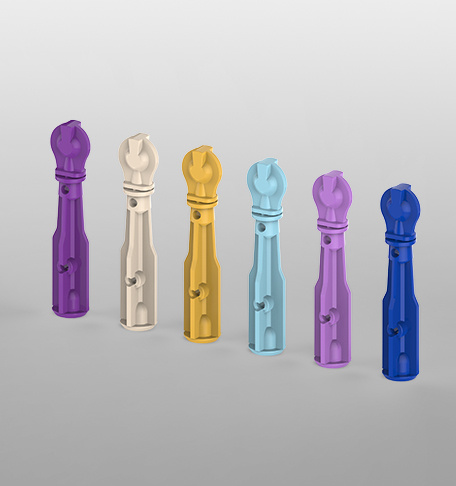
Before Launch: Grip and Activation Shape Positioning
The body surrounding blood lancets determines how the unit or lancing device is held against the sampling site. Non-slip surfaces, wider pads, overall shape, and one-handed handling can affect steadiness during placement. Their significance lies in mechanical and ergonomic control; they do not prove a particular sensation.
Pressure activation combines skin contact and decive activation in one sequence. Rear-button and side-button products separate positioning from the trigger action. Each arrangement changes hand movement and the moment at which force is applied, so training and user dexterity belong in the comparison alongside the trigger name.
A stable position can support a controlled launch, yet grip features do not correct an unsuitable gauge or depth. The comparison avoids treating the body design as an isolated comfort solution. The useful question is whether the user can maintain the intended contact and complete the stated sequence without unintended movement.
Routine sampling magnifies these details because positioning is repeated. A mechanism that feels intuitive once may still create variation when used rapidly or by several trained staff members. Representative observation shows whether instructions, product shape, and operating conditions support the same action across repeated punctures.
During Launch: Springs, Stability, and Vibration Matter
Once blood lancets begin moving, the launch system controls acceleration and travel. lancing devices and self-contained safety products use different mechanical architectures. Features intended to stabilize the needle or reduce vibration address the path of motion, which is distinct from the diameter of the needle itself.
Spring structures can also differentiate products within one activation category. A twin-spring or double-spring description identifies an internal design, not an automatic comfort outcome. We connect such features to the manufacturer's stated purpose and evaluate the complete device, without ranking spring counts.
Penetration depth determines how far the needle is intended to travel. Fixed products link one depth to a product code, adjustable safety lancets place choices on the disposable body, and reusable lancing devices provide depth selection through the reusable device. Every architecture requires the depth to be understood with gauge.
Vibration control matters because nominal dimensions do not describe every movement during puncture. A stable launch may support a smoother event, while poor positioning can still alter the experience. Internal mechanism, contact stability, setting, and instructions belong in one technical sequence.
At Skin Entry: Gauge and Depth Work Together
The gauge of blood lancets identifies needle diameter; higher gauge numbers correspond to thinner needles. Penetration depth is a separate dimension. A fine needle at one depth and a larger-diameter needle at another cannot be compared responsibly unless the changed variables are made explicit.
A two-part comfort example is documented in our work at SteriLance: Soft and SoftSure are listed in 33G, 30G, 28G, and 26G for LDE4 and most mainstream reusable lancing devices. Positioned for low-pain fingertip sampling and frequent glucose checks, SoftSure works within a system where LDE4 supplies nine adjustable depth settings.
Our LDE4 also uses a patented SSC structure intended to stabilize needle launch and reduce vibration. In this two-part system, the consumable provides gauge and the reusable device provides setting and launch control. Comfort-related evaluation must include both items, with no assumption that the disposable box represents the complete system.
Self-contained safety models keep more variables in one unit. Listed configurations extend from 30G at 1.5 mm on ImPress and Elite to Elite Pro with 23G and selectable 1.3, 1.8, or 2.3 mm depths. These facts show how mechanism and dimensions remain product-specific.
After One Puncture: Judge Whether the Design Repeats
Design effects on blood lancets become meaningful when the approved setup can be repeated. Product identification, depth recognition, compatible consumables, grip, activation, disposal, and equipment management all influence whether later punctures resemble the evaluated one. A single favorable use does not establish system consistency.
Our safety portfolio includes pressure-activated Press, Press Plus, and ImPress; rear-button Elite and adjustable Elite Pro; and side-button Lite3 and Lite4. Press has a non-slip square body, Elite Pro has T-shaped grip pads, Elite uses a twin-spring structure, and Elite Pro uses a double-spring structure.
We describe those features as inputs to a controlled workflow. Sampling site, skin characteristics, required specimen, technique, and individual response remain outside a mechanical guarantee. Healthcare guidance and product instructions continue to determine how a configuration is used in practice.
Lancet design affects comfort through a chain of small interactions, from grip and trigger to motion, depth, and needle size. No link is sufficient alone. A coherent product choice preserves the entire chain so the device can be positioned, launched, and reproduced under the conditions for which it was selected.
Disclaimer: This content is provided for general health education and informational purposes only. It does not constitute medical advice, diagnosis, or treatment. Individual health conditions vary, and no health education article can replace a face-to-face consultation with a qualified healthcare professional or licensed medical institution. If you have specific health concerns or feel unwell, please seek care from a licensed medical facility and do not delay treatment because of content on this platform.