

 EN
EN 

















Two gauge labels describe different diameters, while the user encounters the combined motion of needle, holder, depth setting, and hand technique. The launch system, selected depth, device stability, site, technique, and frequency all accompany that diameter. Separating sensation from specification requires keeping those companions visible.
A controlled-variable method follows two steps: identify what gauge changes physically, then hold the rest of the sampling system in view. This clarifies why 33G is finer than 30G, 28G, or 26G without claiming that gauge alone determines comfort, blood volume, or the result of an individual test.
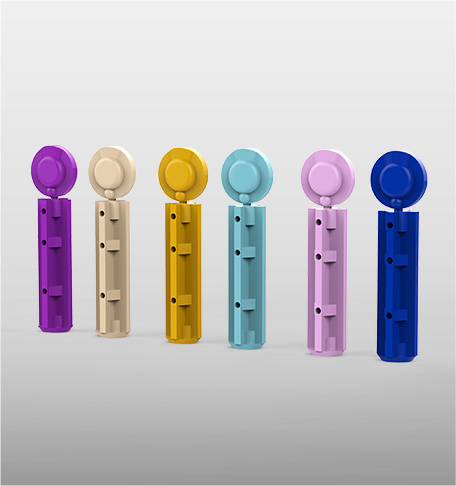
Follow the Diameter Change at Skin Entry
Inside a blood sugar monitor lancet, a higher gauge number identifies a thinner needle. Within the listed range, moving from 26G toward 33G reduces diameter. Because gauge and diameter move inversely, the finer option presents less cross-sectional area at entry; penetration force may also differ when tip geometry, depth, and launch conditions are otherwise comparable.
Those physical differences occur at entry, but the experienced event continues beyond diameter. Recording the comparison conditions prevents a geometrical relationship from being mistaken for a prediction of individual sensation. The needle also travels to a depth, follows a launch path, and interacts with a particular site. A gauge comparison becomes incomplete if it silently assumes that these other conditions are identical.
Individual sensation cannot be read directly from the label. Skin characteristics, prior sampling, site condition, positioning, and technique vary. Gauge is treated as an engineering variable that may influence the event; healthcare guidance and product instructions still govern selection and use.
Frequent glucose checks make consistent conditions especially important. If the lancing device setting, site, or preparation changes along with gauge, the user may attribute the whole difference to needle diameter. A more disciplined comparison records each variable before interpreting the puncture experience.
Observe What Happens After the Needle Starts Moving
The blood sugar monitor lancet is launched either by a reusable lancing device or by an integrated safety mechanism. Stability and vibration influence the motion that accompanies gauge. A fine needle launched inconsistently and a larger needle launched steadily differ in more than diameter, so the experience cannot be assigned to gauge alone.
Depth defines the intended travel distance. Reusable lancing devices may offer multiple settings; fixed safety units carry a specified depth; adjustable safety units provide positions on the disposable body. The selected depth should remain visible whenever users or buyers discuss how a gauge feels during sampling.
Sample requirements add another constraint. A technically suitable puncture must support the intended test pathway, and an inadequate sample may lead to another attempt. The discussion avoids recommending the finest option automatically because comfort and sample adequacy must be considered within the actual procedure.
Device compatibility protects the comparison from hidden mechanical changes. A lancet should be supported for the named holder instead of chosen by appearance. Loading fit, launch structure, depth control, and instructions define the operating environment around the needle gauge.
Compare Gauge Within a Stable Device System
An evaluation of a blood lancet is clearer when 33G, 30G, 28G, and 26G options belong to the same compatible product family. Keeping the holder and its depth setting consistent can reduce unrelated variation, although site, technique, and individual response still require cautious interpretation.
Soft and SoftSure appear in those four gauges for LDE4 and most mainstream lancing devices in our range at SteriLance. Low-pain fingertip sampling and frequent glucose checks form SoftSure's intended context, without turning its listed sizes into a guaranteed sensation.
Nine adjustable penetration-depth settings are available on our LDE4. Its patented SSC structure is intended to stabilize needle launch and reduce vibration. Together, these features show why the disposable gauge, reusable-device setting, and launch behavior should be documented as separate parts of one puncture.
A controlled comparison can keep the same device, setting, sampling site, and approved technique while changing only the available gauge. Even then, results describe the observed conditions instead of a universal response. Those limits remain in the trial record to prevent overextension of the observations.
Interpret Gauge as One Influence on the Experience
The specification for a blood lancet should pair gauge with depth and mechanism before comfort is discussed. As one example, Press and Press Plus list 30G, 28G, and 26G at 1.8 mm. Here, diameter changes while the listed depth remains common across those versions.
Our SteriLance Elite and ImPress configurations create another pattern: 30G is listed at 1.5 mm, while 28G and 26G are listed at 1.8 mm. A direct comfort comparison across those codes would change gauge and depth together, so it cannot isolate the effect of diameter.
Adjustable-depth Elite Pro and Flex3 provide 1.3, 1.8, and 2.3 mm positions. We use these specifications to explain variable control, not to prescribe a setting. The intended user, site, sample need, and relevant guidance remain part of applying any gauge-depth combination.
Needle gauge influences puncture geometry, while penetration force also depends on factors such as tip geometry, depth, and launch conditions. Depth, launch stability, sampling site, and technique determine the context in which diameter acts. Gauge is therefore influential and measurable, but never solitary.
Disclaimer: This content is provided for general health education and informational purposes only. It does not constitute medical advice, diagnosis, or treatment. Individual health conditions vary, and no health education article can replace a face-to-face consultation with a qualified healthcare professional or licensed medical institution. If you have specific health concerns or feel unwell, please seek care from a licensed medical facility and do not delay treatment because of content on this platform.