

 EN










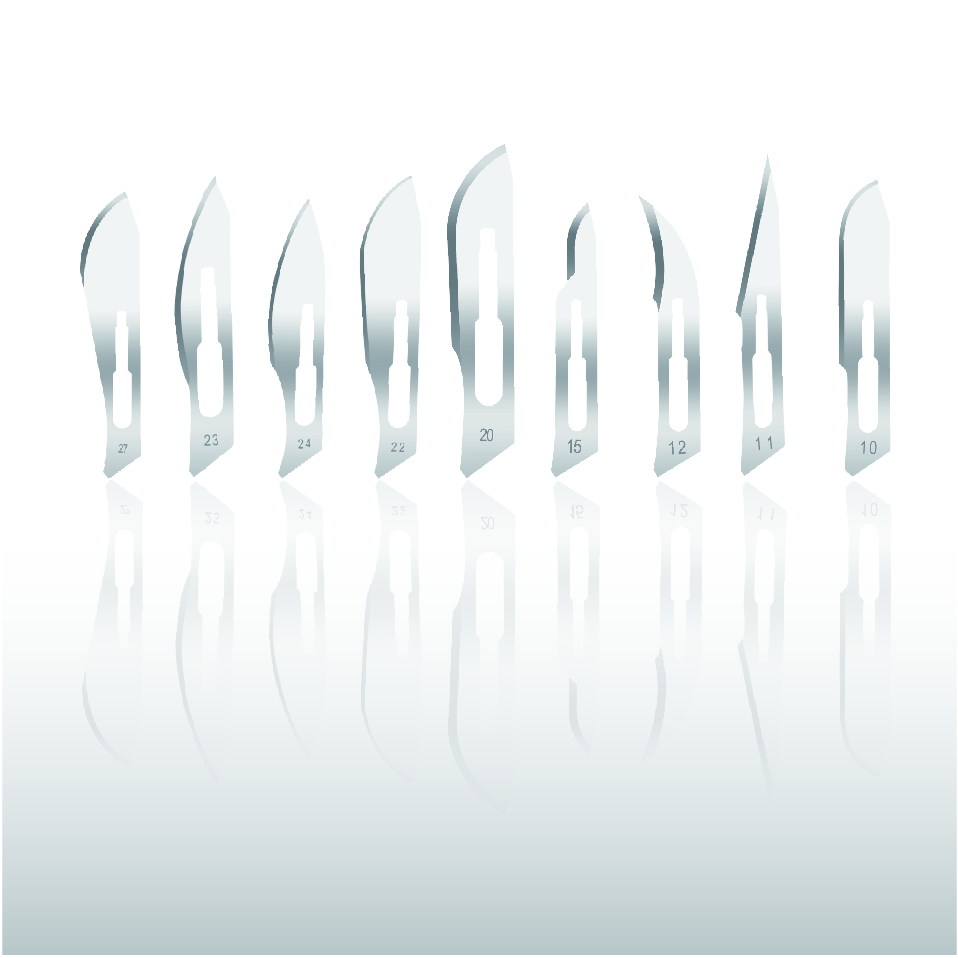


Needle sensitivity changes the sampling experience before the puncture even begins. Anticipation can make a person tense the hand, press the device inconsistently, or hesitate during positioning, so a comfort-oriented design must support both the brief mechanical event and the actions surrounding it.
Comfort is examined through controllable variables, while pain-free sampling remains an unsupported promise. The controllable factors include needle diameter, penetration depth, launch stability, device-lancet fit, hand movement, and single-use technique; they each influence the event differently. Skin characteristics and individual perception still vary, which makes adjustment and consistent handling important.
Understand Why Sensitivity Is More Than Needle Diameter
For a needle-sensitive user, a gentle lancing device must address several possible sources of discomfort. The skin can respond to puncture depth and needle diameter, while the hand may respond to vibration, noise, pressure, or uncertainty about the moment of activation.
In gauge notation, a higher number represents a thinner needle. That relationship is useful, but it does not establish comfort by itself. A thin needle driven deeper than necessary or launched with unstable motion may still feel poorly controlled.
Penetration depth relates to how far the sharp travels into the skin. Too little penetration may not obtain the intended sample, while unnecessary depth may increase tissue involvement. The practical target is sufficient sampling at an appropriate setting, not the highest or lowest number in isolation.
Perception also depends on repeatability. If placement, force, or device preparation changes from one attempt to the next, the user cannot easily learn what to expect. A stable routine reduces avoidable variation without implying that every puncture will feel identical.
Needle sensitivity may also involve sound or anticipation, not tissue sensation alone. Quiet, predictable preparation and a clear sequence can reduce surprise, although those factors do not change the physical gauge or depth.
Coordinate Depth, Launch, and Hand Position
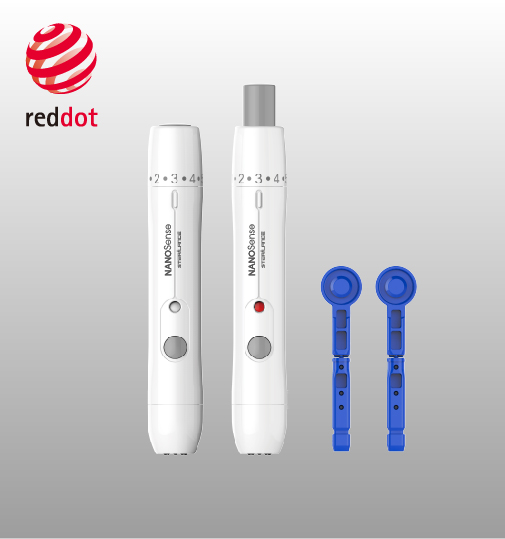
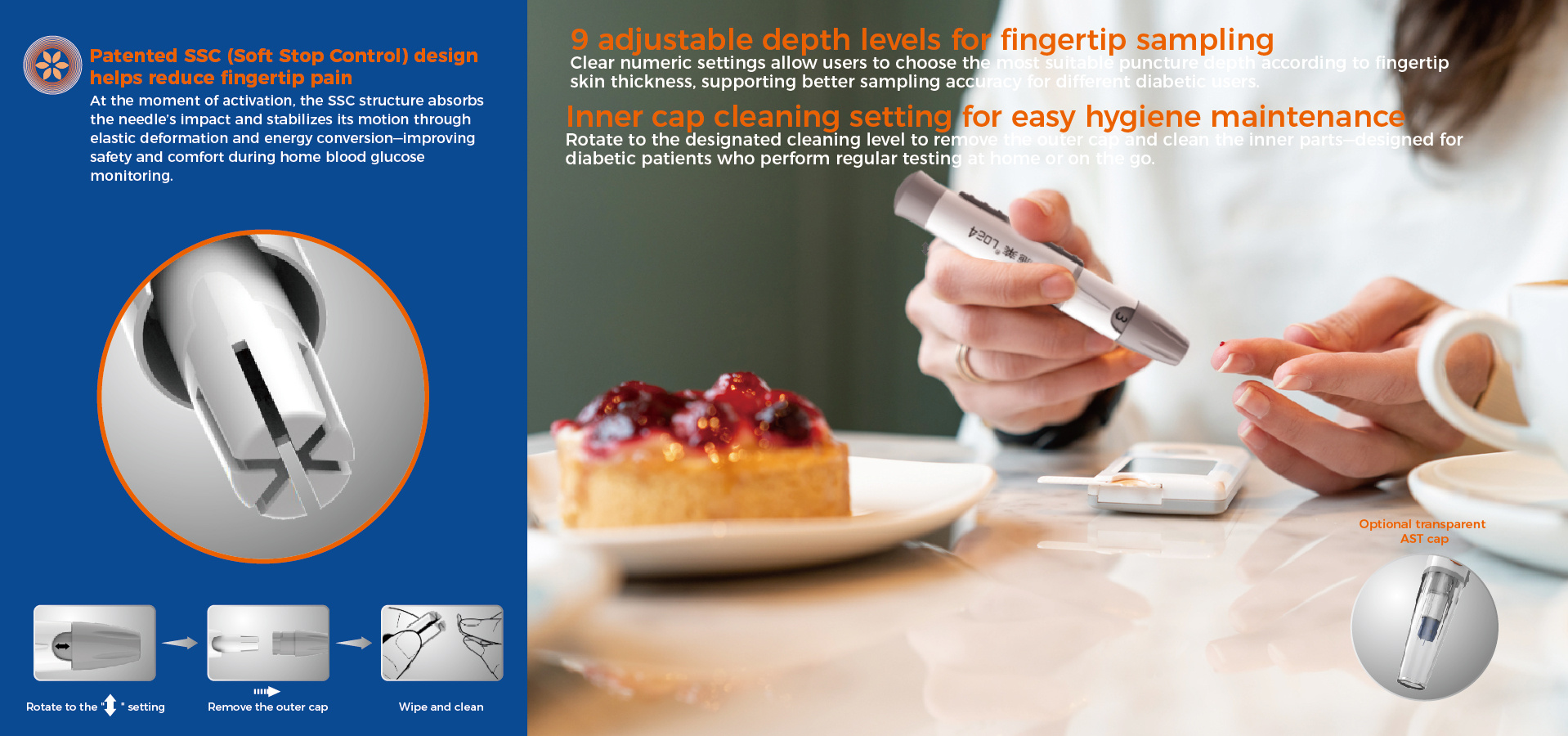
Adjustment gives a gentle lancing device a way to accommodate different skin types and comfort needs. Nine depth settings, as provided by LDE4, create a graded rangefor fingertip blood sampling without requiring one penetration setting for every user.
Launch stability concerns motion during the instant the lancet advances. Lateral vibration or oscillation can add movement beyond the intended forward path. The patented Soft-Stop-Control structure in LDE4 is intended to stabilize the lancet at launch and reduce vibration; individual comfort still depends on the complete sampling conditions.
Operating the device with one hand affects preparation immediately before puncture. Fewer repositioning steps can preserve contact angle and placement once the device reaches the fingertip. We treat that handling feature as support for consistency, not as a substitute for choosing an appropriate depth and compatible lancet.
A controlled trial can begin conservatively within the instructions and evaluate whether the required sample is obtained. Any setting change should follow the applicable device information and professional guidance where needed, especially when circulation, sensation, skin condition, or other health factors are relevant.
Setting labels need to be learned on the actual device, not interpreted as universal millimeter values. We advise keeping the selected position visible in records because numbered adjustment scales can differ between device designs.
Match the Device and Lancet as One System
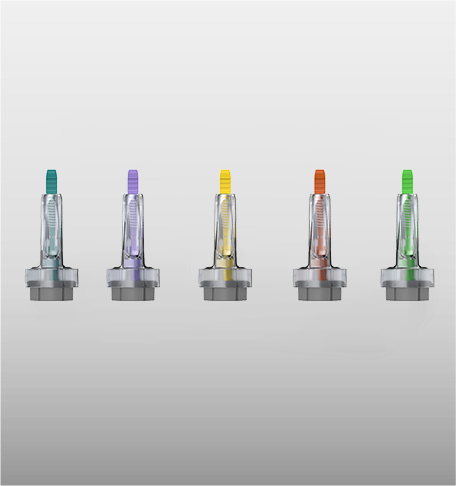
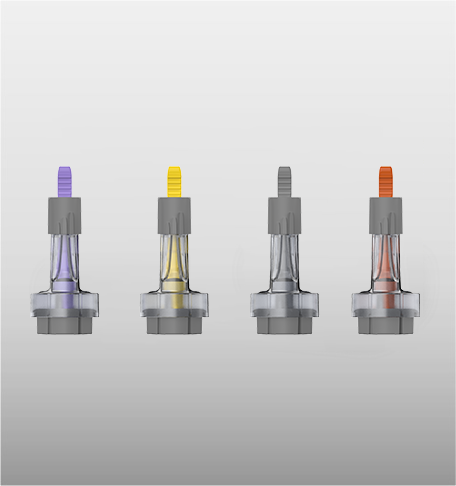
In our SteriLance range, LDE4 (product code 02-2201) is the gentle lancing device example used here. It has a gray-and-white body, nine penetration-depth settings, SSC launch stabilization, and single-hand operation, and it is packed one piece per box and 100 pieces per carton.
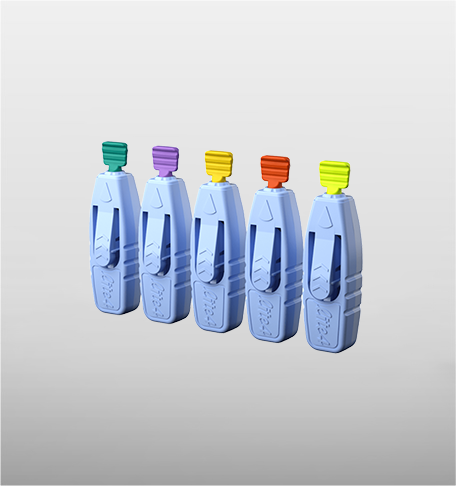
For LDE4, our Soft and SoftSure lines are sterile disposable lancets compatible with the device and most mainstream reusable lancing devices. Both families are available in 33G, 30G, 28G, and 26G, providing several diameter choices that can be considered together with the device setting.A defined interface can reduce uncertainty about fit, while product instructions remain the authority for assembly and use.
Compatibility deserves confirmation because launch behavior depends on how the lancet is held and driven by the device. Similar-looking components should not be assumed interchangeable. Our comparison keeps product identity, gauge, device model, and instructions connected when describing a sampling configuration.
Build Comfort Around a Repeatable Sampling Routine
A gentle lancing device contributes most when the surrounding routine is equally controlled. Preparing the site, seating the lancet correctly, choosing the documented depth, maintaining stable contact, and replacing the disposable lancet after use prevent unrelated variation from obscuring the design variables.
Our product range supplies LDE4 together with compatible Soft and SoftSure options. Our product information provides the concrete gauge, adjustment, stabilization, compatibility, and packaging facts needed to define, not guess the setup.
Records can be simple: device model, lancet specification, depth setting, sample adequacy, and observed comfort. Over repeated checks, that information may reveal whether inconsistency comes from the selected configuration, placement, technique, or changing skin condition.
For needle-sensitive users, low-pain design becomes a coordinated control problem. A suitable configuration configuration balances sufficient sampling with appropriate depth, a suitable gauge, stable launch, secure fit, and minimal repositioning, leaving individual response to be evaluated, not promised in advance.
A routine may need reassessment if repeated sampling becomes difficult or skin condition changes. Product adjustment cannot diagnose the reason, and persistent discomfort or sampling problems warrant discussion with a qualified healthcare professional.
Disclaimer: This content is provided for general health education and informational purposes only. It does not constitute medical advice, diagnosis, or treatment. Individual health conditions vary, and no health education article can replace a face-to-face consultation with a qualified healthcare professional or licensed medical institution. If you have specific health concerns or feel unwell, please seek care from a licensed medical facility and do not delay treatment because of content on this platform.