

 EN





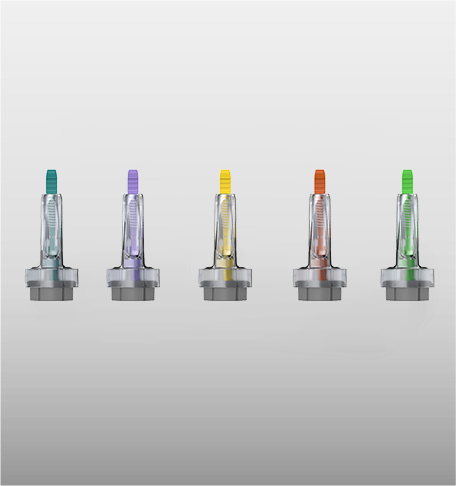
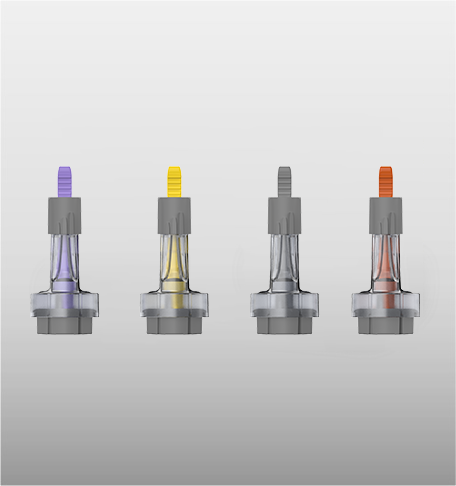

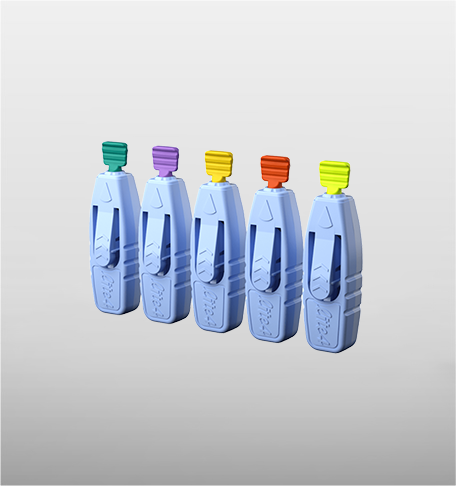


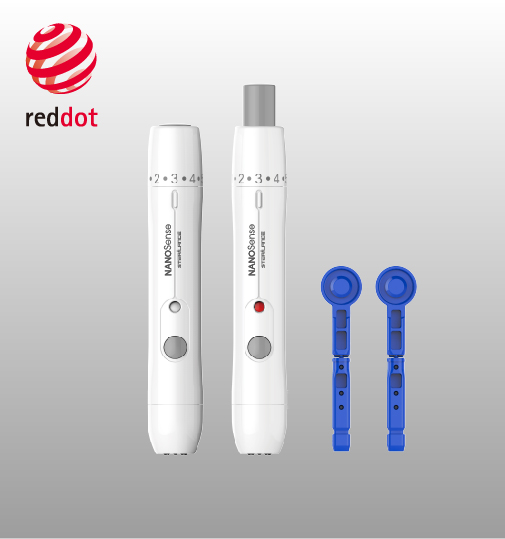


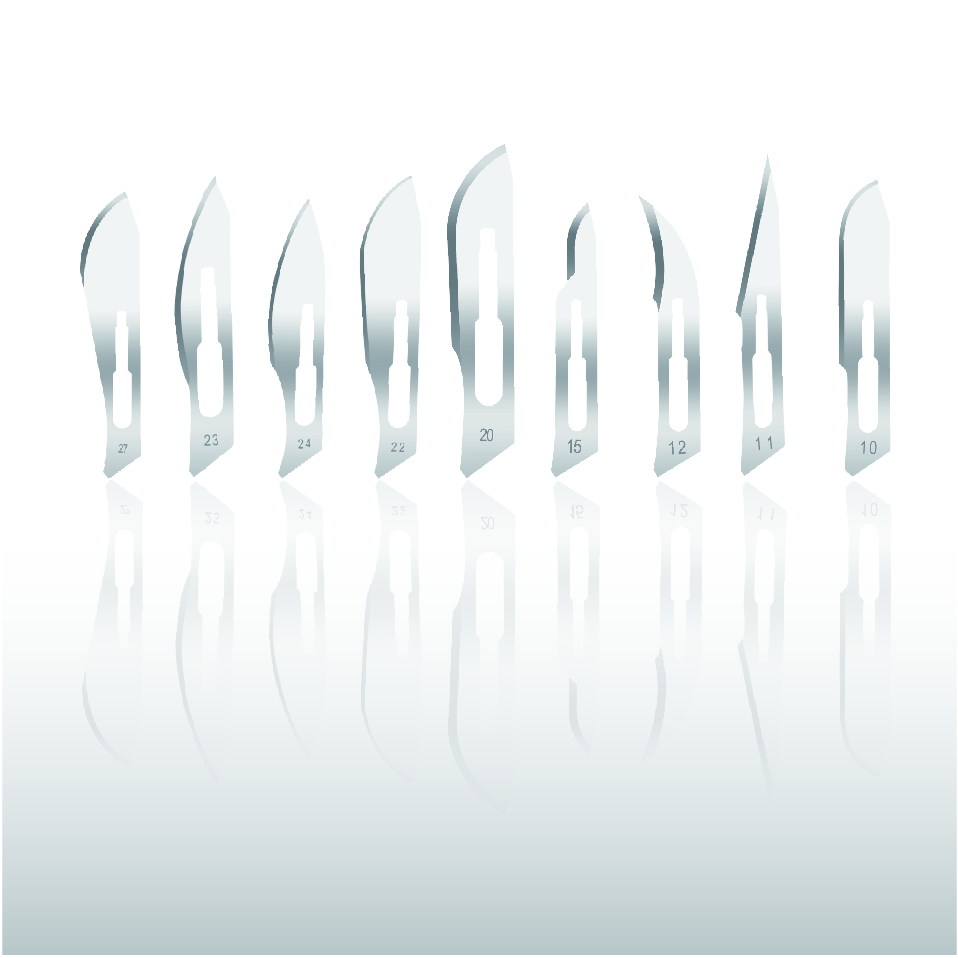


Fingertip puncture combines positioning force, needle acceleration, tissue travel, withdrawal, and post-puncture handling in a brief sequence. The device is positioned, the sharp accelerates, skin is penetrated to a set depth, the sharp withdraws, and the site is handled afterward.
Our approach follows that sequence and identifies which variables can be controlled at each stage. Across that sequence, diameter, penetration depth, launch vibration, activation movement, fit, and repeat technique are related but not interchangeable. Comfort improves most plausibly when the entire puncture event remains proportionate to the sample required.
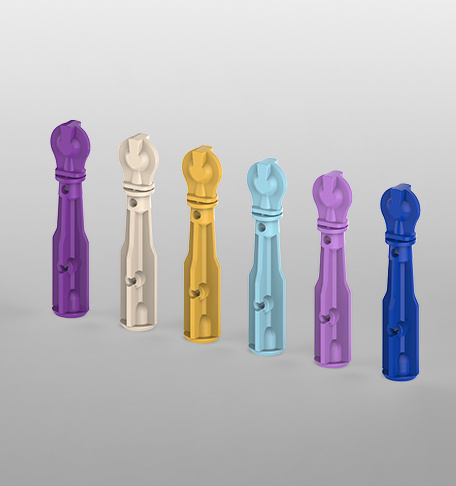
Before Contact: Set the Variables That Shape Puncture
Comfort analysis for a blood lancet starts before skin contact. Product identity, gauge, device compatibility, and depth setting determine the mechanical configuration that will be launched, so preparation is a mechanical part of the puncture sequence, not a separate administrative step.
A higher gauge number indicates a thinner needle. The Soft range is available in 33G, 30G, 28G, and 26G, providing several documented gauge options. Thinness alone, however, cannot determine how deeply or steadily the needle will travel.
Depth needs to correspond to skin characteristics and the intended capillary sample. Insufficient depth may lead to an unsuccessful attempt, while excess penetration involves more tissue than the procedure requires. The balance varies among users and situations and cannot be inferred from gauge or depth alone.
Correct seating inside a reusable device preserves the intended interface between lancet and drive mechanism. Damaged, incompatible, or poorly installed components can introduce uncertainty into launch and return, making product compatibility relevant to both performance and perceived control.
Site rotation and fingertip condition can alter the context in which the same specification is experienced. Device design does not remove those biological differences, so comparisons are most useful when the sampling circumstances are recorded.
During Launch: Limit Unnecessary Motion
Once a blood lancet is activated, forward travel creates the intended puncture, whereas lateral vibration represents movement outside that direct path. Launch stabilization addresses a comfort variable distinct from gauge and penetration depth.
The LDE4 lancing device uses a patented Soft-Stop-Control structure intended to stabilize the needle during launch and reduce vibration which may contribute to a more comfortable sampling experience. Its nine adjustable settings provide a separate means of controlling penetration depth across different sampling conditions.
Contact stability matters at the same moment. If the housing tilts or shifts as activation occurs, the puncture direction may differ from the intended alignment. Single-hand operation can reduce repositioning, provided the user follows the applicable preparation and positioning instructions.
Activation designs also influence the movement required from the hand. Pressure activation and button activation produce different force directions. Their relevance depends on grip, angle, and workflow, so the mechanism should be judged as part of the complete use sequence.
Acceleration and stopping behavior occur too quickly to judge by sight during routine use. We rely on named structural information and observed outcomes, without asking users to infer internal motion from sound alone.
Compare Gauge and Depth Through Real Configurations
Diameter and depth can be separated in the blood lancet examples we supply at SteriLance: Soft and SoftSure, which supply four gauge choices for reusable lancing devices. We connect those specifications to the device's depth options because diameter and travel distance act on separate dimensions of the puncture.
Safety-lancet examples show the same interaction in fixed configurations. Elite offers 30G at 1.5 mm and 28G or 26G at 1.8 mm; ImPress is available in multiple gauge specifications under its applicable product configurations. These are defined product options, not a universal ranking of comfort.
Selectable depth ranges on Elite Pro and Flex3 cover 1.3, 1.8, and 2.3 mm. Adjustable depth can support different sampling conditions, while the available gauge and the activation structure remain additional parts of the configuration.
We avoid equating the smallest diameter with the best outcome. An adequate capillary sample, correct device operation, and a single controlled puncture may matter more than pursuing one parameter while ignoring the others.
Fixed configurations can support consistency when the intended population and sample need are well defined. Adjustable formats offer flexibility, but the selected setting becomes another item that preparation and training must control.
After the Event: Reduce Variation in Repeated Sampling
A blood lancet cannot control every source of pain, but repeat procedures can avoid adding unnecessary variation. Consistent site preparation, device placement, depth documentation, and use of a fresh disposable lancet keep each attempt closer to the evaluated configuration.
Our product information connects the applicable lancet specification, device setting, and safety-lancet configuration for system-level evaluation. Our supplier-side product data keep these variables accurate and connected for system-level evaluation.
Comfort records are more informative when paired with sample adequacy. A setting may feel mild yet fail to produce the required sample, or a successful sample may reveal that less depth is sufficient on later appropriately guided use. Individual response remains part of the assessment.
Designs intended to reduce avoidable discomfort focus on proportionate tissue contact and restrained unintended motion while supporting one effective sampling event. Diameter, depth, launch stability, activation direction, fit, and consistent technique must converge during the same brief puncture; none of those specifications carries that responsibility alone.
Repeated use of a disposable sharp can change the expected condition and falls outside single-use design. A fresh compatible component preserves the evaluated needle geometry for each event and avoids introducing wear as an uncontrolled variable.
Disclaimer: This content is provided for general health education and informational purposes only. It does not constitute medical advice, diagnosis, or treatment. Individual health conditions vary, and no health education article can replace a face-to-face consultation with a qualified healthcare professional or licensed medical institution. If you have specific health concerns or feel unwell, please seek care from a licensed medical facility and do not delay treatment because of content on this platform.