

 EN
EN 

















Repetition turns a simple fingerstick into a device-management system. A lancing device may be used many times while sterile lancets are replaced, so depth settings, launch behavior, compatibility, handling, cleaning or individual assignment, and replenishment all influence whether the routine remains consistent. The reusable component cannot be evaluated as an isolated shell.
We follow one complete use cycle and then examine what must remain stable across later cycles. That approach separates adjustable penetration from needle gauge, mechanical features from comfort claims, and personal use from controlled clinical management. It also keeps technical selection within product instructions and appropriate healthcare guidance.
Map the Repeated Cycle Before Comparing Features
Every blood lancet device operates through a recurring sequence: prepare the sampling site, activate the device, collect the sample, remove the used consumable, and manage the reusable unit for its next authorized use. Evaluation should follow the entire recurring sequence, with the puncture treated as one step among several.
Repeatability depends on whether the selected depth can be identified and reproduced. A dial with several positions offers choice, but the number of settings alone says little about control. We examine markings, tactile movement, instructions, and the likelihood that the intended setting can be selected consistently between sessions.
The lancing device and lancet form one mechanical system. A nominally similar lancet may not have documented compatibility, and gauge does not describe the holder setting. The approval record therefore keeps the disposable specification, reusable model, loading fit, activation method, and stated depth-control method together.
Frequency also changes how small inconveniences accumulate. Cap removal, loading, cocking where applicable, one-handed operation, release, and lancet removal may be manageable once but burdensome over many cycles. Representative handling reveals where instructions, dexterity, storage, or product design affect the continuity of the routine.
Separate Depth Choice from Launch Consistency
Adjustable penetration is a central feature of an adjustable lancing device, yet adjustment and launch stability answer different questions. The first determines the selected setting; the second concerns how the needle moves when released. A broad depth range cannot compensate for an unclear control or unstable mechanical action.
Skin characteristics and comfort needs may differ among users and sites, but an article cannot prescribe an individual depth. The device should make the approved setting understandable and reproducible. Product instructions and qualified healthcare guidance mark the boundary between technical capability and personal use.
Needle motion can influence the experience of puncture independently of nominal gauge. Structures intended to stabilize launch or reduce vibration address that movement, while the consumable provides its own needle dimensions. Not every sensation is attributable to the lancet, and not every sampling outcome is attributable to the lancing device; both components and technique affect the evaluation.
One-handed design may reduce the need to reposition the device during preparation and activation. Its practical value depends on grip, control placement, and the user's ability to complete the sequence correctly. We test the actual configuration, without treating a one-handed claim as evidence that all steps are effortless.
Plan Compatibility and Consumable Supply Together
Repeated use creates two replenishment clocks. The reusable blood lancet device may remain assigned for an extended period, whereas a fresh sterile lancet is required for each authorized puncture. Box quantities, gauge mix, holder availability, product codes, and forecast volume need to support that difference without inviting unapproved substitutions.
Gauge options widen the consumable choice but do not automatically change the depth mechanism. Procurement records should state which gauges belong to the compatible lancet family and which settings belong to the lancing device. We further reconcile box and carton labels with specifications so the stocked item matches the evaluated sample.
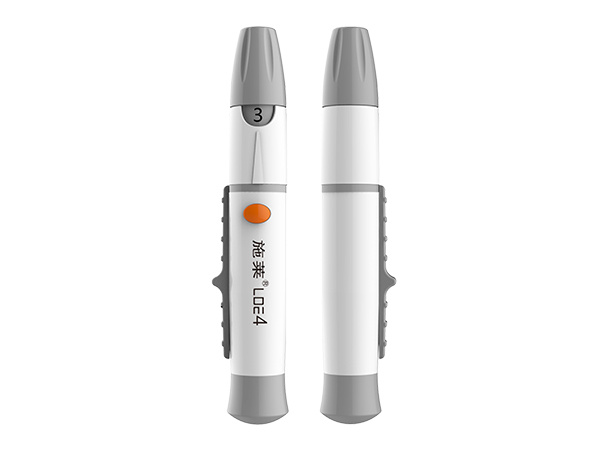
Repeated-use system evidence appears across the SteriLance examples in this discussion: our LDE4 is designed for repeated fingertip sampling with disposable lancets. It provides nine adjustable depth settings, supports single-hand operation, and uses a patented Soft-Stop-Control structure intended to stabilize the needle at launch and reduce vibration. Its listed product code is 02-2201, and the listed color is gray with white.
The compatibility documented for our products covers LDE4 and most mainstream lancing devices for Soft and SoftSure lancets. Both list 33G, 30G, 28G, and 26G. SoftSure is positioned for frequent glucose checks and low-pain fingertip sampling, giving buyers a named consumable option for a recurring monitoring scenario.
Decide How the Reusable Unit Will Be Governed
A blood lancet device assigned to one person creates a different management model from a holder controlled within a clinical protocol. Ownership, storage, identification, condition checks, permitted handling, replacement, and the applicable instructions should be established before repeated sampling begins. Reusability does not imply unrestricted sharing or indefinite service.
Within the range we document at SteriLance, LDE4 is packed one piece per box and 100 pieces per carton. Each of Soft and SoftSure is packed 100 pieces per box and 5,000 per carton. These quantities illustrate why reusable devices and recurring consumables require separate forecasts even though they operate as one sampling system.
A documented review can connect the chosen holder to compatible lancet codes, available gauges, depth-control instructions, launch features, assignment policy, consumable demand, and exception handling. We preserve those links in quotations and product discussions so a later change in one component triggers review of the complete configuration.
The best repeated-sampling device is not simply the model with the most settings. For repeated sampling, a suitable platform is one whose depth can be managed consistently, whose launch behavior and handling fit the routine, and whose compatible sterile consumables can be supplied and identified without ambiguity across every authorized cycle.
Disclaimer: This content is provided for general health education and informational purposes only. It does not constitute medical advice, diagnosis, or treatment. Individual health conditions vary, and no health education article can replace a face-to-face consultation with a qualified healthcare professional or licensed medical institution. If you have specific health concerns or feel unwell, please seek care from a licensed medical facility and do not delay treatment because of content on this platform.