

 EN





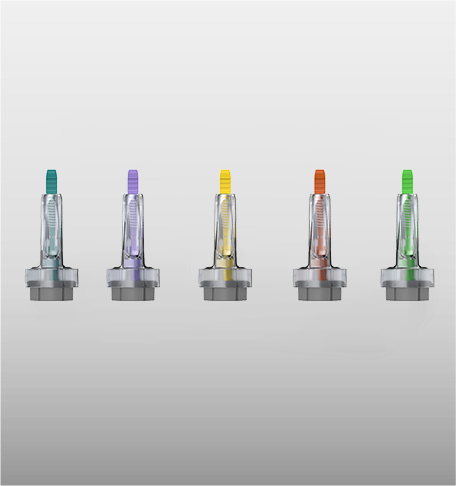
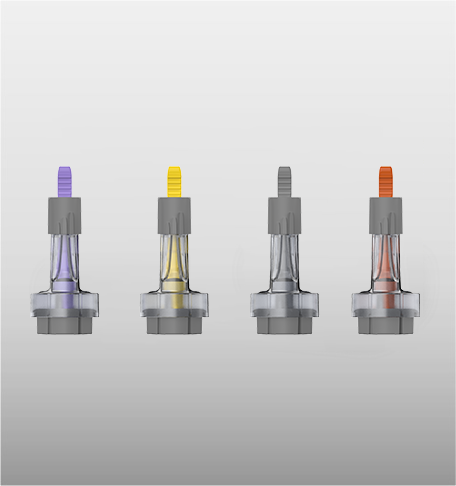

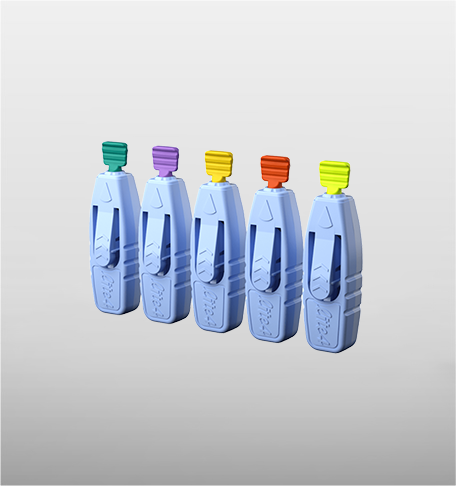


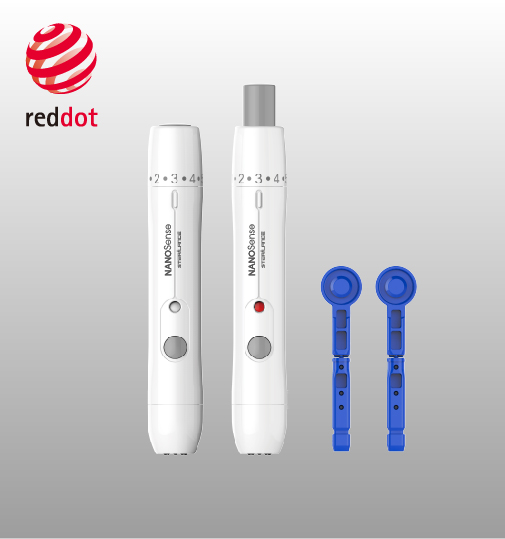





Three variables frame the decision, and each answers a different question. In this decision, gauge represents needle diameter, penetration depth represents how far the needle penetrates the skin, and activation represents how the operator initiates the puncture.
Our selection logic gives the variables an order without declaring one universally most important. The required capillary sample defines the task; gauge and depth define puncture geometry; activation and grip define how that geometry is delivered. Compatibility, single-use handling, and disposal complete the decision.
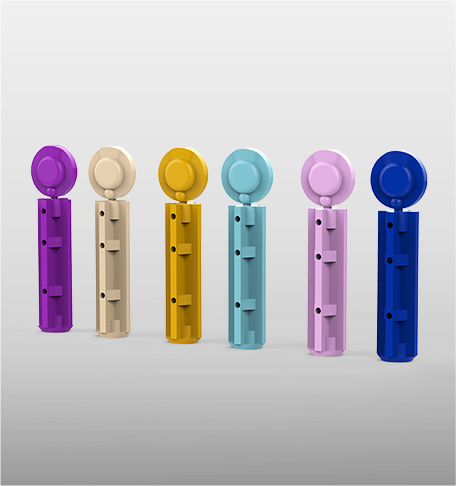
Begin with the Sample Requirement, Then Define Gauge
Defining a blood lancet needle specification starts with the intended capillary procedure, site, user group, and blood amount. Those conditions provide the basis for choosing a diameter; the thinnest listed option is not automatic.
Four listed gauges for Soft and SoftSure are 33G, 30G, 28G, and 26G, and a higher gauge number represents a thinner needle. Gauge changes width; it does not state the penetration depth produced by the device.
Reduced diameter may influence tissue displacement, while sample adequacy remains the practical limit. If the configuration fails to produce the needed amount, repeat puncture can change the overall comfort and workflow outcome.
Product compatibility comes with gauge selection in reusable systems. LDE4 works with Soft, SoftSure, and most mainstream reusable-device lancets, but the actual component and device still need to match the documented setup.
Our comparison keeps gauge tied to the product code and family. That prevents a diameter observation from being transferred to another mechanism or depth without evidence.
Required volume may vary with the test method and clinical context, so the procurement team needs input from the intended users. A catalog cannot determine that requirement from gauge alone.
Set Penetration Depth as an Independent Control
Depth determines how far a blood lancet needle travels into the skin. LDE4 provides nine depth settings and uses Soft-Stop-Control to stabilize needle motion during launch and reduce vibration.
Fixed products attach depth to the selected configuration. Press offers 30G, 28G, and 26G at 1.8 mm; Elite and ImPress provide 30G at 1.5 mm and 28G or 26G at 1.8 mm.
Three depth positions of 1.3, 1.8, and 2.3 mm are available on Elite Pro and Flex3 in 28G, 26G, and 23G versions. The selected depth can change while the gauge version remains the same.
Depth should be sufficient for the required sample without unnecessary penetration. An adjustable range increases options but also makes setting verification part of preparation, training, and documentation.
Gauge and depth can therefore be specified as two fields instead of one comfort category. Their interaction matters, yet changing one does not inherently change the other.
A deeper setting is not a general solution to an inadequate result. Component seating, contact angle, site condition, and technique may need review before the documented depth is changed.
Choose Activation for the Hand and Workflow
Our SteriLance blood lancet needle examples span several activation paths. Press and ImPress activate through pressure against the sampling site; Elite and Elite Pro use rear buttons; Lite3 uses a side button.
With pressure activation, contact and release are combined. Button activation separates positioning from a deliberate trigger movement. Either can support control when the grip, force direction, and access angle fit the intended procedure.
Activation does not determine gauge or depth. Press and Lite3 may share 30G, 28G, and 26G at 1.8 mm while creating different hand movements; Elite Pro combines rear-button activation with adjustable depth.
Grip and feedback add further distinctions. Handling features such as a non-slip square body, compact housing, T-shaped pads, or status indicator address handling or recognition at a particular stage instead of changing needle geometry.
We assess activation with representative users, gloves, positions, and disposal placement. A trigger that is easy to press but shifts the housing is not performing the same control function as one that preserves alignment.
The activation decision can also affect standardization across departments. A familiar trigger may reduce retraining, whereas another design may better preserve alignment in the actual sampling position; evidence should come from representative use.
Verify All Three Variables in One Exact Model
To verify a blood lancet needle, reconstruct the complete configuration: product code, gauge, depth, activation, grip, compatibility, cap condition, use-by status, single-use instruction, and disposal route.
Our SteriLance safety-product instructions identify capillary blood collection, prohibit reuse, and direct used devices into a suitable sharps container. Our product information supplies the gauge, depth, and activation facts for each named example.
A procurement specification can separate diameter, sample-related depth, and workflow-related activation into distinct acceptance fields. Samples and training can then be verified against the same model before volume release.
Selection does not end with gauge, depth, or activation alone. It ends when all three form a compatible, traceable configuration that obtains the intended sample through a controlled hand movement and proceeds directly into the required single-use disposal sequence.
The specified three-variable configuration remains valid only while its controlled fields remain unchanged. A revision to gauge, depth, trigger, product code, or instructions requires renewed review of sampling, training, and documentation before the substitute enters routine use. The review record should preserve the reason for each variable choice so any later change can be traced to a specific sampling need.
Disclaimer: This content is provided for general health education and informational purposes only. It does not constitute medical advice, diagnosis, or treatment. Individual health conditions vary, and no health education article can replace a face-to-face consultation with a qualified healthcare professional or licensed medical institution. If you have specific health concerns or feel unwell, please seek care from a licensed medical facility and do not delay treatment because of content on this platform.