

 EN













Total lancet cost accumulates across specification, training, inventory, traceability, disposal, documentation, and supply continuity—not only the quoted unit price. Configuration errors, unsuitable activation, excess inventory, unclear traceability, training burden, disposal planning, and supplier documentation can all affect total value.
A lifecycle cost account runs from specification through post-use handling. It turns broad quality claims into fields that can be checked: gauge, depth, activation, grip, pack density, instructions, quality-system evidence, regulatory status, and the ability to maintain the specified product over time.

Compare Clinical Fit Before Comparing Unit Cost
The exact sampling requirement belongs at the top of a safety lancet price review. Gauge, penetration depth, patient or user group, expected blood amount, and activation environment define whether the quoted product is technically suitable.
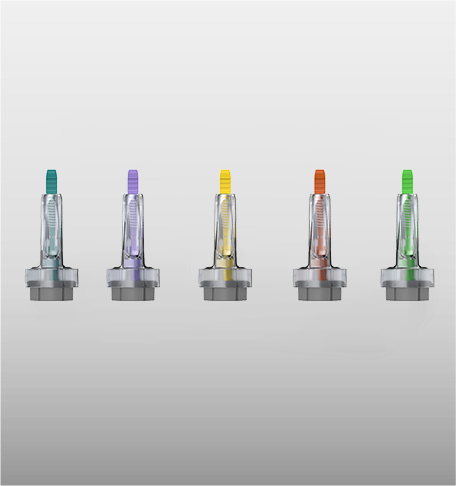
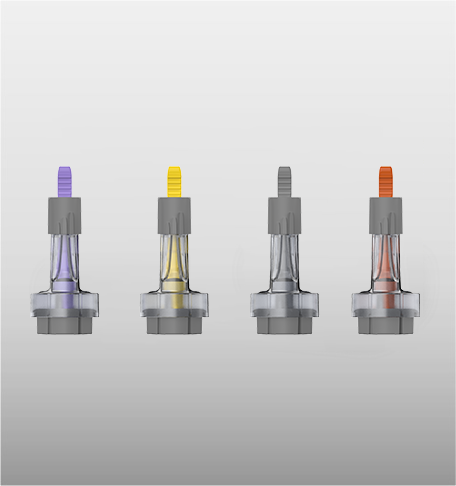
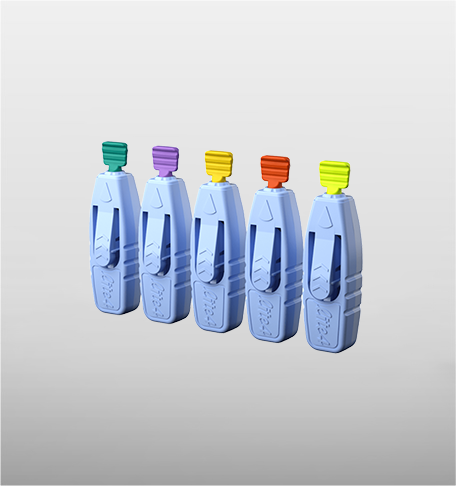
The configurations discussed here include ImPress and Elite pair 30G with 1.5 mm and 28G or 26G with 1.8 mm, illustrating why a category-level quotation can hide important configuration differences.
Adjustable Elite Pro and Flex3 provide 28G, 26G, and 23G with selectable depths of 1.3, 1.8, and 2.3 mm. Adjustment may serve a mixed-use setting but adds setting control to training and procedure design.
A low-priced configuration that does not fit the required sample or workflow may create repeat attempts, substitutions, or unused stock. Those outcomes are not visible in the unit figure but belong to the economic comparison.
We recommend fixing product code, gauge, depth, and activation in the technical specification before commercial bids are normalized. Price then refers to comparable devices, not merely similar names.
Quoted prices also need a consistent unit. Piece, inner box, and carton values can look different while representing the same supply quantity, and pack density affects freight and storage assumptions.
Measure Handling, Training, and Post-Use Control
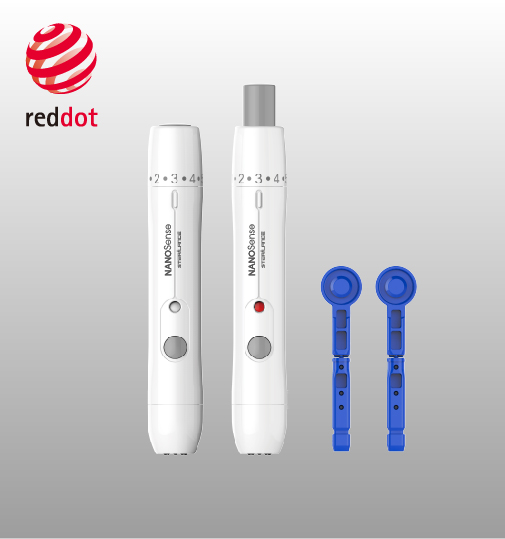
Every safety lancet creates a sequence that staff must perform reliably. Pressure-activated Press, Press Plus, and ImPress use a different hand-force path from rear-button Elite and Elite Pro, side-button Lite3, or adjustable Flex3.
Grip and feedback can affect training. Handling distinctions include Press's non-slip square body, ImPress's compact easy-grip form, Elite Pro's T-shaped grip pads, and Elite's built-in status indicator.
Instructions establish boundaries beyond activation. The products are single-use, the use-by date should be checked, a device with a previously removed cap should not be used, and the activated unit belongs in a suitable sharps container.
Training time, model-identification errors, setting errors, and disposal observations can be measured during representative trials. A feature is valuable when it reduces a defined workflow problem, not simply because it appears in the catalog.
Complaint and incident review should keep product identity and lot information attached to the event. Traceability affects investigation speed and corrective action even though it does not change the initial purchase price.
Include Packaging and Supplier Evidence in Total Value
Packaging arithmetic differs across our safety lancet examples at SteriLance. Common boxes for Press, Press Plus, Lite3, Elite Pro, and Flex3 contain 100 pieces, with 1,000 pieces per carton.
Elite is packed 50 pieces per box and 1,000 per carton, while ImPress is 100 per box and 2,000 per carton. Equal annual unit volume can still produce different storage, replenishment, opened-box, and carton requirements.
Supplier review can include EN ISO 13485:2016, MDSAP, the UL 21 CFR Part 820 quality-system credential, and China Medical Device GMP quality-system credentials, together with NMPA registration, FDA 510(k), and CE marking under the EU MDR status.
Credentials provide context for system oversight; they do not replace model-level specifications, incoming checks, lot traceability, or local trials. Market-specific review should confirm that scope and relevance match the product under review.
We connect commercial comparison with documentation availability, change control, complaint handling, and continuity of the specified configuration. A lower price loses value if product identity or evidence cannot be maintained.
Documentation should be current and attributable to the supplier and product scope. A certificate name copied into a quotation is less informative than verifiable scope, validity, and the records supporting the shipped configuration.
Build a Comparison That Survives the Contract Term
A safety lancet scorecard can separate technical fit, handling, safety instructions, logistics, supplier controls, and price. Weighting should reflect the actual sampling environment, not an identical formula for every buyer.
For this comparison, we provide the model specifications, packaging quantities, instructions, and listed quality and regulatory credentials available from SteriLance. Our evidence gives procurement concrete fields to verify without replacing its own approval process.
The awarded specification should define acceptable product codes and changes, required documents, pack counts, labeling, traceability, notification, and review procedures. These controls keep later shipments comparable with the evaluated sample.
Price becomes meaningful after the product, workflow, supply unit, and evidence package are aligned. A durable comparison selects the lowest total burden for the required performance, not simply the smallest number attached to a device that may differ in critical ways.
After award, lifecycle evidence continues through complaint records, delivery performance, expiry loss, change notices, and training observations. Linking each event to the approved product code reveals costs or benefits that the initial quotation could not show and helps prevent an unrelated configuration change from distorting the comparison.
Disclaimer: This content is provided for general health education and informational purposes only. It does not constitute medical advice, diagnosis, or treatment. Individual health conditions vary, and no health education article can replace a face-to-face consultation with a qualified healthcare professional or licensed medical institution. If you have specific health concerns or feel unwell, please seek care from a licensed medical facility and do not delay treatment because of content on this platform.