

 EN













Pain, handling, and post-use control describe three different stages of capillary sampling and need separate comparison fields. Combining them into one vague idea of quality can hide important tradeoffs: a fine needle may address one source of discomfort, while activation, containment, and disposal govern other outcomes.
The three dimensions are first recorded independently and then examined for interaction. The comparison record contains needle gauge and depth, launch behavior, activation steps, grip, single-use controls, post-puncture handling, and pack format under the conditions in which the product will actually be used.
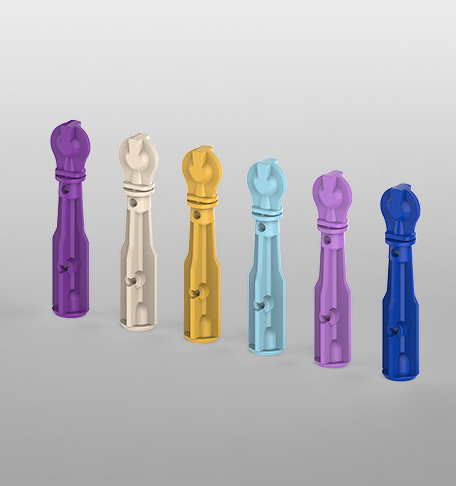
Separate Puncture Geometry from the Perception of Pain
Pain-related comparison of single-use lancets begins with gauge and penetration depth. Here, a higher gauge number represents a thinner needle, whereas depth describes travel into the skin; neither number can substitute for the other in a product specification.
Sensation also reflects needle motion. Side movement or vibration during launch can add disturbance beyond the intended forward path, so a controlled drive structure and stable contact deserve attention alongside nominal gauge.
Skin condition, puncture site, contact force, and required blood amount can change both sensation and sample adequacy. A configuration that feels mild but repeatedly produces an inadequate sample may lead to another puncture and a less favorable overall experience.
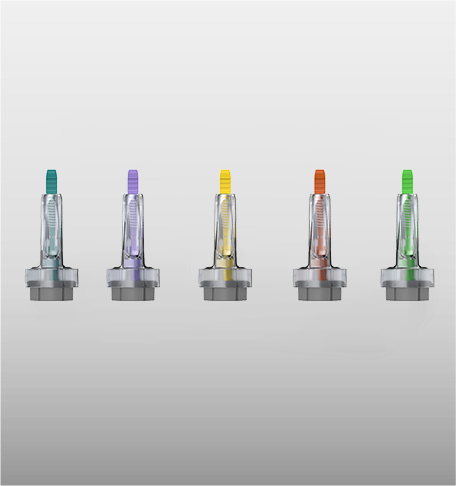
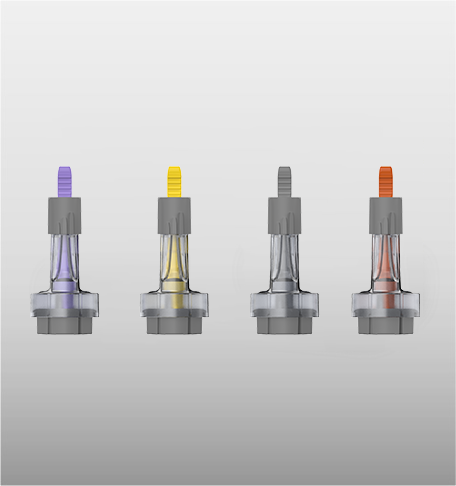
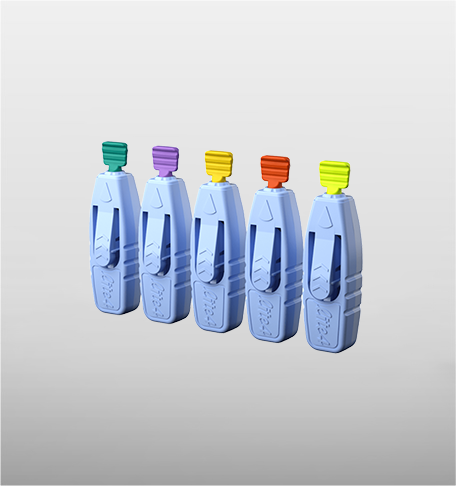
Soft and SoftSure provide 33G, 30G, 28G, and 26G options. Used with LDE4, they can be evaluated across nine depth settings, while its Soft-Stop-Control structure is intended to stabilize launch and reduce vibration.
Our trials hold as many variables constant as possible. Gauge comparisons keep device and depth stable; depth comparisons keep gauge stable; observations include sensation together with sample adequacy, without treating comfort as an isolated score.
A structured comfort record can use the same wording and rating scale across configurations, while noting site and sample result. Consistent observation cannot remove personal variation, but it reduces the chance that memory or an unusually difficult attempt determines the comparison.
Trace Safety from Opening the Pack to Disposal
A safety review of single-use lancets covers more than whether the needle is visible. It follows the device through cap inspection, activation, the post-activation state, transfer from the sampling site, and placement in a suitable sharps container.
Single-use protection matters because reuse introduces contamination and performance concerns. The applicable instructions for use specify single-use capillary blood collection, require checking relevant date and cap conditions, prohibit reuse, and direct the used device into appropriate sharps disposal.
Integrated fixed and adjustable safety models reduce handling of a separate exposed sharp. That architectural difference should still be considered with the actual activation sequence, since premature firing, incomplete activation, or unnecessary manipulation can create workflow problems.
A comparison can document whether the cap is intuitive to remove, whether hands remain behind the working end, whether the post-activation state is recognizable, and whether the used unit moves directly into the disposal route without recapping.
A separate line distinguishes product features from facility controls. Device design supports safer handling, but staff training, sharps-container placement, local procedure, and correct disposal capacity remain part of the complete safety system.
Observe Ease of Use as a Sequence of Movements
Ease of use in single-use lancets can be mapped step by step, not reduced to a subjective first impression. Opening, gripping, positioning, activating, recognizing completion, collecting the sample, and discarding the unit each create a possible point of friction.
Among the SteriLance products we use in this discussion, Press combines pressure activation with a non-slip square body and a cap-off, press-and-collect sequence. Compact ImPress uses one-step pressure activation in a body designed for an easy grip.
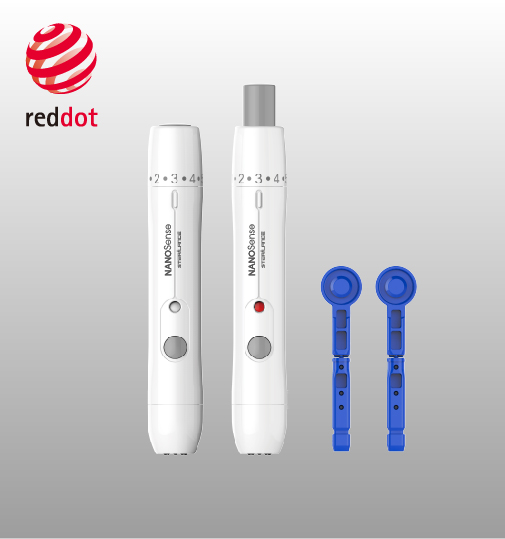
Button-operated models create different hand movements. On Lite3, a side button responds to gentle fingertip pressure, while Elite uses a rear-button trigger and includes a status indicator that can support recognition of device state.
Grip pads on Elite Pro have a T-shaped form, and the model provides three adjustable depths; Flex3 pairs one-step activation with three depth settings. Adjustment expands the available configurations but also introduces a setting choice that must be understood and verified.
Gloves, hand size, access angle, user dexterity, and training influence which sequence feels straightforward. We test representative users in realistic positions because ease demonstrated on a desk may not carry into a clinical station or home routine.
Build a Balanced Scorecard for the Intended Setting
An actionable comparison assigns separate fields to single-use lancets: gauge and depth for puncture geometry, launch stability for motion, activation and grip for handling, and single-use and disposal requirements for post-use control.
Packaging belongs on the same scorecard. Model-specific box and carton quantities affect storage, issue frequency, inventory rotation, and the number of units available at each use point even when the individual procedure is unchanged.
The range documented in our work at SteriLance offers standard lancets and multiple pressure-, side-button-, rear-button-, and adjustable safety formats. Our product information keeps those distinctions visible so one attractive feature is not mistaken for proof that every other dimension is equally suitable.
The rating should reflect the intended population and workflow, not an abstract winner. The stronger choice is the exact configuration that obtains the required sample with controlled motion, supports one-way use and disposal, and can be performed consistently by its actual users.
Weighting also needs to be declared in advance. A hospital may place greater emphasis on post-use control and staff handling, while a home-use evaluation may give more weight to a simple, repeatable sequence; neither weighting can be assumed for every setting.
Disclaimer: This content is provided for general health education and informational purposes only. It does not constitute medical advice, diagnosis, or treatment. Individual health conditions vary, and no health education article can replace a face-to-face consultation with a qualified healthcare professional or licensed medical institution. If you have specific health concerns or feel unwell, please seek care from a licensed medical facility and do not delay treatment because of content on this platform.