
 EN





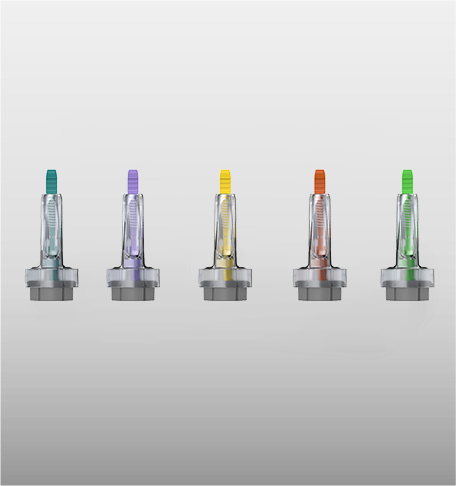
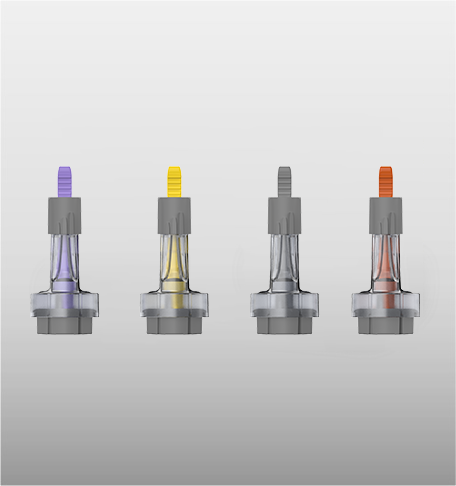

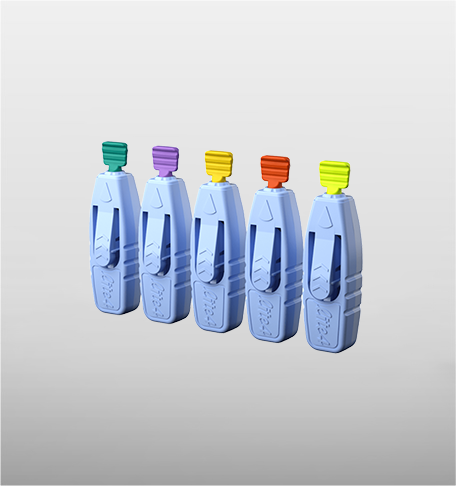




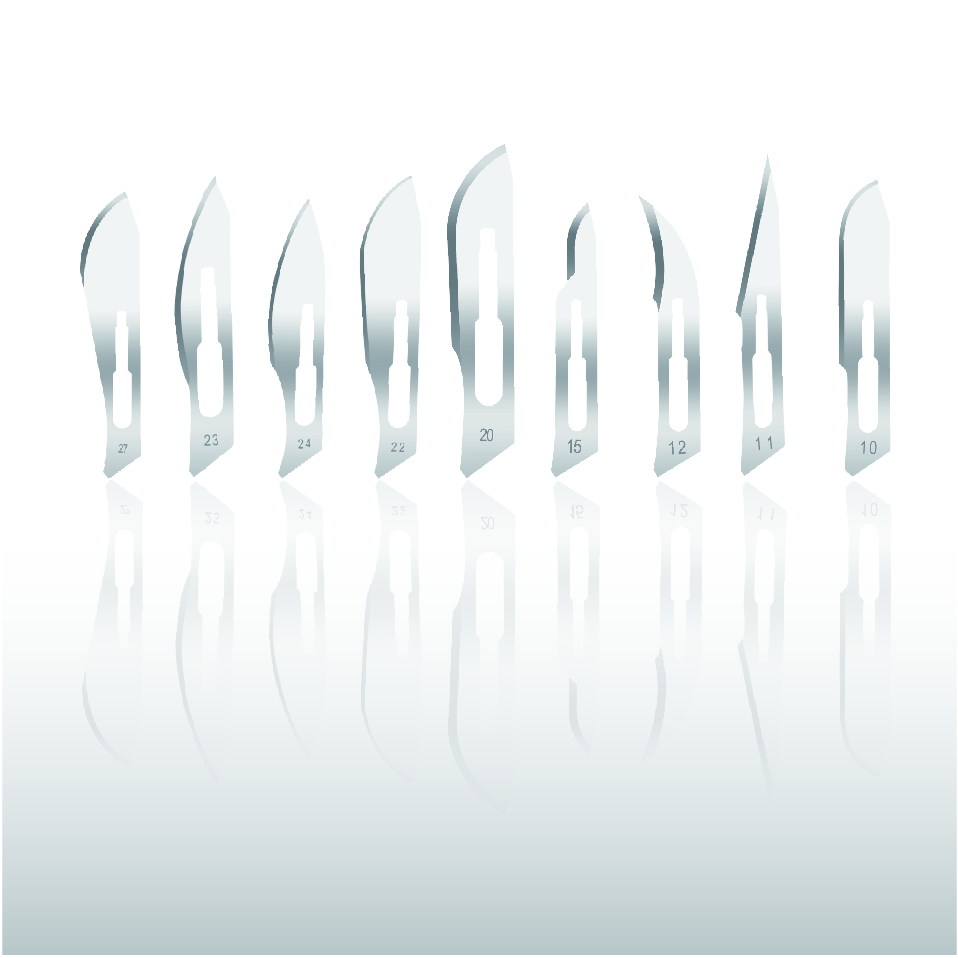


Accidental exposure becomes easier to analyze when two paths are drawn separately: the sharp's path inside the mechanism and the operator's hand path around the housing. Design reduces risk when those paths meet only at the intended puncture and separate again immediately afterward.
This analysis maps concealment, deployment, retraction, locking, grip, trigger direction, and status recognition onto those paths. This approach distinguishes features that control needle motion from features that stabilize the user's contact with the device, then connects both to single-use disposal.
Keep the Sharp Path Enclosed Except at Puncture
Before activation, a safety lancet needle remains concealed in the device and protected by the intact cap. The use-by date and cap condition define whether the unit should enter the procedure; prior cap removal changes the known protective state.
Deployment should occur only through the intended trigger and along the defined puncture path. Here, gauge and depth characterize the needle, while the housing and mechanism guide its movement. An exposed sharp is not required during preparation.
Retraction reverses the needle's outward travel immediately after tissue penetration. The point returns into the housing without a separate recapping action, limiting the interval in which hands or nearby objects could contact it.
Irreversible locking preserves the retracted state. A contained needle that cannot be re-exposed or fired again supports the single-use boundary, though the used housing still belongs in a suitable sharps container.
Mapping each device state identifies every moment when the device changes state: capped, prepared, positioned, triggered, retracted, identified as used, and discarded. Hazards and user actions can then be assigned to a state instead of discussed as one undifferentiated procedure.
Direct the Hand Path Away from Unstable Movement
Control of a safety lancet needle also depends on where fingers grip and where force is applied. External grip geometry, including compact forms or dedicated pads, can reduce rotation and repositioning without changing the internal needle dimensions.
Contact activation directs force toward the sampling site. Rear and side buttons introduce other finger movements, so their position relative to the grip matters. No trigger format is automatically best for every hand, glove, or working angle.
Spring systems address internal launch behavior while grip features address the housing. These layers can work together, but one should not be used as evidence for the other. Trials can record device shift separately from perceived mechanism behavior.
A status cue reduces uncertainty about whether activation has occurred. Clear recognition can prevent extra trigger attempts or unnecessary manipulation, but visual feedback cannot replace retraction and locking of the sharp.
Activation force deserves observation in context. Excessive movement may disturb positioning, while an unintended trigger can start the puncture before placement is stable. Comparative testing records representative-user behavior; the mechanism name alone cannot predict it.
See How Features Control Different Paths
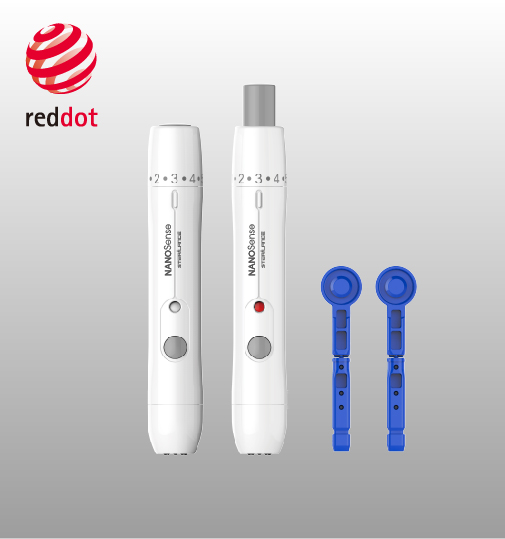
Our portfolio comparison at SteriLance begins with Press, a safety lancet needle option that uses pressure activation and a non-slip square body, joining a direct force path with external grip control. Compact ImPress construction combines an easy grip with one-step pressure activation.
Rear-button activation on Elite is combined with a twin-spring mechanism and status indicator. Elite Pro provides T-shaped grip pads, a double-spring mechanism, and selectable depths of 1.3, 1.8, and 2.3 mm.
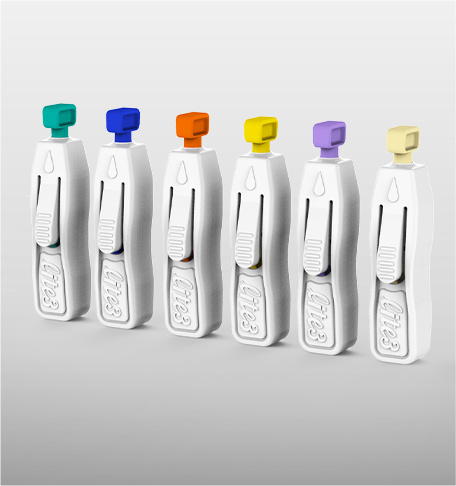
Lite3 uses side-button activation, while Lite4 uses a launch button; these activation interfaces change the hand movement required before puncture. These alternatives change the hand path before release, while the concealed-sharp, retraction, and locking architecture controls the needle path before and after puncture.
We keep the functions distinct in product descriptions. Grip does not prove containment, a status indicator does not stabilize the housing, and depth adjustment does not replace the single-use lock. Each feature is evaluated at its point of influence.
Housing dimensions influence how closely fingers approach the sampling surface and how the device is oriented. This discussion examines those spatial relationships together with trigger access, since a secure grip can still place a finger poorly if the use sequence is misunderstood.
Verify Separation Through the Disposal Step
Assessment of a safety lancet needle can observe cap removal, hand placement, trigger direction, housing movement, needle concealment, fired-state recognition, post-puncture locking, and transfer to the container.
Our SteriLance instructions prohibit reuse, require an intact cap and valid use-by date before use, and direct the activated device into a suitable sharps container. Our evaluation retains that complete sequence around the mechanical design.
Representative-use trials may include gloves, constrained access angles, interruptions, and realistic container placement. Near-miss observations are valuable because they show where hand and sharp paths approach one another even when no contact occurs.
Exposure control is supported when the sharp remains inside the housing except for the intended puncture and the operator does not need to place a hand in its path. Stable handling, automatic return, irreversible locking, clear status, and direct disposal maintain that separation.
Post-use transfer introduces a final hand path around the container opening. We look at reach distance, opening size, obstructions, and whether staff are tempted to set the unit down, because mechanism performance cannot compensate for an impractical disposal station.
Training should name the visible and tactile signs associated with each model instead of relying on generic language. Such model-specific training reinforces the designed sequence, not to teach users to test, shake, recap, or otherwise manipulate an activated unit.
Disclaimer: This content is provided for general health education and informational purposes only. It does not constitute medical advice, diagnosis, or treatment. Individual health conditions vary, and no health education article can replace a face-to-face consultation with a qualified healthcare professional or licensed medical institution. If you have specific health concerns or feel unwell, please seek care from a licensed medical facility and do not delay treatment because of content on this platform.