
 EN













Sourcing records often capture needle length and stop too early. Length is essential, but a procurement specification remains incomplete without diameter, tip construction, cannula wall, lubrication, sterilization, hub architecture, safety controls, compatibility, and the unit in which goods are packed.
We build the comparison sheet in the same order that ambiguity is removed: decode the size notation, document construction, identify interface and protection features, then normalize packaging and verification evidence. This sequence turns a catalog description into an auditable purchase definition.
Decode Every Size Pair Without Collapsing the Variables
Recording insulin pen needles sizes requires both gauge and millimeter length. Gauge is the needle-size measure in which a higher number indicates a thinner needle; length states a different geometric property and must occupy its own field.
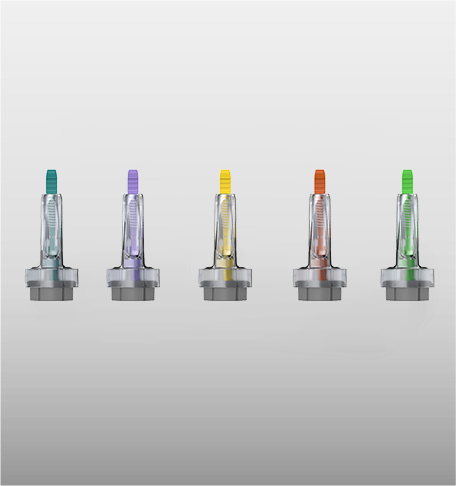
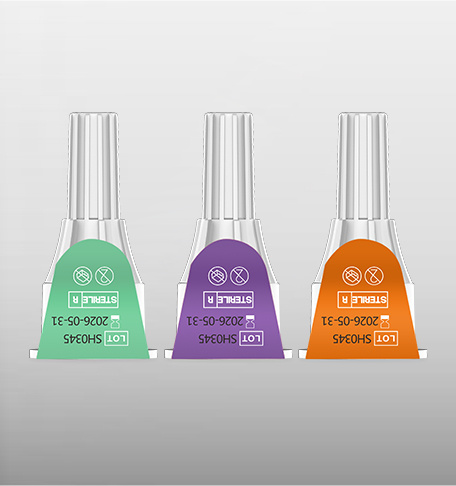
Classic, Classic Pro, Plus, and Plus Pro list 32G × 4 mm, 31G × 5 mm, and 31G × 6 mm. Procurement tables should preserve the multiplication-style pair instead of grouping all three merely as short needles.
Safety Pen Needles list 31G × 5 mm, 30G × 5 mm, and 30G × 8 mm. The two 5 mm entries demonstrate that equal length can coexist with different gauges and should not be treated as one specification.
Procurement records can include allowable product codes beside each approved pair. This limits unintended substitution and makes receiving inspection more reliable when several visually similar boxes or variants enter the same inventory.
Our size table is descriptive, not prescriptive for an individual user. Clinical suitability depends on the person's circumstances and applicable professional guidance, which a sourcing document cannot determine by dimensional notation alone.
Units and symbols should remain consistent across the request, quotation, purchase order, and receiving record. Writing 31G × 5 mm in the same form at every stage reduces ambiguity introduced by reordered or abbreviated descriptions.
Specify Construction and Sterilization as Separate Fields
Beyond insulin pen needles sizes, the bill of characteristics should identify bevel, wall design, coating, and sterilization. These terms describe different aspects of the needle and should not be combined under a broad label such as premium construction.
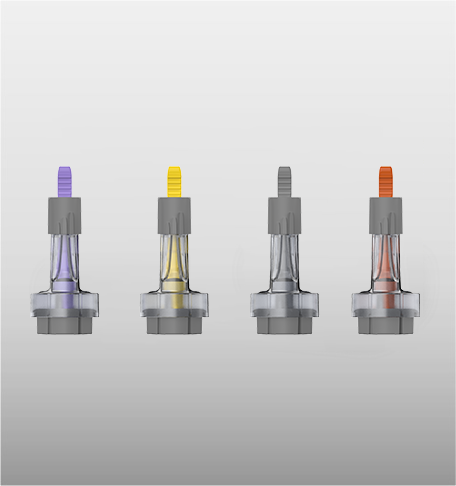
Easydrip Classic has a 3-bevel tip, while Easydrip Classic Pro uses a 5-bevel tip; Easydrip Plus and Plus Pro follow the same distinction. The exact family and variant remain necessary even when size is unchanged.
The Classic cannula uses an austenite extra-thin-wall design, optimized bevel geometry, and medical-grade silicone coating on both ends. Each item can be listed separately for documentation review and technical equivalence assessment.
Sterilization is listed as Cobalt-60 gamma sterilization. A procurement file may also require supporting sterilization, packaging-integrity, storage, and shelf-life records appropriate to the supplier qualification process and destination market.
We define acceptance against documentary facts, not marketing adjectives. If an alternative is proposed, its tip, wall, surface, and sterilization evidence can then be compared field by field instead of accepted because the nominal dimensions match.
Technical equivalence also depends on how each claim is evidenced. A specification can state the required document, revision, and acceptance criterion, allowing reviewers to distinguish a catalog statement from a verified characteristic of the offered product.
Capture Hub Geometry, Contact Area, and Safety Shielding
Interface-related specifications give insulin pen needles sizes their connection and handling context. For lateral stability, Easydrip Plus and Plus Pro add Hextra Tech hub geometry, together with enlarged inner and outer caps intended to improve grip.
The Plus contact platform is described as twelve times larger than a standard pen needle and is intended to support controlled penetration depth. Within our SteriLance range, we document that platform independently from size and bevel so its function remains explicit.
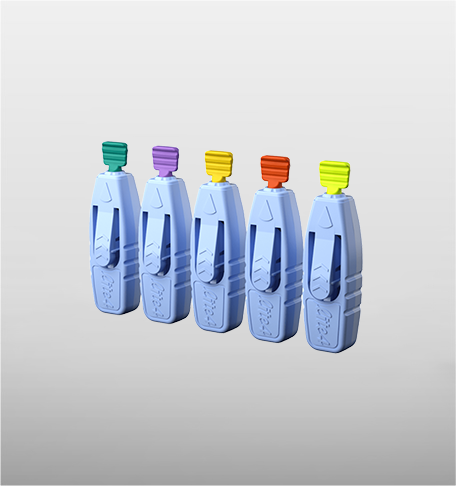
Needlestick protection in Safety Pen Needles comes from safety-shield hubs designed to address exposure from either end. They also incorporate lateral stability and an enlarged skin-contact platform, while the shielding mechanism adds model-specific post-use handling requirements.
Compatibility requirements for the target insulin pen belong in this section of the specification. Nominal gauge and length do not establish that an interface is suitable, and procurement should rely on applicable product information and instructions.
Our sample review follows the complete interaction: attachment, cap handling, stability, insertion control, removal, shield state where present, and disposal. That observation identifies requirements that a dimensions-only tender would miss.
Normalize the Commercial Unit and Lock the Approved Record
Commercial comparison of insulin pen needles sizes becomes meaningful after all technical fields match. Classic, Plus, and Safety lines are each packed at 100 pieces per box and 2,000 per case, providing consistent stated units for quotation normalization.
Equal pack counts do not prove equivalent products. Quotes should retain family, exact gauge and length, bevel type, wall and coating details, sterilization method, hub features, shielding, compatibility evidence, and included documentation.
The range we manufacture at SteriLance supplies the listed configurations across our three pen-needle families. Our sourcing support can map a requested specification to the corresponding product, while the purchaser retains its own qualification, market, and clinical-use requirements.
The approved specification record should control later orders and substitutions through exact identifiers and change notification. A sufficiently detailed sourcing specification does more than name a length: it preserves the entire combination of geometry, construction, interface, protection, packaging, and evidence that was actually evaluated.
Change control should cover packaging and documentation as well as the physical needle. A revised box count, label, sterilization record, or compatibility statement may affect inventory or approval even when gauge and length remain unchanged.
Disclaimer: This content is provided for general health education and informational purposes only. It does not constitute medical advice, diagnosis, or treatment. Individual health conditions vary, and no health education article can replace a face-to-face consultation with a qualified healthcare professional or licensed medical institution. If you have specific health concerns or feel unwell, please seek care from a licensed medical facility and do not delay treatment because of content on this platform.