

 EN





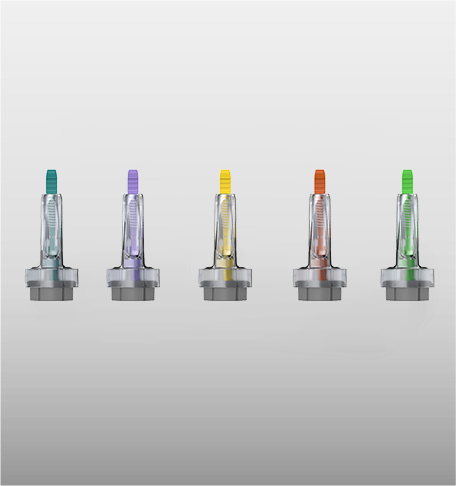
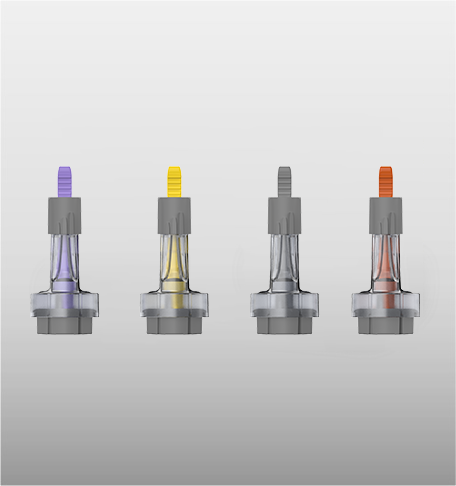

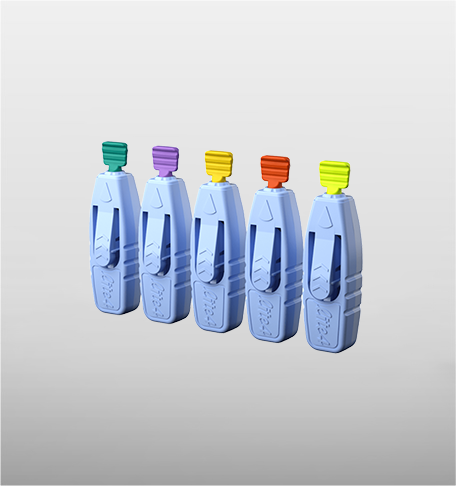


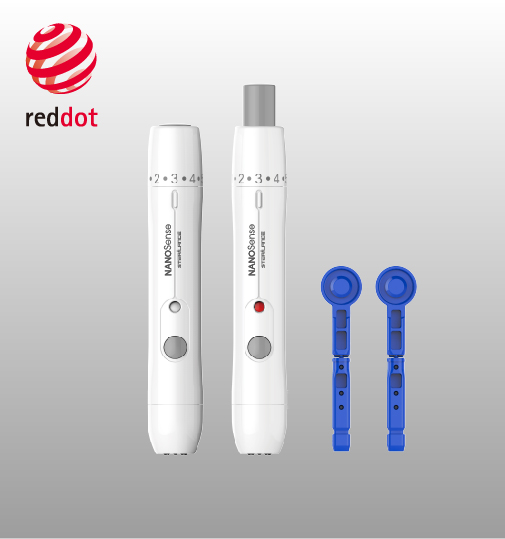




Pen needles that share a general purpose can differ substantially in the way they penetrate, stabilize, shield, and integrate into a supply system. Treating them as interchangeable because they attach to an insulin pen removes the very details that determine intended use.
The comparison uses four layers and does not collapse them into a single ranking: first size and cannula construction, then tip and surface design, followed by hub and safety architecture, and finally compatibility and packaging. Each layer answers a different product question.
Interpret Gauge and Length as Independent Dimensions
The specification of an insulin pen needle begins with gauge and length. Under gauge notation, a higher number indicates a thinner needle, while millimeters state needle length; a 32G × 4 mm product differs from a 31G × 6 mm product in both gauge and length.
Easydrip Classic, Classic Pro, Plus, and Plus Pro are offered in 32G × 4 mm, 31G × 5 mm, and 31G × 6 mm. Keeping those paired values intact prevents a length-only table from hiding diameter changes.
Listed Safety Pen Needle sizes are 31G × 5 mm, 30G × 5 mm, and 30G × 8 mm. Their range illustrates why a family comparison needs exact configurations, not a general statement that one line is shorter or thinner.
Size selection belongs within appropriate clinical guidance and device instructions because user needs vary. A catalog comparison can clarify geometry but cannot determine a personal injection regimen or replace consultation with a qualified healthcare professional.
We further record product code and family next to every size. Identical nominal dimensions do not establish identical bevel, wall, hub, shield, sterilization, or packaging features.
A comparison table should never infer diameter from length or length from diameter. Separate columns also make it easier to detect whether a proposed substitute changes only one dimension or moves to a different combination entirely.
Examine the Needle Tip, Wall, and Surface Together
Tip architecture changes the entry geometry of an insulin pen needle. A 3-bevel tip appears on Easydrip Classic, whereas Classic Pro uses a 5-bevel tip; Plus and Plus Pro follow the same distinction.
The Classic range uses an austenite extra-thin-walled cannula, optimized bevel geometry, and medical-grade silicone coating on both needle ends. Wall design relates to the internal passage, while coating and bevel concern interaction at the needle surfaces.
One construction term alone cannot represent injection comfort. Sensation can vary with user, site, technique, and other conditions, so product claims need to remain tied to stated design facts, not universal outcomes.
The listed sterilization method for the range is Cobalt-60 gamma irradiation. Sterilization information belongs in the comparison record alongside packaging integrity, storage conditions, shelf-life documentation, and instructions.
Our technical review keeps these fields distinct. A five-bevel tip is a tip feature; an extra-thin wall is a cannula feature; silicone is a surface treatment; irradiation is a sterilization method.
Compare Stability and Needlestick Protection by Architecture
Hub design can change how an insulin pen needle is supported during use. Within the Plus family, Hextra Tech geometry supports lateral stability, and a skin-contact platform is described as twelve times larger than that of a standard pen needle.
In our SteriLance product comparison, the enlarged platform is intended to support controlled penetration depth, while enlarged ergonomic inner and outer caps address handling. These features operate at different points and should be evaluated separately.
Safety Pen Needles place needlestick protection at the center of the design. Their safety-shield hub addresses exposure from either end of the needle and is combined with lateral stability and the enlarged skin-contact platform.
A safety shield changes the handling sequence and requires model-specific instruction. Procurement review can observe attachment, positioning, injection, shield behavior, removal, recognition of the post-use state, and transfer to the proper disposal route.
We do not assume that every user needs the same architecture. Home-use priorities and professional exposure controls may differ, so the intended environment should define whether conventional or shielded handling is appropriate.
Exposure-control priorities may also depend on who handles the needle after injection. The user, caregiver, and healthcare worker can encounter different steps, so the relevant safety sequence should be mapped for the actual environment, not described generically.
Reassemble the Fields into One Comparable Product
A useful insulin pen needle matrix places exact size, bevel count, wall design, coating, sterilization, hub geometry, contact platform, safety shielding, compatibility, and package quantity on the same row for each proposed model.
All three product lines use standard packaging of 100 pieces per box and 2,000 per case. Equal counts simplify one part of normalization but do not erase technical differences among Classic, Plus, and Safety families.
A field-level reading of our SteriLance portfolio provides the reference; we offer the three families as distinct combinations of cannula, tip, hub, and safety features. Our documentation supports a field-by-field comparison instead of presenting one family name as a summary of every characteristic.
The comparison is complete only after nominal dimensions are connected to construction and workflow. Products with similar size labels may serve different handling and protection needs, so the defensible choice is the exact compatible configuration whose full architecture fits the intended setting.
Receiving and storage teams need the same identifiers used by clinical or technical reviewers. Maintaining a shared product code, family, and size description reduces the risk that a commercially similar item is accepted without review of its different architecture.
Disclaimer: This content is provided for general health education and informational purposes only. It does not constitute medical advice, diagnosis, or treatment. Individual health conditions vary, and no health education article can replace a face-to-face consultation with a qualified healthcare professional or licensed medical institution. If you have specific health concerns or feel unwell, please seek care from a licensed medical facility and do not delay treatment because of content on this platform.