

 EN
EN 

















A valid 28G-versus-30G comparison begins by fixing every variable that is not gauge; within that comparison, 30G is the thinner needle. That difference can affect puncture area and penetration force, yet a fair comparison also needs equal attention to depth, launch stability, required sample, and testing conditions.
The comparison examines the two sizes through controlled scenarios instead of naming a universal winner. First the diameter relationship is established, then reusable and fixed-depth systems show what can be held constant and what may change. Individual comfort varies, while sampling adequacy remains tied to the intended procedure.
Establish the One Difference Gauge Actually Describes
Among blood lancets sterile, 30G identifies a thinner needle than 28G because higher gauge numbers correspond to smaller diameters. With depth, tip geometry, and launch conditions held comparable, a finer needle has a smaller cross-section at entry and may require less penetration force than a much larger-diameter needle. Those facts describe geometry and force, not a guaranteed comfort ranking.
Gauge does not state penetration depth. A 30G product may be shallower, equal in depth, or part of an adjustable system depending on the model. Without the associated depth, a 28G-versus-30G comparison can wrongly attribute two simultaneous changes to diameter alone.
Nor does gauge specify required blood volume. Site, technique, depth, launch, and specimen handling influence whether the intended sample is obtained. Selection must balance the physical difference between diameters with the needs of the test and the goal of avoiding preventable repeat attempts.
Sterility and single-use handling are common requirements for both sizes and do not distinguish 28G from 30G. Verified configurations keep both gauge and the surrounding device system named in the same comparison.
Hold the Reusable Device Constant for a Cleaner Comparison
A reusable platform can place both 28G and 30G blood lancets sterile in the same holder family. Keeping the compatible device, depth setting, launch mechanism, site, and authorized technique consistent narrows the comparison. Any observed difference is then less confounded by unrelated product architecture.
Depth-setting consistency is particularly important. A user who changes from 28G to 30G while also moving the lancing device has changed two physical variables. Recording the setting before and after a trial prevents an unnoticed penetration change from entering the gauge comparison.
Testing frequency may influence the value placed on a finer option, especially where fingertip punctures recur. Even so, the chosen configuration must support the intended sample pathway. Comfort-oriented evaluation should not detach from specimen adequacy or the instructions governing the reusable device.
Compatibility completes the control. Similar-looking consumables should not be assumed to operate identically in the holder. We verify the supported lancet family, gauge label, loading fit, packaging, and device instructions before comparing user observations. Lot identity and the condition of the reusable lancing device can also be recorded, keeping later observations tied to the same approved equipment and consumable specification, not to an assumed equivalent.
Use Matched Products to See Where 28G and 30G Diverge
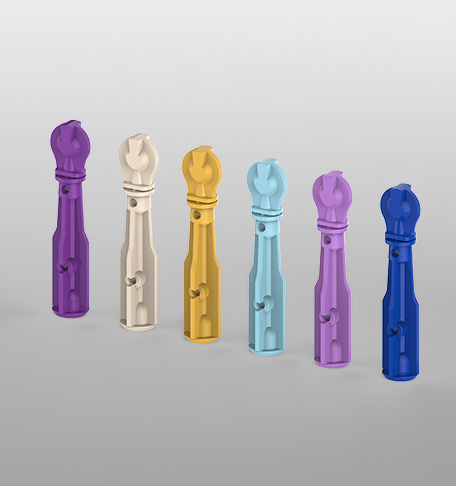
A same-platform test case is available within our blood lancets sterile range: Soft and SoftSure offer both 28G and 30G, along with 26G and 33G. In our SteriLance portfolio, both families are compatible with LDE4 and most mainstream lancing devices, allowing the two gauges to be considered within the same reusable platform.
SoftSure is specifically intended for low-pain fingertip sampling and frequent glucose checks. Depth control on LDE4 in our range provides nine adjustable positions, while a patented SSC structure is intended to stabilize the needle at launch and reduce vibration. The holder setting should remain consistent during a gauge-focused comparison.
Fixed-depth safety products reveal a matched case. Matched Press and Press Plus versions list 28G and 30G at the same 1.8 mm depth, so published penetration is held constant across those two codes. Trigger, body, and product family also remain common, strengthening the dimensional comparison.
Selected Elite and ImPress configurations show why cross-code conclusions require caution: the listed 30G configuration uses 1.5 mm, while the listed 28G configuration uses 1.8 mm. A difference in sampling or comfort between those codes would reflect both needle diameter and depth, not gauge in isolation.
Choose Through the Conditions of the Intended Test
A review of 28G and 30G sterile blood lancets should include documentation of device architecture, exact depth, launch stability, site, testing frequency, sample requirement, user feedback, packaging, and instructions. The thinner 30G geometry is relevant evidence, but it does not settle every operational or individual question.
The portfolio we maintain at SteriLance provides both reusable-device and safety-lancet examples for this analysis. At this point, we use Soft or SoftSure with LDE4 to hold the platform steady, and Press or Press Plus to compare fixed 1.8 mm configurations. Elite and ImPress demonstrate a deliberately unmatched-depth case.
Results should be interpreted within the observed setup. A favorable experience at one setting and site does not prove that the same gauge will behave identically under another technique or sample requirement. Qualified healthcare guidance remains the basis for individual use decisions.
Between 28G and 30G, the certain difference is diameter: 30G is thinner. The practical consequence emerges only after depth, launch, specimen need, and repeated-use conditions are specified. A controlled comparison therefore produces a more useful answer than declaring either gauge universally more comfortable or effective.
Disclaimer: This content is provided for general health education and informational purposes only. It does not constitute medical advice, diagnosis, or treatment. Individual health conditions vary, and no health education article can replace a face-to-face consultation with a qualified healthcare professional or licensed medical institution. If you have specific health concerns or feel unwell, please seek care from a licensed medical facility and do not delay treatment because of content on this platform.