

 EN













Five candidates become comparable only inside one neutral matrix with identical requirements, evidence fields, and deviation rules. Published rankings often mix product preference, corporate scale, and marketing visibility, none of which proves fit for a defined sampling workflow.
Here, five denotes the number of candidates; it is not a claim that one universal top-five list exists. This comparison matrix keeps technical configuration, usability, quality evidence, production capability, and supply performance separate until the concluding risk review.

Build One Neutral Matrix for All Five Candidates
A comparison matrix for safety blood lancets should open with intended use, user group, sample requirement, activation, gauge, puncture depth, packaging, label, and destination market. Each candidate answers the same fields and identifies any deviation.
Mandatory requirements should be separated from preferences before supplier names are entered. That prevents a visually attractive feature or low quote from silently changing the accepted technical baseline.
Evidence columns can distinguish published specification, sample observation, document verified, audit finding, and supplier statement. Different evidence strengths should not receive the same score merely because every cell contains text.
Unanswered items remain explicit and receive clarification deadlines. A blank, not applicable response, and proposed alternative have different consequences for shortlisting.
The matrix also preserves product codes and document revisions. Comparisons lose value if samples, quotations, and certifications refer to neighboring models instead of the offered configuration.
Scoring rules should be written before responses arrive. Evidence thresholds, mandatory failures, permissible alternatives, and weighting ranges make the method reproducible and limit the influence of supplier familiarity or presentation quality on technical judgment.
Compare Puncture and Handling without Inventing Rankings
Technical comparison of safety blood lancets covers gauge, fixed or selectable depth, activation force path, grip, trigger position, status cues, and post-use handling. One combination cannot be assumed best for every setting.
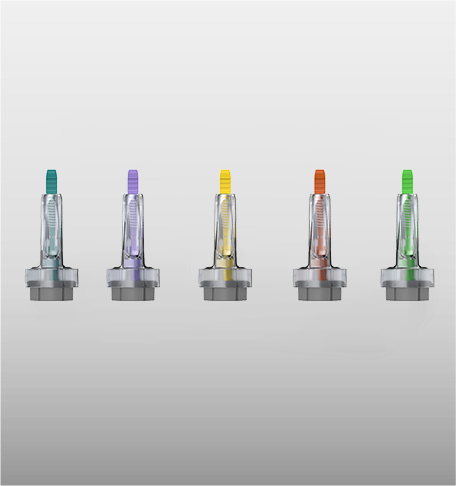
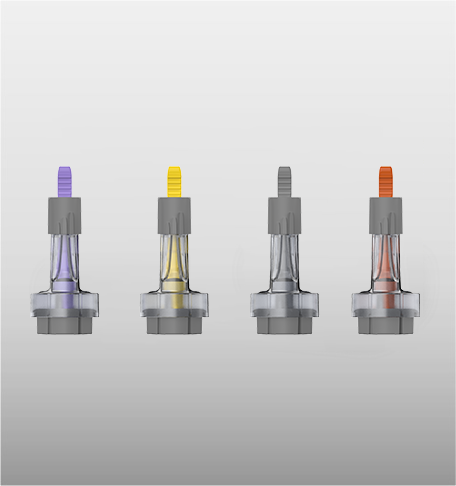
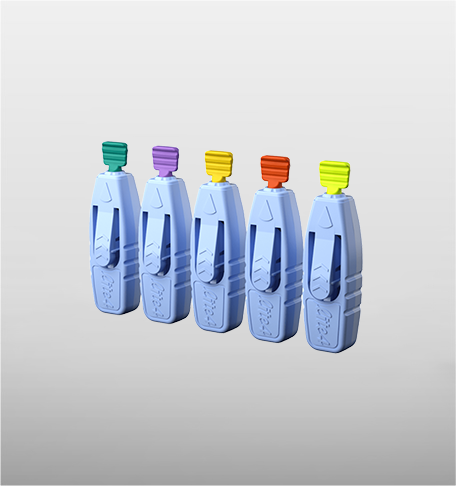
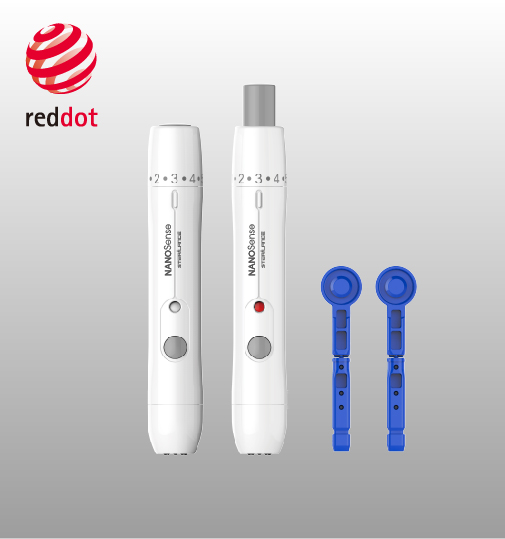
Our portfolio provides a benchmark range with pressure-activated, side-button, rear or push-button, and adjustable-depth models, including Press, Press Plus, ImPress, Elite, Elite Pro, Lite3, Lite4, and Flex3.
Common options span 30G, 28G, 26G, and 23G, fixed 1.5 or 1.8 mm punctures, and selectable 1.3, 1.8, and 2.3 mm settings. Comparable candidates should disclose equally specific pairings.
Human-factor review can observe grip stability, activation control, setting visibility, completion recognition, glove use, and disposal transfer under realistic tasks. User preference should be reported separately from measurable activation and sample outcomes.
Our matrix avoids unsupported comfort or superiority scores. It records what was tested, under which configuration, with which sample requirement, and what limitation remains.
Sampling trials should use comparable conditions and representative users. If product codes, gauges, depths, sites, or instructions differ, those variables need to remain visible, without being absorbed into a single convenience score.
Test Manufacturer Capability and Evidence Depth
A supplier of safety blood lancets should connect R&D, structural design, precision molding, automated production, inspection, maintenance, traceability, and change control to the proposed device. Factory size alone does not make that connection.
R&D, structural design, precision molding, automated production, OEM/ODM support, inline inspection, and TPM are among the capabilities integrated into our operations at SteriLance. These become benchmark audit topics, not promotional points awarded automatically.
Quality-system fields may include ISO 13485:2016, MDSAP, GMP, and the UL 21 CFR Part 820 quality-system credential, while destination-market evidence may include NMPA, FDA 510(k), and CE marking under the EU MDR. Scope and applicability require verification.
A record sample can follow one lot from components through release and one change or complaint through closure. The continuity of identifiers and decisions shows whether the system works across departments.
Capacity, backup resources, technical personnel, supplier controls, and development ownership add context. A shortlist should reflect the capability needed over the contract term, not only current sample availability.
OEM or ODM needs may introduce another comparison layer: concept ownership, design inputs, tooling, verification, regulatory support, production transfer, artwork control, and intellectual-property responsibilities. Catalog capability does not automatically prove custom-development readiness.
Rank Supply Risk Only after Technical Normalization
Commercial review of safety blood lancets compares prices only after unit, configuration, packaging, quantity, documentation, lead time, freight responsibility, and customization scope have been normalized. Otherwise, the lowest figure may describe less product or evidence.
Packaging documented for our SteriLance models varies by code: 50 or 100 pieces per box and 1,000 or 2,000 per carton. Our quotation must remain tied to the selected code and pack structure.
Supply scoring can cover sample approval, traceability, change notification, on-time delivery, complaint handling, corrective action, continuity plans, and current instructions. Weightings should follow the purchaser's actual risk.
Site audits or staged orders can close evidence gaps before full award. A reserve supplier may be kept for continuity without pretending that every shortlisted company is technically interchangeable.
Reference checks and performance history can supplement, but not replace, direct evidence. Buyers can ask about similar supply complexity, change communication, and issue resolution while respecting confidentiality and differences between markets or product configurations.
The decision record should explain why each supplier advanced, remained conditional, or left the shortlist. Transparent reasons make later reassessment easier when demand, market scope, product requirements, or supplier evidence changes.
Identical questions, visible deviations, and transparent evidence rules produce a defensible five-candidate shortlist. Its endpoint is a documented fit assessment tied to the stated application, not an unsupported public ranking of manufacturers.
Disclaimer: This content is provided for general health education and informational purposes only. It does not constitute medical advice, diagnosis, or treatment. Individual health conditions vary, and no health education article can replace a face-to-face consultation with a qualified healthcare professional or licensed medical institution. If you have specific health concerns or feel unwell, please seek care from a licensed medical facility and do not delay treatment because of content on this platform.