

 EN
EN 

















Product checklists should separate essential safety functions from optional handling refinements. Containment, one-time use, defined puncture specifications, traceability, and disposal instructions establish the basic control system; grip shape, trigger location, depth adjustment, and status cues determine how that system fits a particular workflow.
Our framework reviews the product in three states: before activation, during puncture, and after use. This sequence prevents one attractive feature from standing in for the whole design. It also gives procurement and clinical reviewers a common structure for comparing exact models without assuming that every family member shares the same attributes. In this analysis, we use the same three-state record during trials so a favorable grip score cannot obscure missing identification, configuration, or post-use evidence.
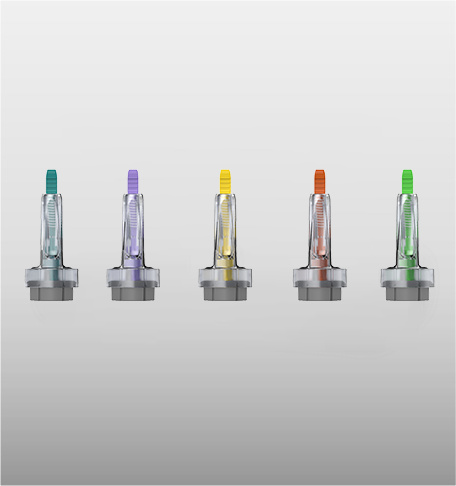
Specify the Protected and Identifiable Starting State
Before a safety lancet reaches the skin, its needle should remain contained within a device intended for capillary blood collection. The protective cap needs to be intact, and the use-by date should be checked. These conditions establish that the unit is eligible to enter the procedure.
Single-use status should be explicit in the product information and instructions. The boundary is operationally important because a fired unit must not be mistaken for one that can be prepared again. Packaging and storage practices should preserve the distinction before and after use.
Traceability fields add another layer of identification. Traceability during rotation, investigation, and recall procedures can draw on lot and expiration information linked to the exact model. Shell-level printing may place those details nearer to the user, while box and receiving records retain supply context.
Written gauge and depth specifications should replace any inference based on color or body shape. A product name alone cannot reveal the puncture configuration, particularly where several codes use similar housings. The approved specification belongs in purchasing, training, and stock labels. Reviewers can compare the unit, box, and ordering record to confirm that the same code carries through the supply chain. Where colors are used, they remain secondary to written product identification.
Define How the Product Is Held and Activated
Depending on its architecture, a safety lancet can be triggered by skin contact or by a rear or side button. Adjustable designs add a depth-selection step. Reviewers need to determine whether the required hand motion supports stable placement and can be taught consistently in the intended setting.
Grip features answer a different question from trigger style. Rotation and control are addressed by a non-slip square body, while compact construction affects hand fit and T-shaped pads create defined finger contact. None changes the nominal gauge or depth.
Continuity may be preserved by one-handed operation where the other hand has an approved supporting role. Its practical value should be observed from cap removal through activation, because a one-handed trigger does not prove that every preparation step can be completed with the same grip.
Status indication can clarify whether a unit has fired. That feedback is useful only when staff recognize it and when it remains attached to the correct model in training materials. A visible cue cannot substitute for needle containment or proper disposal.
Verify Puncture and Post-Use Controls by Model
Within our safety lancet range at SteriLance, Press lists 30G, 28G, and 26G at 1.8 mm and uses a non-slip square body with pressure activation. One-handed use and shell-printed lot and expiration information are features of Press Plus.
Elite lists 30G at 1.5 mm; its 28G and 26G versions are listed at 1.8 mm. A rear trigger and status indicator define its handling route. Side-button operation is used by Lite3 and Lite4, creating another activation direction.
Depth options on Elite Pro are 1.3, 1.8, and 2.3 mm, accompanied by T-shaped grip pads; Flex3 also belongs to the adjustable group. Adjustment belongs in the pre-activation record and does not function as a general quality ranking.
After puncture, the needle retracts and locks inside the housing. The used product should then enter a suitable sharps container and must not be reused. We treat retraction, locked status, single-use labeling, and disposal instructions as linked post-use features.
Turn the Feature List into an Approval Checklist
A complete review of a safety lancet can record intended use, cap condition, date, lot traceability, single-use statement, activation method, grip, gauge, depth, status cue, retraction, irreversible locking, packaging, and disposal instructions.
Within the SteriLance product set used here, we offer pressure, rear-button, side-button, and adjustable formats with model-specific handling features. We provide precise product facts and samples so reviewers can test the exact configuration, not compare broad category labels.
The checklist should also name who verifies each field. Procurement may own ordering and traceability, clinical educators may evaluate handling, infection-control teams may review sharp containment, and users must follow the approved procedure. Shared evidence does not erase separate responsibilities. We also include representative handling conditions, such as gloves, working angle, interruptions, and access to the sharps container, because a feature can be present on paper yet difficult to use consistently in the intended environment.
A disposable product is well specified when its safe starting condition, controlled activation, defined puncture, unmistakable used state, contained sharp, and disposal route can all be verified. That complete chain is more informative than any single feature count.
Disclaimer: This content is provided for general health education and informational purposes only. It does not constitute medical advice, diagnosis, or treatment. Individual health conditions vary, and no health education article can replace a face-to-face consultation with a qualified healthcare professional or licensed medical institution. If you have specific health concerns or feel unwell, please seek care from a licensed medical facility and do not delay treatment because of content on this platform.