

 EN












Low-pain puncture and safe post-use handling belong to different stages of the sampling sequence and rely on different design controls. Sensation varies among people, while sample adequacy, device stability, activation control, cap integrity, single-use, and disposal all affect the full experience.
We do not identify one universal best model. Instead, we explain how gauge, depth, motion, grip, activation, and workflow can be combined so an appropriate configuration can be evaluated without turning a comfort claim into a medical guarantee.
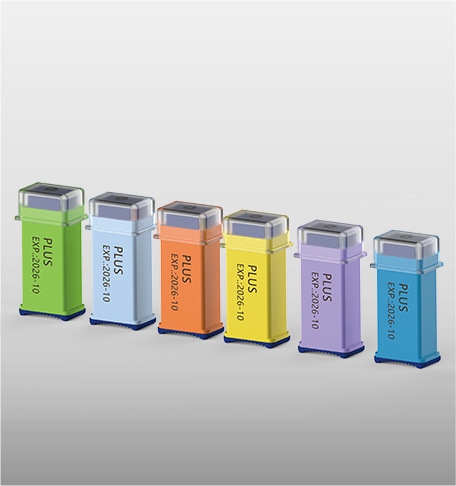
Understand Why Pain Cannot Be Predicted by Gauge Alone
A safety lancet with a higher gauge number generally uses a thinner needle, but puncture depth, launch motion, contact angle, skin condition, site, and individual sensitivity also influence sensation. Gauge is one variable, not a pain score.
Insufficient sampling can lead to manipulation or another puncture, so the least noticeable first puncture is not automatically the lowest-burden outcome. Comfort review should include whether the intended sample was obtained.
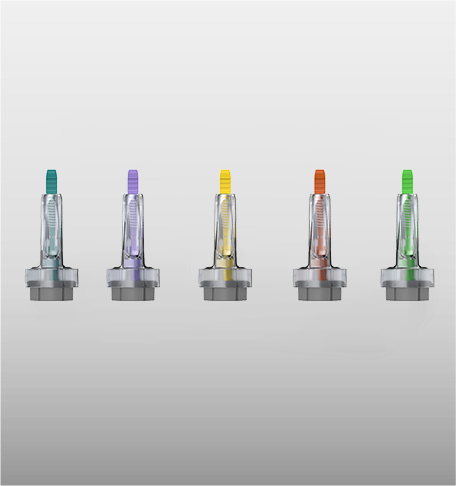
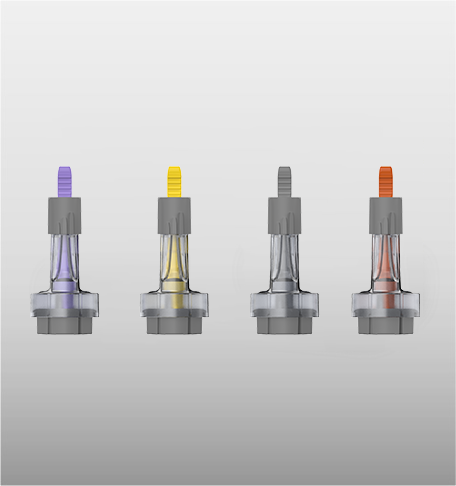
Common Elite and ImPress configurations list 30G at 1.5 mm and 28G or 26G at 1.8 mm in common configurations. Gauge and depth change together across those options, making casual one-variable comparisons misleading.
The trial records configuration, site, technique, sample adequacy, repeat attempts, and user-reported sensation under consistent conditions. Conclusions remain limited to the tested users and workflow.
The practical aim is controlled sampling with no unnecessary puncture-depth or repeated attempts. Clinical or organizational requirements should guide the specified configuration where individual needs are uncertain.
Words such as gentle, low-pain, or comfortable should be treated as hypotheses to evaluate, not guaranteed outcomes. Testing methods, participant context, comparison configuration, and sample adequacy need to accompany any conclusion, especially where sensation is self-reported.
Relate Activation and Grip to Device Stability
Handling of a safety lancet begins before activition. Housing shape, grip, contact pressure, trigger location, glove use, hand position, and access to the site affect whether the device stays aligned through activation.
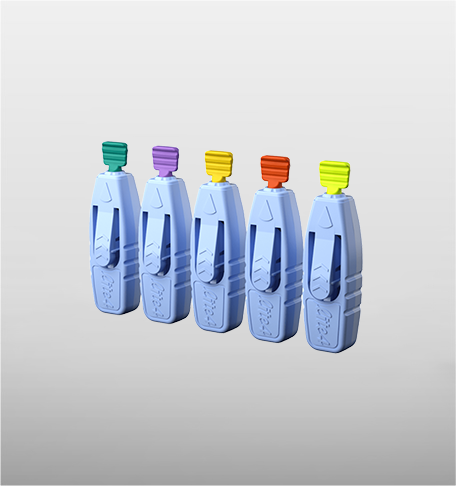
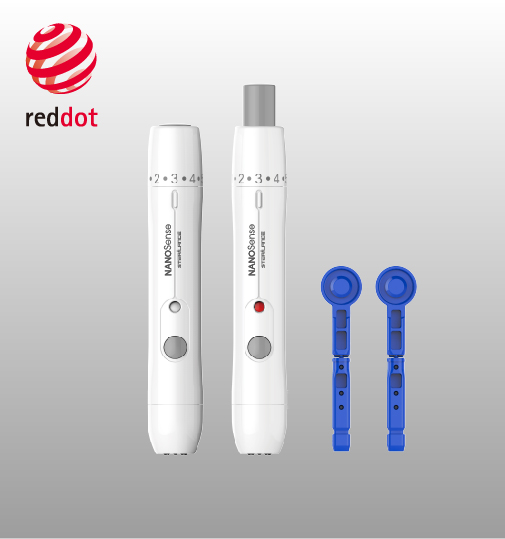
The Press configuration uses one-step pressure activation and a non-slip square body. ImPress also uses pressure activation with a compact grip, while Lite3 uses a side-button trigger and gentle fingertip pressure.
Elite separates placement from activation through a rear-button trigger and includes a twin-spring system. For grip control, Elite Pro uses T-shaped pads with a rear button and double springs.
No trigger type is inherently safest for every user. Evaluation observes accidental or premature activation, movement during activation, trigger reach, recognition of activation status, and the transition from sampling to disposal.
A stable procedure supports the intended puncture geometry. Even a well-engineered internal mechanism cannot correct an unstable angle or a rushed hand movement outside the device.
Operator confidence can improve with familiarity, yet familiarity may also hide shortcuts. Observation should cover preparation, placement, activation, and disposal, not just speed or the assumption that an experienced operator follows every required step.
Use Adjustable Depth Only within a Defined Workflow
Adjustability gives one safety lancet more than one puncture-depth setting, but it also creates a choice that must be visible, understood, and controlled. Deeper settings should not be treated as automatically more effective.
Available Elite Pro configurations pair 28G, 26G, or 23G with selectable depths of 1.3, 1.8, and 2.3 mm. The Flex3 design offers the same three puncture-depth settings with one-step activation.
These formats address different handling preferences within our range at SteriLance while preserving explicit gauge and setting information. A trial should document both, without naming only the model family.
A setting-control procedure can define who selects the setting, when it is checked, which settings are specified for the task, and how an error is handled. Consistency matters particularly where several operators share inventory.
We assess comfort together with sample adequacy, activation success, setting errors, grip, and repeat attempts. An adjustable design earns value only where the workflow uses its flexibility deliberately.
In workflows already standardized, fixed-depth models can reduce setting decisions where one configuration has already been approved. Their suitability still depends on gauge, depth, activation, sample need, and the people using them, so simplicity is not a universal ranking criterion.
Keep Safe Handling around the Entire Sampling Sequence
Every safety lancet in the comparison is a single-use device with a sharp component. Before use, the cap should be intact and the use-by date checked; afterward, the device must not be reused and should enter a suitable sharps container.
Across the SteriLance product examples used here, we offer pressure-activated, button-activated, and adjustable models so product configuration can follow the intended workflow. Our published options do not remove the need for local training, infection-control practice, and disposal procedures.
Preparation, site choice, clean handling, deliberate activation, sample collection, and immediate disposal form one sequence. A design feature supports only the portion of risk it was created to address.
Product comparison should also verify package integrity, labels, instructions, lot identification, and applicable documentation. A comfortable demonstration unit is not sufficient evidence for routine supply.
Home and institutional settings may manage sharps differently, but both require an appropriate disposal route. Local rules, container availability, transport, and final disposal responsibilities belong in the workflow before products are issued.
Any unexpected pain, persistent soreness, bleeding concern, or difficulty obtaining samples warrants discussion with a qualified healthcare professional. Product education cannot determine an individual's clinical needs or replace hands-on instruction.
Suitability is established through three separate observations. The selected configuration must produce an adequate sample, remain predictable in the intended users' hands, and move through a disciplined single-use and sharps-disposal sequence.
Disclaimer: This content is provided for general health education and informational purposes only. It does not constitute medical advice, diagnosis, or treatment. Individual health conditions vary, and no health education article can replace a face-to-face consultation with a qualified healthcare professional or licensed medical institution. If you have specific health concerns or feel unwell, please seek care from a licensed medical facility and do not delay treatment because of content on this platform.