

 EN
EN 

















Routine sampling rewards designs that make the same authorized sequence easy to recognize and repeat. Pressure activation can combine site contact and firing, but its benefit depends on the body, cap, gauge-depth code, labeling, handling instructions, and disposal system around that action. The trigger is only the center of the workflow.
This discussion traces each benefit to an operational consequence and leaves broad performance claims aside. Preparation, placement, activation, identification, and post-use handling form the comparison sequence, followed by model-level distinctions among Press, Press Plus, and ImPress. Single-use design supports a controlled pathway but never removes the need for training or sharps procedures.
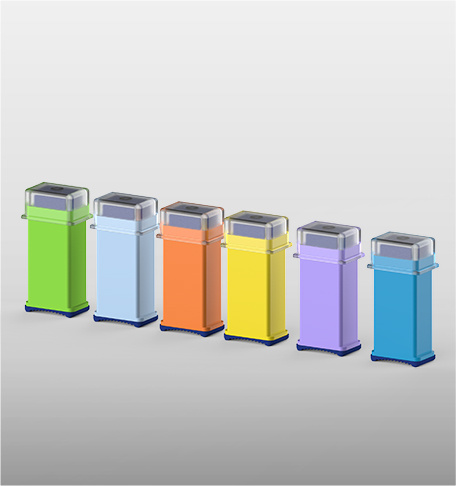
A Shorter Trigger Sequence Can Support Standardization
After cap removal, pressure-activated safety lancets fire through applied contact pressure once the unit is positioned. No rear- or side-button action is required as a separate trigger step. This can make the trigger sequence easier to describe within a routine protocol.
Standardization depends on more than fewer steps. Staff must identify the approved product, remove the cap correctly, place the device firmly, maintain position until activation completes, collect the sample, and dispose of the unit. The shortened trigger forms one controlled segment of the complete chain.
One-handed operation can be useful where the other hand supports the sampling site or collection process. Body shape and grip influence whether that design intent is realized. Representative use remains important because hand size, dexterity, and working position differ among users.
A familiar contact action may also reduce variation between operators, provided training and instructions use the same sequence. Pressure activation does not mean accidental force is irrelevant; the device still needs controlled placement and handling within its stated capillary blood collection use.
Self-Contained Units Simplify Component Accounting
Each of the pressure-activated safety lancets discussed here is a complete single-use unit. No separate reusable lancing device is loaded for the puncture. Inventory can be organized by device code, gauge, depth, box quantity, and carton quantity because the workflow does not contain two components with different replacement cycles.
Self-containment also shapes post-use handling. Instructions direct disposal into a suitable sharps container after sampling. The complete device follows that pathway, but a nearby container, staff training, and facility procedure remain necessary for the design to support safer routine handling.
Known gauge-depth combinations can reinforce product identification. If a routine protocol uses one approved code, the puncture dimensions remain attached to that unit. Facilities that need more variation may stock additional codes, which increases the importance of clear labels and segregated storage.
Pack quantities influence replenishment instead of puncture quality. Commercial pack counts should be matched to consumption, storage, and product-code control. This method avoids using larger case volume as evidence that one pressure-activated family is technically better than another. Forecasting should instead connect the exact configuration to consumption rate, storage space, replenishment frequency, and the facility's method for preventing substitutions among similar-looking devices.
Product Details Turn General Benefits into Specific Choices
A routine pressure-activation sequence is documented in the pressure-activated safety lancets range we maintain at SteriLance: Press follows a cap-off, place, press, and collect sequence. Its square non-slip body supports one-handed operation. Listed sizes are 30G, 28G, and 26G at 1.8 mm, packed 100 pieces per box and 1,000 per carton.
Press Plus also uses pressure activation and a one-touch spring design. It supports one-handed handling and carries expiration and lot-number information on the shell. We list the same 30G, 28G, and 26G options at 1.8 mm, with 100 pieces per box and 1,000 per carton.
ImPress provides another one-step pressure-activated option with three cap styles and a compact, easy-to-grip design. Its listed configurations are 30G at 1.5 mm and 28G or 26G at 1.8 mm. Packaging is 100 pieces per box and 2,000 pieces per carton.
The differences show that pressure activation is a category, not one uniform specification. Grip, cap, shell information, gauge-depth pairing, and case count vary. Buyers should qualify the exact family that supplies the desired operational benefit.
Benefits Become Real Only Inside a Controlled Routine
A program adopting pressure-activated safety lancets can evaluate trigger simplicity, one-handed handling, unit identification, fixed configuration, inventory flow, and disposal as separate benefits. Each should be connected to observed tasks and the intended capillary sampling environment instead of assumed from the activation name.
The instructions we provide at SteriLance require firm placement against the puncture site until activation is complete, followed by disposal in a suitable sharps container. Those steps remain in the explanation of routine efficiency because omitting them would misrepresent the product sequence.
Pressure activation may reduce the distinct action of pressing a rear or side trigger after positioning. It does not determine sample adequacy, individual comfort, or every handling risk. Gauge, depth, site, technique, training, and the disposal system remain part of the practical result.
The central benefit is a recognizable contact-activation workflow packaged in a self-contained single-use device. Those three families express the benefit through different bodies, labels, dimensions, and case quantities. Routine value arises when one exact configuration fits the protocol and can be repeated correctly.
Disclaimer: This content is provided for general health education and informational purposes only. It does not constitute medical advice, diagnosis, or treatment. Individual health conditions vary, and no health education article can replace a face-to-face consultation with a qualified healthcare professional or licensed medical institution. If you have specific health concerns or feel unwell, please seek care from a licensed medical facility and do not delay treatment because of content on this platform.