

 EN
EN 

















Variation in capillary sampling can be handled by stocking several fixed products or by placing selectable depth on one safety-lancet family. The second approach changes both the clinical workflow and inventory logic: the user gains a setting step, while the organization may gain a broader range of approved configurations within one activation format.
Adjustable-depth safety lancets are examined through the problems they solve and the controls they add. Patient group, skin thickness, sample amount, trigger familiarity, product identification, disposal, and training define the use case. Flexibility is an advantage only when those conditions make it governable.
One Activation Format Can Cover Several Approved Depths
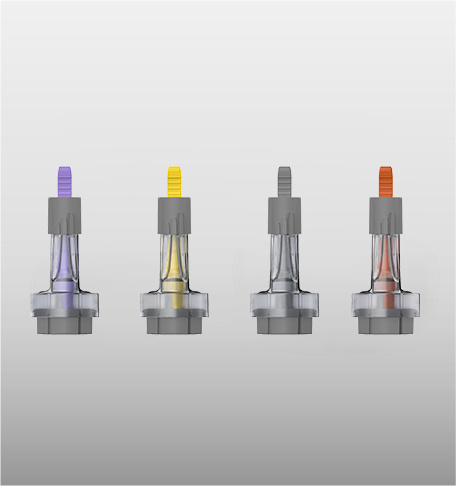
Adjustable safety blood lancets keep the needle, trigger, and selectable penetration control in one single-use body. A facility can preserve a familiar activation sequence while choosing among documented depths. This differs from changing to a separate fixed product code whenever the sampling requirement varies.
Consistency of activation can reduce one source of training variation, but the selector adds another task. Users must identify the authorized position before use and keep the device stable during activation. The advantage is a controlled range, accompanied by a deliberate setting decision.
Gauge remains separate from depth. A product family may offer multiple gauges and several settings, but not every combination should be inferred without documentation. We verify the exact model, selector positions, trigger, packaging, and instructions before treating the range as interchangeable.
Self-contained architecture also changes component handling. No reusable lancing device is loaded for the puncture, and the complete unit is discarded afterward according to the instructions and placed in a suitable sharps container. Adjustment does not alter the single-use boundary.
Use Cases Arise from Real Sampling Variation
Different patient groups or skin characteristics can create a use case for adjustable safety blood lancets. Required blood amount may also vary among sampling procedures. Selectable penetration can keep those needs within one product family, provided the program defines how each setting is assigned.
A setting range can be relevant where staff encounter more than one specimen requirement but want to retain the same rear-button or other activation format. This reduces mechanism changes, though gauge selection and sample handling still require their own protocol fields.
Fixed-depth products remain useful when a facility has one defined sampling pathway. Their product code carries a predetermined depth and can remove the selection step. To test that point, we compare the value of standardization with the value of controlled variation instead of assuming that adjustable is inherently superior.
Inventory consequences deserve attention. One adjustable family may cover several approved conditions, yet packaging, gauge variants, selector training, and storage identification still matter. The commercial benefit cannot be judged solely by counting model names in a catalog. Forecasting should connect each gauge and package quantity to the approved use cases, expected consumption, storage capacity, and change-control process. That wider view shows whether portfolio consolidation actually reduces operational burden.
Study Elite Pro as a Complete Adjustable System
Within the safety blood lancets portfolio we document at SteriLance, Elite Pro combines a rear-button design with T-shaped grip pads and a double-spring system. Its 28G, 26G, and 23G versions each provide selectable 1.3, 1.8, and 2.3 mm puncture depths.
The grip pads concern positioning, the button concerns activation, the spring structure concerns launch, and the selector concerns depth. Our comparison keeps those roles distinct so a buyer can identify which design element addresses each part of the sampling sequence.
Elite Pro is packed 100 pieces per box and 1,000 pieces per carton. Packaging quantities link the adjustable configuration to ordering and replenishment. This keeps replenishment decisions tied to the approved adjustable configuration. A quotation should also retain gauge and the supplied product code so a general Elite family name does not obscure the Pro mechanism.
Our Flex3 provides another adjustable safety-lancet option. The supplied information identifies it as part of the selectable-depth range, while Elite Pro provides the detailed gauge, depth, trigger, grip, spring, and packaging example used here. We avoid transferring unlisted Elite Pro details to Flex3.
Balance Flexibility with Setting Control and Disposal
A program using adjustable safety blood lancets should define who selects depth, which condition supports each choice, how the position is checked, and how the used unit enters a suitable sharps container. single-use and disposal after sampling remain fixed parts of the workflow.
Our comparison of Press at SteriLance illustrates standardization: Press lists 30G, 28G, and 26G at 1.8 mm. For Elite, the listed configurations are 30G at 1.5 mm and 28G or 26G at 1.8 mm. Those fixed codes can be preferable where a protocol does not need on-device adjustment.
Instructions direct the user to place the safety lancet firmly against the puncture site for activation and discard the used device appropriately. We treat those steps as operating controls around the selectable mechanism, not as optional details added after product choice.
Adjustable-depth safety lancets are most useful where genuine sampling variation exists and one activation platform can manage it clearly. Their advantage is bounded flexibility: several documented depths within a self-contained unit, supported by setting discipline, stable handling, exact gauge identification, and a defined disposal pathway.
Disclaimer: This content is provided for general health education and informational purposes only. It does not constitute medical advice, diagnosis, or treatment. Individual health conditions vary, and no health education article can replace a face-to-face consultation with a qualified healthcare professional or licensed medical institution. If you have specific health concerns or feel unwell, please seek care from a licensed medical facility and do not delay treatment because of content on this platform.