

 EN
EN 

















Workflow delay accumulates at the handoffs between product identification, preparation, puncture, status recognition, and disposal. It emerges when preparation, identification, puncture, status recognition, and disposal connect without avoidable pauses. In a crowded sampling area, an extra grip change or an unclear used state can multiply across many procedures and interrupt an otherwise orderly sequence.
Workflow is examined through the number and direction of actions, with convenience claims tested against the observed sequence. Trigger architecture, one-handed control, configuration consistency, visible traceability, and immediate sharp containment each answer a different operational question. Clinical protocols and product instructions continue to govern actual practice. Workflow observations should also remain tied to the tested department, because staffing patterns, station layout, and specimen routing can change the value of the same device feature.
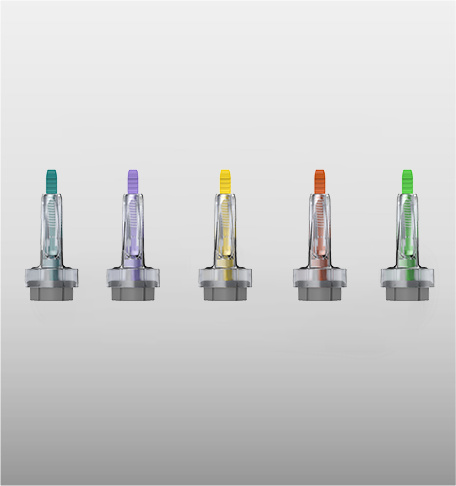
Locate Friction Across the Sampling Sequence
Every use of safety blood lancets begins before skin contact. Staff retrieve the specified configuration, check the unit, remove its cap, orient the body, and prepare the site according to local procedure. A workflow review can time these actions separately and identify where hands repeatedly leave the intended position.
Activation changes the movement pattern at the puncture site. Contact pressure combines placement and triggering, whereas a rear or side button requires a distinct fingertip action after positioning. The useful comparison is not the trigger name alone but whether its force direction fits the working posture.
Recognition after firing deserves equal attention. A visible status cue may clarify whether activation has occurred, while an unambiguous mechanical end state can guide removal. Neither cue substitutes for training; each reduces a specific uncertainty that can otherwise slow the transition to disposal.
Post-use handling completes the sequence. Retraction and irreversible containment keep the sharp inside the housing after puncture, reducing the need to recap or manipulate it. The used device still belongs in a suitable sharps container, so container location remains part of workflow design.
Distinguish Speed from Controlled Standardization
Faster handling of safety blood lancets has limited value if operators receive inconsistent gauge, depth, or activation configurations. Standardization gives repeated actions the same mechanical reference. One predefined protocol may be supported by a fixed-depth model, while adjustable products introduce flexibility together with a setting-verification step.
One-handed operation concerns continuity, not haste. If the housing can be prepared, placed, and activated with one controlled hand, the other hand may remain available for an approved supporting task. Grip shape, cap removal, and trigger location determine whether that description holds in representative use.
Shell-printed lot and expiration details can shorten traceability checks where unit-level visibility is useful. Packaging records still matter because the shell cannot replace inventory control, storage conditions, or local documentation. The feature addresses access to information at the device itself.
High-throughput trials can record action count, grip changes, failed activations, configuration checks, status recognition, and distance to disposal. These observations reveal where time is spent without treating the shortest measured cycle as automatically safest or most suitable. Repeated measurements across different shifts can distinguish a persistent design-related pause from temporary unfamiliarity. Reviewers can also note whether an apparent saving merely transfers work to labeling, restocking, specimen handling, or waste management later in the process.
Map Product Features to Defined Bottlenecks
One workflow-specific configuration appears in the safety blood lancets line we document at the combination supports one-handed handling and pressure activation without requiring a separate button press after positioning. The combination addresses placement, grip stability, and triggering without adding a separate button motion once the device is positioned.
Press Plus follows a pressure-activated, one-handed format and carries the lot number and expiration information on its shell. That information can support identification near the point of use, while the approved receiving and stock-rotation process remains necessary.
Compact , easy-grip construction and three cap styles characterize ImPress, which also uses one-step pressure activation. Elite follows another route: a rear-button trigger, twin-spring mechanism, and built-in status indicator connect positioning, release, and recognition through distinct features.
Lite3 uses side-button activation, while Lite4 uses a launch button. Elite Pro retains rear-button operation and adds selectable depths of 1.3, 1.8, or 2.3 mm. These mechanisms remain alternatives for different controlled workflows and are not ranked on speed alone.
Measure the Handoff from Puncture to Disposal
Operational assessment of safety blood lancets should extend beyond sample appearance. The path from completion to the sharps container includes recognition of the used state, withdrawal from the site, temporary hand position, movement toward the container, and release into it.
Our SteriLance instructions specify single-use, prompt disposal into a suitable sharps container, and no reuse. Our workflow discussions preserve those requirements because a time-saving interpretation that adds recapping, carrying, or manual sharp manipulation would contradict the intended post-use sequence.
Procurement can combine trial findings with packaging quantity, daily procedure volume, storage capacity, and disposal throughput. A model that handles smoothly at one station may still require a different stocking pattern across several wards, so local scale changes the operational result.
Busy settings improve through fewer ambiguous transitions, not through speed in isolation. A suitable configuration keeps identification clear, directs activation predictably, contains the sharp after use, and reaches disposal without extra handling; that complete chain is the meaningful workflow outcome.
Disclaimer: This content is provided for general health education and informational purposes only. It does not constitute medical advice, diagnosis, or treatment. Individual health conditions vary, and no health education article can replace a face-to-face consultation with a qualified healthcare professional or licensed medical institution. If you have specific health concerns or feel unwell, please seek care from a licensed medical facility and do not delay treatment because of content on this platform.