

 EN
EN 

















Nursing usability is revealed at the points where attention must shift. A cap that changes the grip, a trigger that draws the finger away from alignment, or a setting that is difficult to recognize can add mental and physical work even when each individual action appears simple.
We follow nursing hand movements and decisions from identification through disposal. We separate grip security, trigger direction, status feedback, configuration control, and repeated-use consistency so that ease of use remains an observable property. No design feature replaces competency requirements or facility procedure. We further consider whether the same sequence stays understandable during interruptions, because clinical usability depends on recovering the correct step after attention briefly moves elsewhere. Clear recovery reduces uncertainty without removing required verification.
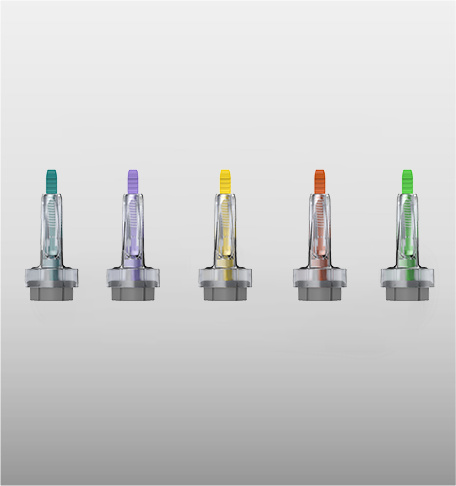
Follow the Hands Through Preparation and Placement
Gloved handling provides a concrete starting point for reviewing a safety lancet. Staff must open or uncap the specified unit, preserve a stable grip, and position it at the sampling site. Body texture and geometry matter when they prevent rotation or an unnecessary second grasp.
Cap removal can alter orientation just before puncture. Trial observers can note whether the device remains recognizable, whether fingers migrate toward the trigger, and whether the housing can be placed without obscuring the contact surface. These details are more informative than a broad ergonomic label. They can be documented with task-based scoring that separates opening, orientation, placement, activation, and removal. Comments from experienced and newly trained staff may reveal different burdens, so a usable design should not be judged from one operator's familiarity alone.
A compact body may reduce storage space and suit some hands, yet size alone does not establish control. Square surfaces, grip pads, and trigger clearance create different contact points. Representative nurses can test them in the posture and glove type used in the intended department. Glove thickness and hand angle can alter tactile feedback, so the trial should reproduce the actual workstation.
Patient support is part of the hand-position problem. One-handed operation may leave the other hand available within the approved technique, but only if preparation and activation genuinely remain stable. The entire motion enters the assessment, from placement through the final trigger press.
Examine How the Trigger Directs Force
A contact-activated safety lancet releases as pressure is applied against the site, bringing placement and triggering into one direction of force. Button location introduces separate finger movements in rear-triggered and side-triggered mechanisms. Their suitability depends on grip, access angle, and how reliably the housing stays aligned.
Pressure activation can reduce the number of visible steps, although the required contact force and cap-removal sequence still need training. Button activation can make the release action more explicit, while finger travel may affect stability. Neither mechanism is universally easier across all users.
Status indication answers whether a device has transitioned from unused to fired. That feedback can reduce hesitation after activation, particularly during repeated work. It does not verify sample adequacy or correct site technique, so its role should remain narrowly defined.
Depth adjustment adds another decision before use. It can serve protocols that require controlled options, but the selected position must be recognizable and repeatable. Fixed depth removes that choice while tying the unit to one predefined configuration.
Connect Specific Designs with Nursing Tasks
One pressure-activated example in our safety lancet family at SteriLance is Press, which has a non-slip square body. Press Plus also supports one-handed operation and places lot-number and expiration information on the shell, connecting handling with point-of-use identification.
Three cap styles and compact , easy-grip construction distinguish ImPress. On Elite, a rear-button trigger works with a twin-spring system, and the built-in status indicator gives the nurse a device-state cue after activation.
Elite Pro pairs T-shaped grip pads with a rear-button layout and depth settings of 1.3, 1.8, and 2.3 mm. Lite3 uses side-button activation, while Lite4 uses a launch button.
Repeated glucose monitoring can call for a reusable architecture. LDE4 supports single-hand operation, nine adjustable depth settings, and an SSC mechanism intended to reduce needle vibration. We keep that holder-based route distinct from complete disposable safety devices.
Test Usability as a Team Property
Evaluation of a safety lancet gains depth when nurses, infection-control staff, educators, and procurement personnel observe the same product trial. Nurses can describe grip and sequence, while other roles examine disposal, traceability, replenishment, and consistency with policy.
Our safety-product instructions identify professional users and direct immediate disposal into a suitable sharps container after use across the use guidance we maintain at SteriLance. The route to disposal remains part of our usability claims, which do not end at successful puncture.
Useful trial notes capture mis-grips, repeated cap actions, body rotation, trigger uncertainty, missed status cues, setting corrections, and post-use hand movements. Model and configuration identifiers belong beside every observation so findings are not transferred to a different product by assumption.
Ease for nurses comes from preserving control as attention moves between patient, device, specimen, and disposal. The strongest design fit is the one that makes those transitions legible and repeatable within the department's real procedure, staffing, and training conditions.
Disclaimer: This content is provided for general health education and informational purposes only. It does not constitute medical advice, diagnosis, or treatment. Individual health conditions vary, and no health education article can replace a face-to-face consultation with a qualified healthcare professional or licensed medical institution. If you have specific health concerns or feel unwell, please seek care from a licensed medical facility and do not delay treatment because of content on this platform.