
 EN





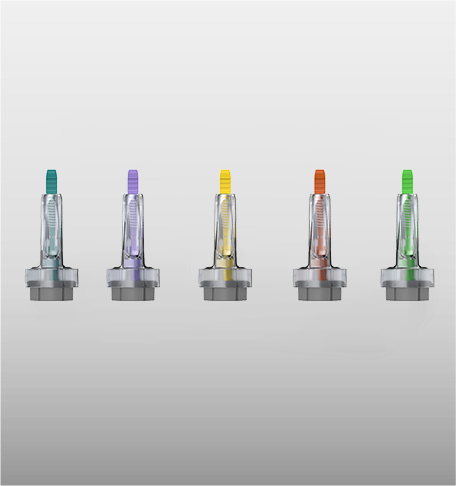
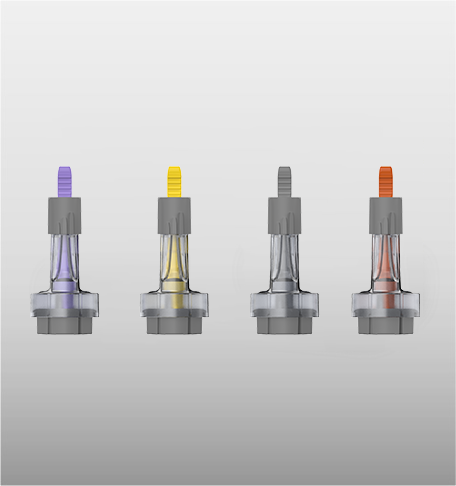

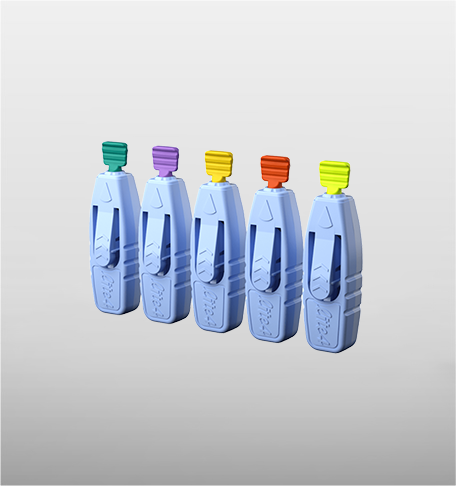


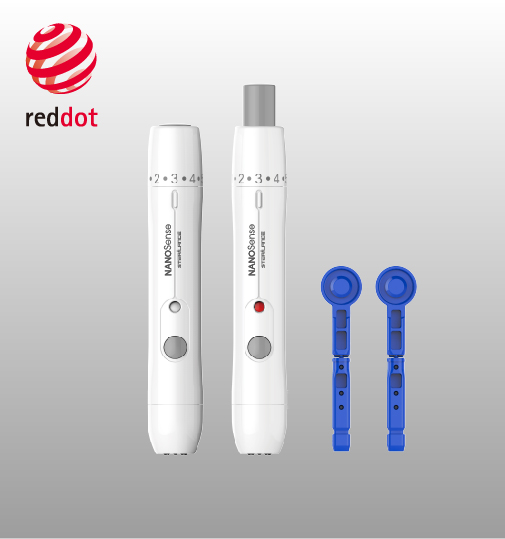




Activation method determines where force enters the sampling sequence. A pressure-activated device fires as it is pressed against the site, while a button-activated device separates positioning from a deliberate finger trigger. Neither force path is universally preferable.
This comparison follows the operator's hand from cap removal to disposal. Contact stability, trigger timing, grip, depth selection, feedback, gloves, and access angle can change how each format performs. The useful distinction is the workflow created by the mechanism, not the label printed above it.
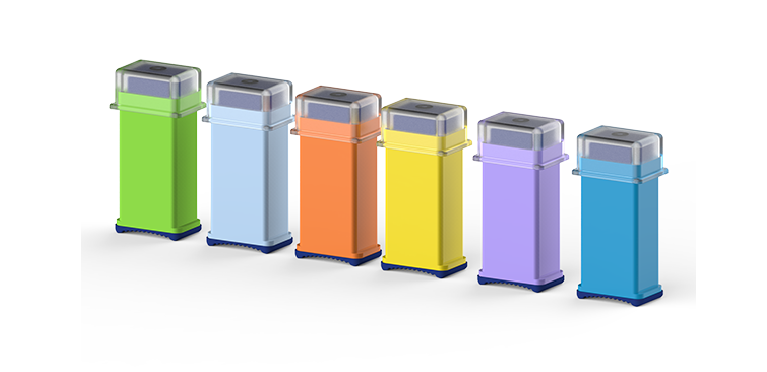
Pressure Activation Combines Contact and Release
Pressure devices provide the reference point for comparing push button safety lancets. After cap removal, the housing is placed firmly against the puncture site and activation occurs when the required contact pressure is applied.
Combining contact and release can shorten the visible sequence and avoid moving a separate trigger finger. The same arrangement means that placement force and activation force are connected, so stable positioning before pressure increases is important.
One-step pressure activation on Press is paired with a non-slip square body designed for one-handed handling. Its common 30G, 28G, and 26G configurations use a fixed 1.8 mm depth.
On Press Plus, pressure activation accompanies a one-touch spring design, while lot and expiration information are printed on the shell. The configurations discussed here include 30G, 28G, and 26G versions with a fixed 1.8 mm depth.
ImPress has a compact easy-grip body and three cap styles. Common specifications include 30G at 1.5 mm and 28G or 26G at 1.8 mm, demonstrating that activation type does not determine gauge or depth.
Pressure thresholds are part of the product mechanism and should not be improvised by the user. Evaluation observes whether representative operators can maintain placement as the device reaches its designed activation point.
Button Activation Separates Placement from Triggering
With push button safety lancets, the operator first establishes contact and then presses a rear or side control. That separation can make the trigger moment explicit, although the finger movement may introduce another force direction around the housing.
Elite's rear button works with twin springs and a status indicator. Its configurations pair 30G with 1.5 mm and 28G or 26G with 1.8 mm, so trigger style remains only one part of the product definition.
Lite3 uses a side button with 30G, 28G, and 26G at 1.8 mm. A side trigger changes finger placement relative to the sampling axis and may suit a different working angle from a rear button.
Elite Pro combines rear-button activation with selectable depths of 1.3, 1.8, and 2.3 mm. Setting control occurs before triggering, which adds flexibility and a verification step to the workflow.
Direct trigger control does not eliminate the need for stable contact. Grip, glove use, hand size, and access can determine whether pressing the button preserves or disturbs the device's alignment.
Button location also affects visibility and reach. A rear trigger may align with one grip pattern, while a side trigger may be easier to access from another angle; these are testable handling differences.
Place Advantages and Tradeoffs in Real Use Cases
Our pressure devices and push button safety lancets at SteriLance provide several workflow choices without treating one trigger pair as suitable for every setting. We examine which movement is easier to reproduce in the intended environment.
Pressure activation may fit routines that favor a cap-off, place, press, and collect sequence. Its tradeoff is that increasing contact force reaches the activation threshold, making steady placement part of trigger control.
Rear-button activation may suit users who want contact established before a distinct release action. Side-button activation changes the finger path again. Either format can shift if the grip does not support the required direction of force.
Status indication, shell traceability, cap style, and depth adjustment are associated features, not automatic properties of pressure or button categories. Elite carries a status indicator; Press Plus carries lot and expiration information on the shell.
We keep those model-level differences visible during trials. Otherwise, an observed benefit from grip, feedback, or depth could be attributed incorrectly to activation type.
Select the Force Path That the Workflow Can Control
Evaluation of push button safety lancets can observe placement, hand position, trigger force direction, housing movement, activation recognition, sample adequacy, and the transition to disposal. The same criteria can be applied to pressure models.
In this SteriLance product review, we offer Press, Press Plus, and ImPress as pressure-activated examples, with Elite, Lite3, and Elite Pro illustrating rear- and side-button formats. Our descriptions retain each stated gauge, depth, grip, and additional feature.
Representative users should test the specified configurations under realistic angles and glove conditions. Desk-based familiarity may not predict how a mechanism behaves at a bedside, clinic station, or constrained sampling position.
The practical choice is not pressure versus button in isolation. It is the complete force path from grip to contact to release, combined with the correct gauge and depth and a workflow that keeps the housing stable through one controlled puncture.
Model-specific training needs to identify the exact trigger and activation-state cues for each model. Generic instructions can create hesitation or extra manipulation when staff encounter a different activation layout. A trial should therefore record hand position and force direction as separate observations rather than treating all button devices as one mechanism.
Disclaimer: This content is provided for general health education and informational purposes only. It does not constitute medical advice, diagnosis, or treatment. Individual health conditions vary, and no health education article can replace a face-to-face consultation with a qualified healthcare professional or licensed medical institution. If you have specific health concerns or feel unwell, please seek care from a licensed medical facility and do not delay treatment because of content on this platform.