

 EN












Versatility can mean two different things in capillary sampling. One device may fit many patient or sample conditions because its depth can change; another may fit a busy standardized workflow because its depth never needs to be chosen at the point of use.
We distinguish clinical range from operational simplicity before comparing the designs. Gauge, depth, activation, training, traceability, and expected blood amount all influence practical versatility. The broadest adjustment range is not automatically the best fit for every procedure, team, or purchasing specification.
Fixed Depth Trades Range for a Defined Configuration
Linking one product code to one intended penetration distance defines a fixed-depth safety lancet. Staff identify the specified model, remove the cap, activate it as instructed, and do not add a depth-setting decision immediately before sampling.
Fewer settings can support standardization when the patient group, sampling site, and required volume are predictable. Training can focus on product identification, positioning, activation, and disposal because no adjustment scale is present.
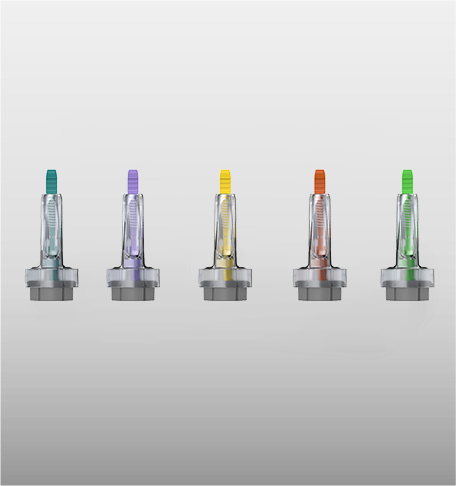
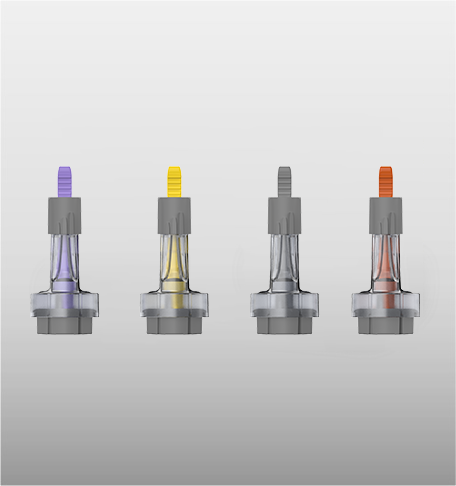
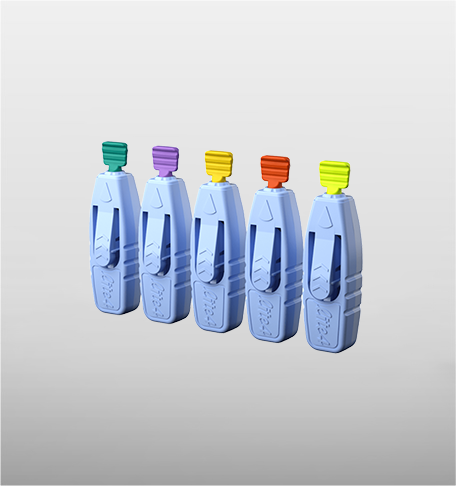
Fixed does not mean identical across the category. At a fixed 1.8 mm, Press, Press Plus, and Lite3 provide 30G, 28G, and 26G versions, while Elite pairs 30G with 1.5 mm and 28G or 26G with 1.8 mm.
Gauge selection remains part of procurement even when depth is fixed. The approved configuration should retain its product identity through ordering, storage, issue, and use so a different diameter or depth is not substituted unnoticed.
Operational versatility appears when the same defined device can be deployed repeatedly with limited setup variation. Its boundary is equally clear: a new depth requirement generally calls for another configuration, not an adjustment on the existing unit.
Standardization can also reduce the risk of an undocumented setting change between operators. That standardization succeeds only when the correct fixed product is chosen initially and its packaging, labeling, and storage controls remain clear.
Adjustable Depth Expands the Sampling Envelope
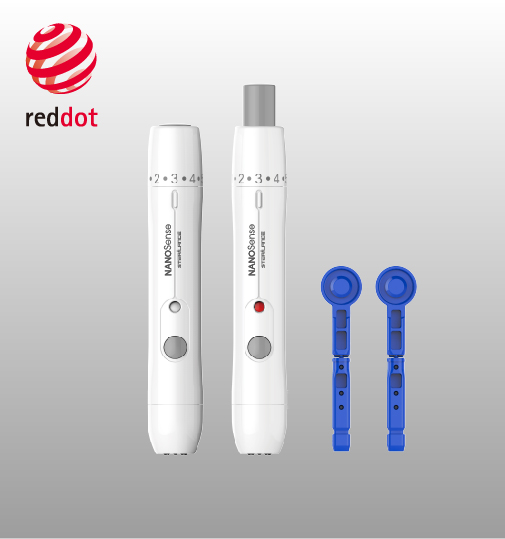
Multiple penetration distances are built into one adjustable safety lancet design. Three selectable depths of 1.3, 1.8, and 2.3 mm are offered by Elite Pro and Flex3 in 28G, 26G, and 23G versions.
The added range can accommodate differences in skin characteristics or sample requirements without changing to another depth-specific model. Flexibility therefore exists at the procedure level, where the operator selects among documented settings.
Flex3 instructions state that a deeper setting produces a larger blood amount. Depth selection is consequently linked to sampling need, not merely to preference. The setting should be chosen and verified before activation according to the applicable procedure.
Adjustment creates another possible source of variation. Training must cover how the scale is read, how the selected position is confirmed, and which settings are specified for each intended scenario.
Elite Pro combines its three depths with T-shaped grip pads and a double-spring structure. Flex3 uses a one-step activation format. The record keeps depth flexibility separate from grip and activation because those features answer different workflow questions.
Adjustability may reduce stock variety only when one gauge version and its specified settings cover the relevant procedures. Separate gauge needs can still require multiple product codes even though depth is selectable.
Compare Versatility Across the Whole Workflow
Our safety lancet range at SteriLance shows why a depth count alone cannot settle the comparison. Press is pressure-activated, Lite3 uses a side button, Elite uses a rear button, and the adjustable products bring their own activation and handling structures.
A fixed product may be more versatile across many identical stations because preparation is consistent. An adjustable product may be more versatile within a mixed sampling population because one model offers several penetration distances.
Inventory also changes. Multiple fixed configurations can increase the number of product codes held, while an adjustable model may consolidate depths but still requires the correct gauge and approved setting for each use.
Training burden moves, not disappears. Fixed products require reliable model identification; adjustable products require reliable model identification plus setting control. Both formats need cap checks, use-by-date checks, single-use handling, and appropriate disposal.
In the comparison below, we evaluate the combination of gauge range, activation direction, grip, depth options, and staff workflow. A feature becomes versatile only when it can be applied consistently under the intended operating conditions.
Choose the Form of Versatility the Procedure Needs
A safety lancet can be selected more deliberately by first asking whether variation occurs mainly between procedures or within them. Repeatedly identical requirements favor a defined configuration; changing depth requirements make adjustment more relevant.
Our range at SteriLance provides fixed-depth Press, Press Plus, Lite3, and Elite examples together with adjustable Elite Pro and Flex3. Our product information documents each model's stated gauge, depth, activation method, and other model-specific design features.
Representative workflow trials may record setting errors, model-selection errors, activation success, sample adequacy, device movement, and training time. These observations reveal whether flexibility reduces complexity or merely moves it to another step.
Fixed and adjustable designs are therefore versatile in different directions. Fixed depth standardizes one puncture specification across repeated use, whereas adjustable depth extends one device family's sampling range; the better choice is the form of flexibility that the actual workflow can control.
A later change in sample requirements or user population can change the original versatility judgment. The same format may become restrictive after a workflow expands, or unnecessarily complex after variation is removed from the protocol.
Disclaimer: This content is provided for general health education and informational purposes only. It does not constitute medical advice, diagnosis, or treatment. Individual health conditions vary, and no health education article can replace a face-to-face consultation with a qualified healthcare professional or licensed medical institution. If you have specific health concerns or feel unwell, please seek care from a licensed medical facility and do not delay treatment because of content on this platform.