

 EN












Gauge becomes interpretable only after depth, launch system, sampling site, and required blood volume are fixed or documented. The number describes needle diameter: higher gauge means a thinner needle. It does not state penetration depth, launch stability, skin condition, or the volume of blood needed.
Gauge is treated as one controlled variable and is not used as a shortcut for predicting comfort. Product comparisons become misleading if a 30G needle at one depth is compared with a 28G needle at another depth and the observed difference is attributed entirely to diameter.
Translate Gauge Numbers into the Physical Variable
On a blood sugar monitor lancet, gauge provides a standardized way to describe needle diameter, and the numerical direction is inverse: 33G is thinner than 30G, which is thinner than 28G or 26G. The gauge number should not be treated as a standalone measure of comfort.
Diameter affects the physical dimensions of the puncture path and may contribute to the sensation of insertion. That gives gauge a plausible relationship to puncture sensation, but the relationship operates within the rest of the configuration, not independently.
Needle diameter and penetration depth should not be confused with gauge as separate aspects of the puncture configuration. Depth states how far the sharp travels into the skin during the event, while gauge describes its width. A thin needle can still penetrate to different depths.
Sample requirement limits how far diameter can be considered alone. If the chosen setup does not obtain adequate capillary blood, the procedure may need repetition or another documented adjustment, changing the overall comfort experience.
As a result, we describe gauge as important but incomplete information. It narrows one mechanical dimension and becomes meaningful when paired with the device, depth, sampling site, and intended use.
Nominal gauge also does not describe bevel geometry, surface condition, or manufacturing tolerances. Those characteristics may influence insertion, which is another reason a number-only comparison cannot represent every mechanical difference.
Control the Variables That Can Distort a Gauge Comparison
A fair comparison of a blood sugar monitor lancet keeps depth and mechanism visible. Elite, for example, uses 30G at 1.5 mm and 28G or 26G at 1.8 mm, so changing gauge within those fixed options can also change depth.
ImPress follows the same 30G/1.5 mm and 28G or 26G/1.8 mm pattern. Lite3 provides 30G, 28G, and 26G at a fixed 1.8 mm, while Press is available in a broader range of gauge and depth configurations.
Needle launch stability presents another potential confounder. Alongside nine depth settings, LDE4 uses its patented Soft-Stop-Control structure to stabilize the needle at launch. A perceived difference may involve motion or travel even when gauge is unchanged.
Skin characteristics, contact angle, site condition, grip, and sampling frequency can also vary between attempts. Comparative observations are strongest when these circumstances are recorded, not assumed to be identical.
One measurement cannot isolate every cause of sensation. Attribution to gauge requires configuration and use conditions that make the interpretation reasonable.
Use Product Families to See the Interaction
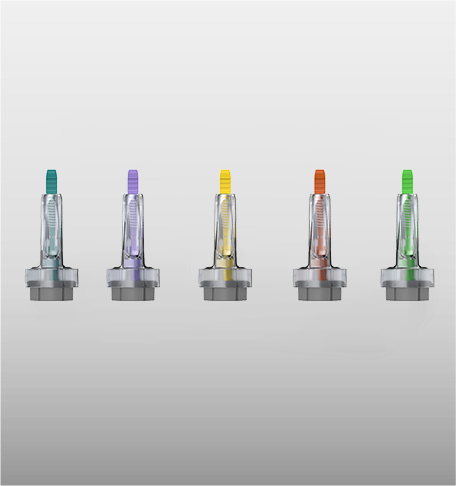
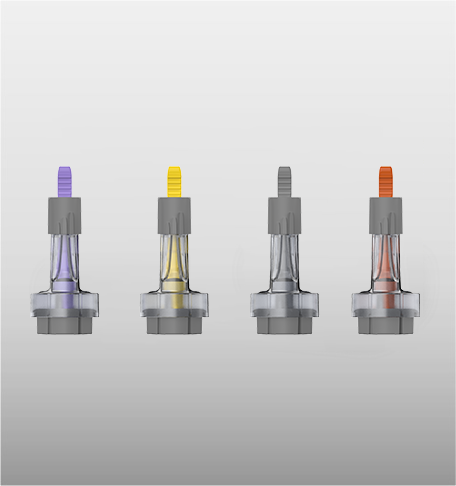
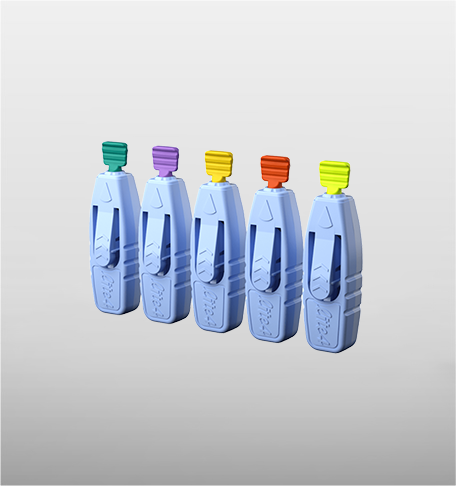
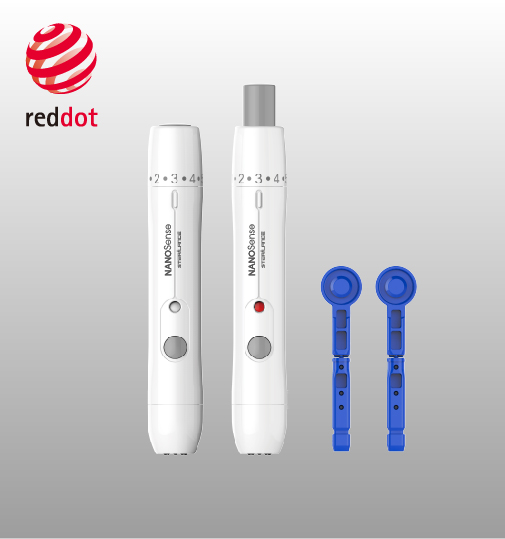
A within-family diameter comparison is possible with our blood sugar monitor lancet examples at SteriLance: Soft is available in 33G, 30G, 28G, and 26G, while the applicable SoftSure configurations should be identified separately. Remaining within one family can simplify a diameter comparison, although the reusable device and selected depth still need documentation.
Across Elite Pro and Flex3, 28G, 26G, and 23G versions provide selectable depths of 1.3, 1.8, and 2.3 mm. Their adjustment range makes the distinction between diameter and forward travel especially visible.
Press and Lite3 keep the common listed depth at 1.8 mm across 30G, 28G, and 26G options. Their activation formats differ, so the device structure remains part of any cross-model comparison.
Product data can define the available combinations but cannot rank individual sensation. We provide the gauge, depth, and mechanism facts needed to design a comparison without claiming that one number will feel best for everyone.
Packaging and product codes should stay connected to the tested configuration. Accurate identification prevents a result from being assigned to the wrong gauge or depth after units are removed from outer cartons.
Interpret Gauge as Part of a Complete Puncture
Choosing a blood sugar monitor lancet involves more than moving toward the highest gauge number. The candidate must remain compatible with the device, reach an appropriate depth, operate through a controlled mechanism, and obtain the intended sample.
For the SteriLance products used as examples in this article, we supply Soft and SoftSure, LDE4, and safety models with defined diameter and depth choices. Our explanations keep those specifications separate so gauge is neither dismissed nor overstated.
A comparison log pairs gauge with depth, device model, activation type, site, sample adequacy, and observed comfort. Patterns across comparable attempts can then suggest how much diameter matters within that specific routine. This keeps any observed diameter effect tied to the conditions under which it was measured.
Gauge affects puncture geometry, but its practical importance is conditional. It matters alongside penetration distance, launch control, skin response, and sample need; the most defensible conclusion describes that combination instead of awarding comfort to a number alone.
If gauge is changed during evaluation, the reason should be documented. A different sample requirement, skin response, or device option provides interpretive context and prevents the new diameter from being treated as an arbitrary comfort adjustment.
Disclaimer: This content is provided for general health education and informational purposes only. It does not constitute medical advice, diagnosis, or treatment. Individual health conditions vary, and no health education article can replace a face-to-face consultation with a qualified healthcare professional or licensed medical institution. If you have specific health concerns or feel unwell, please seek care from a licensed medical facility and do not delay treatment because of content on this platform.