

 EN





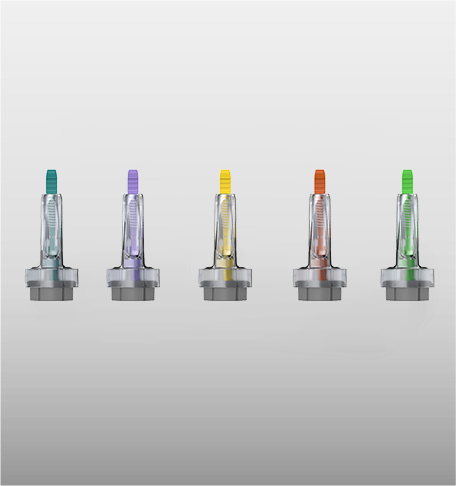
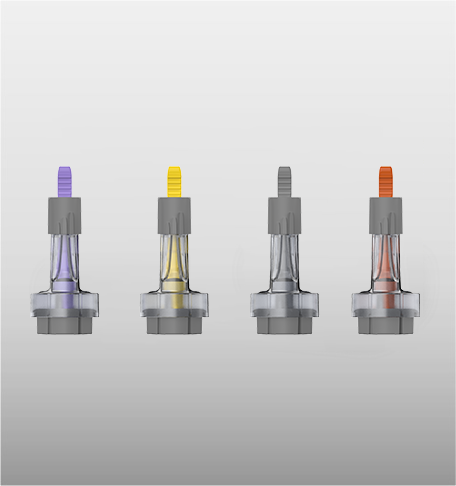

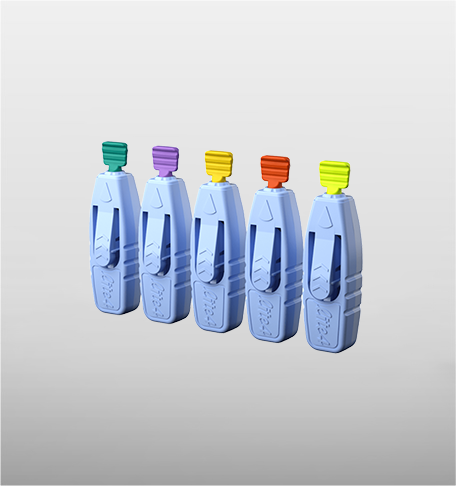


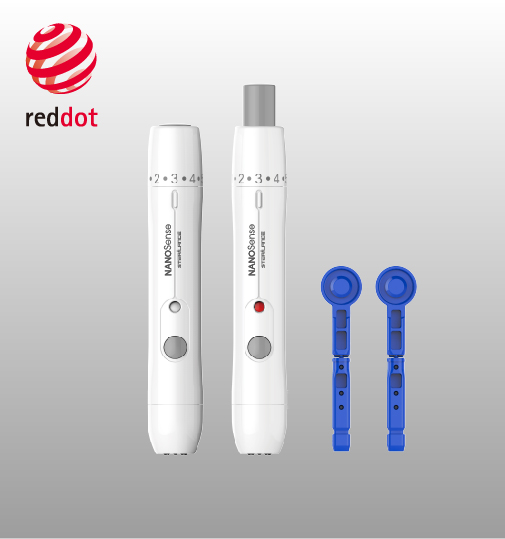




An adequate capillary sample and a proportionate puncture are two outcomes of the same sampling event. A mild-feeling puncture that yields too little blood may require another attempt, while excessive penetration may obtain a sample at the cost of avoidable tissue involvement.
We frame the task as a two-outcome design problem: obtain an adequate capillary sample and control the puncture event. Gauge, depth, launch stability, activation, fit, and handling influence different parts of that balance, with individual skin and technique remaining important variables.

Define Reliability Before Discussing Low Pain
For diabetes lancets, reliability begins with a successful sampling event under the intended conditions. The required volume, sampling site, frequency, user group, device format, and operating procedure provide context for deciding whether a configuration performs consistently.
Failure can arise before, during, or after puncture. An incompatible component may not seat correctly, insufficient depth may yield inadequate blood, unstable contact may redirect the path, and inconsistent technique may change results between attempts.
Avoiding unnecessary repeat punctures belongs in any pain-reduction assessment. A specification that appears conservative in isolation may not improve the total experience if it frequently requires a second puncture to obtain the needed sample.
Reliability is not the same as maximum depth or largest needle diameter. The goal is proportionate performance: adequate sampling with no more tissue involvement and uncontrolled movement than the task requires.
Subjective comfort observations remain beside objective process results such as activation success and sample adequacy. The two forms of evidence answer different questions and become more useful when interpreted together.
A reliable result should be defined before the trial begins. Clear criteria for adequate volume, number of attempts, activation, and usable sample prevent a generous interpretation of outcomes after an uncomfortable or unsuccessful procedure.
Balance Diameter, Depth, and Launch Behavior
The geometry of diabetes lancets includes needle diameter and penetration depth. Within this notation, a higher gauge number means a thinner needle, whereas depth specifies forward travel. Changing one value does not automatically change the other.
Soft and SoftSure are available in 33G, 30G, 28G, and 26G options and are compatible with LDE4 and specified compatible lancing devices. LDE4 provides nine penetration-depth settings, while needle diameter is determined by the selected lancet gauge.
Needle launch stabilization in LDE4 relies on patented Soft-Stop-Control intended to reduce vibration. Launch control addresses unintended motion, not sample volume directly, so it should be considered alongside gauge and depth.
Skin type and sampling frequency may change the setting context. A configuration that works for one person or site should not be assumed to produce the same sample or sensation elsewhere without appropriate evaluation.
Repeated-use records can show whether a chosen setup remains adequate over time. Model, gauge, depth, site, and result give more diagnostic value than a general note that the product felt comfortable.
Different users may reach the same sample target through different configurations. The discussion avoids turning one successful setting into a default for every person, especially when skin condition or professional instructions indicate another approach.
Compare Reusable and Integrated Sampling Options
Two sampling outcomes can be studied across our range of diabetes lancets at SteriLance: reusable-device and single-use safety configurations. Sterile Soft and SoftSure lancets serve as disposable components, while LDE4 supplies the adjustable drive mechanism and SSC launch stabilization.
Press offers one-step pressure activation with 30G, 28G, and 26G options at 1.8 mm. Its fixed depth and integrated mechanism create a different preparation sequence from loading a lancet into a reusable device.
ImPress provides 30G at 1.5 mm and 28G or 26G at 1.8 mm, uses pressure activation, and offers three cap styles. Rear-button Elite pairs its trigger with a twin-spring structure and corresponding fixed gauge-depth choices.
Elite Pro supplies 28G, 26G, and 23G with selectable depths of 1.3, 1.8, and 2.3 mm. Flex3 also offers those three depth settings in a one-step adjustable format.
To test that point, we compare these products by the sampling conditions they can address, not by labeling one architecture universally superior. Reusable adjustment and integrated single-use formats distribute preparation, activation, and setting control differently.
Confirm the Balance in the Intended Routine
Representative sampling should verify the selection of diabetes lancets by recording whether the intended volume is obtained, whether activation and handling remain consistent, and whether the reported comfort is acceptable for the actual user or setting.
For these SteriLance product examples, we supply the documented gauge, depth, activation, spring, compatibility, and stabilization information behind the examples. Our product facts define what can be tested while avoiding an unsupported guarantee of painless or universally reliable sampling.
A result outside expectations needs investigation before a parameter is changed. Component fit, depth setting, contact angle, site condition, device preparation, and product identity may each explain an inadequate or uncomfortable attempt.
A defensible low-pain configuration is not simply the thinnest or shallowest option. It is the system that repeatedly obtains the needed sample while keeping penetration and unintended motion proportionate, so comfort and reliability are evaluated in the same complete event.
A sound evaluation also depends on configuration continuity. Product code, gauge, depth, and device identity need traceability through storage and issue; otherwise, a changed mechanism or geometry may be mistaken for ordinary variation in the documented setup.
Disclaimer: This content is provided for general health education and informational purposes only. It does not constitute medical advice, diagnosis, or treatment. Individual health conditions vary, and no health education article can replace a face-to-face consultation with a qualified healthcare professional or licensed medical institution. If you have specific health concerns or feel unwell, please seek care from a licensed medical facility and do not delay treatment because of content on this platform.