

 EN
EN 

















For nurses, ease of use is measured across repeated tasks under time, space, and safety constraints. Opening, identifying, gripping, positioning, activating, recognizing status, collecting, and disposing may each be simple alone, yet their cumulative burden becomes visible over a shift. Product design can remove or clarify particular steps.
We map features to nursing tasks instead of describing convenience generically. Activation style, one-handed handling, status visibility, depth control, label information, package identity, and disposal are considered in the order staff encounter them. Clinical protocols and training remain the authority for actual use.
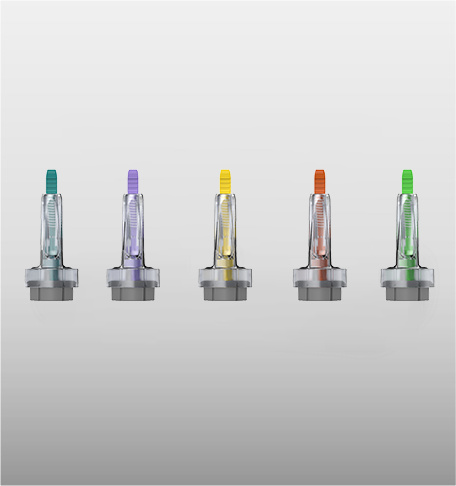
Reduce Ambiguity During Preparation and Identification
Before using medical lancets, nurses need to identify the approved model, gauge, depth, and available expiration or lot information. Clear unit and package information can support traceability, while similar family names or colors can create risk if technical fields are not read.
Cap design affects the first physical step. A cap should be removed through the stated action without obscuring the trigger or causing the body to slip. Multiple cap styles may serve different product designs, but the exact supplied version needs to match training materials and samples.
Fixed depth can simplify preparation where one predefined configuration fits the protocol. Adjustable depth provides controlled variation but adds a selector check. The comparison treats the presence or absence of that selector check as a workflow choice, not a universal measure of professional quality. Because the selector creates a recognizable device state, training should specify when and by whom it may be changed.
Package quantities influence stock rotation and availability at the point of care. They do not determine usability directly, yet an approved device that is difficult to identify or replenish creates operational friction. Procurement records should preserve model-level distinctions. Nursing teams also benefit when outer cartons, boxes, and individual units use consistent identifiers, because stock may move through central stores, ward cabinets, procedure trays, and disposal points before the device is used. Clear identity reduces avoidable verification work at each handoff.
Support Stable One-Handed Placement and Activation
During use, medical lancets may fire through contact pressure, a rear button, or a side button. Each mechanism changes where the nurse applies force while maintaining skin contact. Ease depends on whether that movement fits the sampling position and established technique.
Keeping one hand free can support the patient or collection process during operation. Grip geometry becomes important because the device must remain aligned through activation. A square non-slip body, compact housing, or T-shaped pads offers different forms of control.
Status visibility answers a separate question: whether the device has completed its activation state. A built-in indicator can reduce uncertainty, but it does not confirm that every preceding step was correct. In the comparison below, we evaluate the cue alongside instructions and the actual trigger sequence.
Sample requirements still define the chosen gauge and depth. Ease cannot compensate for an unsuitable configuration, and a familiar trigger does not guarantee adequate collection. Nursing evaluation should keep handling and specimen needs in the same approval process. Input from clinical staff, infection control, procurement, and training can expose different failure points before a product is standardized across a department.
Connect Named Features to Specific Nursing Tasks
Within the medical lancets portfolio we document at SteriLance, Press uses one-step contact activation and a non-slip square body. For Press Plus, one-handed use and shell-printed expiration and lot information connect preparation, handling, and traceability to specific features.
Our ImPress is compact, portable, and easy to grip and comes with three cap styles. Built-in status visibility accompanies the rear-button trigger and twin-spring system on Elite. Lite3 uses side-button activation with gentle fingertip pressure, while Lite4 uses a side-button launch button.
On Elite Pro, T-shaped grip pads accompany selectable depths of 1.3, 1.8, and 2.3 mm; Flex3 also belongs to the adjustable range. These models support workflows that need controlled variation, while fixed-depth products can suit protocols centered on one configuration.
The listed differences should remain attached to their exact products. The comparison avoids transferring Elite's status indicator to other button models or Press Plus shell information to all pressure-activated families. Precise feature mapping keeps nursing training and procurement aligned.
Include Disposal in the Ease-of-Use Assessment
After sampling, medical lancets are single-use devices and should move into a suitable sharps container according to instructions and facility procedure. Container access, recognition of the used state, and the path from bedside or station to disposal all contribute to nursing workload.
Our SteriLance safety-lancet instructions identify capillary blood collection and include professional and individual users. Those intended-use and disposal requirements remain part of our ease-of-use assessment, because convenience cannot be evaluated by omitting required safety steps.
A nursing trial can record preparation time, grip changes, trigger clarity, state recognition, depth-setting checks, product identification, and disposal movements. Results should remain clearly linked to the exact model and environment instead of becoming a broad endorsement of one mechanism.
Ease improves when the approved product reduces uncertainty at several handoffs: selection, preparation, placement, activation, status recognition, and disposal. The most useful feature is the one that removes a real task burden without hiding another requirement elsewhere in the sampling workflow.
Disclaimer: This content is provided for general health education and informational purposes only. It does not constitute medical advice, diagnosis, or treatment. Individual health conditions vary, and no health education article can replace a face-to-face consultation with a qualified healthcare professional or licensed medical institution. If you have specific health concerns or feel unwell, please seek care from a licensed medical facility and do not delay treatment because of content on this platform.