

 EN
EN 

















Safety needles are designed to reduce exposure to sharps during routine blood collection, but safe handling still depends on using the device exactly as intended. For point-of-care capillary sampling, a safety lancet needle is typically used as a single-use lancing device rather than a reusable holder or manually handled needle. This guide explains how to lock a safety needle in practical terms: activate it correctly, avoid manual manipulation, and dispose of it immediately after use.
How safety needles lock after activation
A safety lancet is presented on the official Sterilance product page as a safety lancet product for blood sampling applications. In this product category, locking is not usually a separate user-controlled step like twisting a cap back onto a conventional needle; the safer workflow is to complete the activation motion and let the device’s safety mechanism do its job. If a device has model-specific instructions, those instructions should take priority over any general handling note.
For users asking how to lock a safety needle, the key point is simple: do not try to expose, recap, bend, or alter the needle after puncture. Occupational safety guidance treats safer needle systems as engineering controls used to reduce occupational exposure to bloodborne hazards. In daily use, that means the operator should prepare the sampling site, activate the lancet once, and move the used device directly to a sharps container without additional handling.
Using a safety lancet needle for capillary sampling
The Sterilance website identifies Sterilance as the company behind its official English product information and product pages. The safety lancet page is the relevant official source for its safety lancet needle product information, so purchasing teams and clinical users should verify available product details there before selecting items for a procedure or facility protocol. Avoid assuming gauge, depth, sterility status, or package configuration unless those details appear in the current official product information.
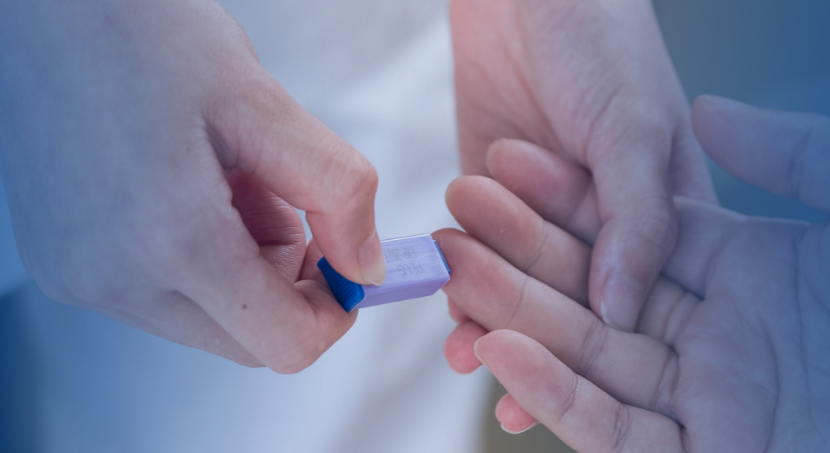
Good activation practice starts before puncture. Staff should check that the device packaging and product identity match the intended procedure, because fingerstick devices have been associated with cross-contamination risks when reused or shared between patients. Public health guidance states that fingerstick devices should never be used for more than one person, and disposable single-use auto-disabling fingerstick devices are recommended when assisted monitoring is performed.
Safety needle disposal after use
Safety needle disposal should happen immediately after use, not at the end of a tray setup or testing round. The United States Food and Drug Administration advises placing used needles and other sharps in sharps disposal containers right away after use. This timing matters because most preventable exposure risks appear during the short period after puncture, when the used device is still in the operator’s hand or on a work surface.
Sharps containers should be used according to local facility procedures and applicable disposal rules. The Food and Drug Administration also advises using FDA-cleared sharps disposal containers where available, and it provides guidance for situations where such containers are not available. For procurement teams, this makes needle safety devices only one part of the system; containers, training, and workflow placement affect whether the safety feature is used consistently.
Procurement notes for needle safety devices
When evaluating needle safety devices, keep the review factual. Confirm the intended use, activation method, single-use handling requirement, and disposal process from the current manufacturer page or instructions. The Sterilance product page should be the starting point for checking official safety lancet information, while public health and occupational safety sources can support facility policies on reuse prevention, exposure control, and sharps disposal.
A practical specification review should also avoid unsupported assumptions. If the product page does not state a certification, penetration depth, needle gauge, or packaging format, do not add it to internal documentation. That discipline protects both users and buyers. It keeps the focus on verified device information, correct activation, immediate disposal, and training that matches the real product supplied by Sterilance.
Disclaimer: This content is provided for general health education and informational purposes only. It does not constitute medical advice, diagnosis, or treatment. Individual health conditions vary, and no health education article can replace a face-to-face consultation with a qualified healthcare professional or licensed medical institution. If you have specific health concerns or feel unwell, please seek care from a licensed medical facility and do not delay treatment because of content on this platform.