

 EN
EN 

















Not every capillary blood test requires the same amount of blood. While routine blood glucose monitoring often needs only a small drop, other point-of-care tests or laboratory procedures may require a larger sample. To meet these varying clinical needs, many modern safety lancets are designed with adjustable-depth settings that help produce different blood sample volumes while maintaining user comfort and procedural consistency.
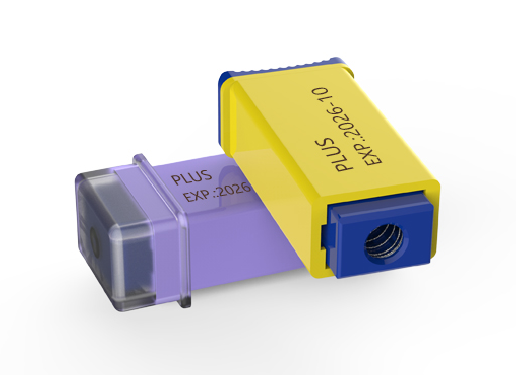
At SteriLance, we develop innovative blood sampling solutions for healthcare providers, distributors, and medical institutions worldwide. Our safety lancets are engineered to combine safety, consistent performance, and user-friendly operation for a wide range of clinical applications. Explore our portfolio today to find the right lancet solution for your blood collection requirements.
Why Do Adjustable-Depth Settings Matter?
The primary purpose of adjustable-depth technology is not simply to change how deeply a needle enters the skin. Instead, it allows users to obtain an appropriate blood sample for different testing requirements without causing unnecessary tissue disruption.
A blood glucose meter may require only a very small blood drop, while certain point-of-care diagnostic tests or laboratory analyses need a greater sample volume. Rather than using separate devices for every application, adjustable-depth safety lancets allow healthcare professionals to select a setting that better matches the intended procedure.
This flexibility also helps improve workflow efficiency. Medical staff can adapt sampling procedures to different patient populations while using the same product platform.
How Pressure Activated Safety Lancets Produce Different Sample Volumes
The operating principle of pressure activated safety lancets combines a spring-loaded mechanism with controlled skin contact. Once sufficient pressure is applied to the sampling site, the device activates automatically, delivering a rapid and consistent puncture before the needle immediately retracts into the housing.
In adjustable-depth models, users select a penetration setting before activation. The selected setting controls how far the needle travels beyond the protective housing, influencing the amount of capillary tissue reached during sampling.
However, penetration depth is only one factor affecting blood volume. Needle geometry, spring force, activation consistency, and skin characteristics also contribute to the final sample obtained. Together, these design elements help produce predictable blood collection while maintaining safety.
Low Sample-Volume Settings: Designed for Routine Testing
Low sample-volume settings are intended for situations where only a small blood drop is needed. Daily blood glucose monitoring is one of the most common examples, as many modern glucose meters require relatively little blood for accurate analysis.
A shallower puncture can help reduce tissue disruption while still providing sufficient blood for routine testing. This setting may also be suitable for individuals who perform frequent finger-stick procedures and prioritize a more comfortable experience.
Healthcare professionals may also choose lower settings for patients with thinner skin or when minimizing puncture sensation is an important consideration.
Medium Sample-Volume Settings: A Balanced Everyday Option
We regard medium settings as the most versatile option, as they strike an ideal balance between adequate sample volume and user comfort. Clinics, outpatient centers, and routine diagnostic facilities commonly choose these settings to accommodate the diverse patient needs they encounter daily.
Rather than maximizing penetration, a medium setting aims to deliver consistent blood collection across different skin types without requiring repeated punctures. This balance can improve both workflow efficiency and patient satisfaction.
For many healthcare providers, the medium setting becomes the preferred starting point because it accommodates a wide range of routine capillary blood collection procedures.
High Sample-Volume Settings: When More Blood Is Required
Some diagnostic procedures require a larger capillary blood sample than standard glucose testing. In these situations, a high sample-volume setting can help provide sufficient blood while reducing the likelihood of repeated sampling attempts.
Higher settings may also be useful for patients with thicker skin or situations where circulation makes blood collection more challenging. Producing an adequate sample on the first attempt can improve efficiency while minimizing unnecessary discomfort caused by multiple punctures.
It is important to understand that a higher setting does not necessarily mean better performance. The goal is to select the lowest setting capable of providing the required blood volume for the intended test.
Other Design Factors That Influence Blood Collection
Although adjustable depth plays an important role, it is not the only design feature affecting blood sample volume. The quality of the needle tip, activation speed, spring mechanism, and overall device stability all contribute to successful blood collection.
A precisely manufactured needle can enter the skin smoothly, while a consistent spring mechanism helps ensure reliable penetration from one device to the next. Stable activation also reduces variability between different users.
In addition, external factors such as skin hydration, finger temperature, circulation, and sampling technique may influence how much blood is collected. Understanding these variables helps healthcare professionals achieve more consistent results.
Why Healthcare Providers Choose Pressure Activated Safety Lancets
Modern healthcare environments value products that simplify procedures while maintaining high safety standards. Pressure activated safety lancets support these goals by combining one-step activation with automatic needle retraction after use.
This design minimizes manual handling of exposed needles and helps reduce the risk of accidental needlestick injuries. Automatic activation also promotes more consistent puncture performance compared with devices requiring multiple operating steps.
At SteriLance, we design our safety lancets to support efficient workflows without compromising patient safety. Reliable activation, dependable sample collection, and intuitive operation help healthcare professionals perform capillary blood sampling with greater confidence.
How To Select The Right Sample-Volume Setting
Selecting the appropriate setting depends on the diagnostic purpose rather than personal preference alone. Users should consider the amount of blood required, patient characteristics, and manufacturer recommendations before choosing a setting.
For routine blood glucose monitoring, a low setting is often sufficient. Medium settings work well for many general capillary blood collection procedures, while high settings may be appropriate when larger samples are needed or when blood collection is more difficult.
Healthcare professionals should always follow clinical protocols and product instructions to ensure safe and effective sampling. Choosing the correct setting can improve sampling success while enhancing patient comfort.
Conclusion
Adjustable-depth safety lancets are designed to provide different blood sample volumes by allowing users to select low, medium, or high penetration settings before sampling. Rather than offering a one-size-fits-all solution, these devices help match blood collection performance with specific clinical requirements.
Understanding how sample-volume settings work enables healthcare providers and patients to choose the most appropriate option for each testing situation. By considering the required blood volume, patient characteristics, and device design, users can improve both sampling efficiency and comfort.
As blood collection technology continues to evolve, we at SteriLance remain committed to developing innovative safety lancet solutions that combine reliable performance, user safety, and practical flexibility for modern healthcare environments.
Disclaimer: This content is provided for general health education and informational purposes only. It does not constitute medical advice, diagnosis, or treatment. Individual health conditions vary, and no health education article can replace a face-to-face consultation with a qualified healthcare professional or licensed medical institution. If you have specific health concerns or feel unwell, please seek care from a licensed medical facility and do not delay treatment because of content on this platform.