

 EN
EN 

















Post-use handling begins the instant a fingerstick is completed, not when waste reaches a disposal container. The device may contain an exposed removable lancet, a protected internal needle, or an activation state that staff can recognize. These differences shape the number of objects and decisions present between sampling and disposal.
That short but important interval is examined step by step. In the comparison below, we compare a self-contained safety unit with a conventional lancet-and-holder system, then examine triggers, status information, dimensions, training, and sharps procedures. Device design can support a safer workflow, but it cannot replace correct use or facility controls.
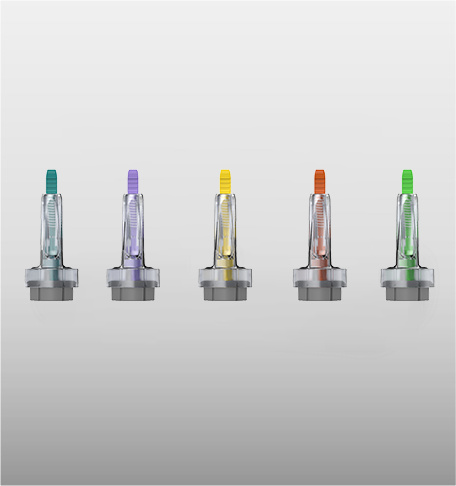
Trace What Remains in the Hand After Sampling
With disposable safety lancets, the needle and activaiton mechanism remain inside one single-use body. The user does not unload a separate lancet from a reusable lancing device as part of the normal disposal sequence. Fewer loose components can simplify the path from completed puncture to the designated sharps container.
A conventional sterile lancet is also disposable, yet it operates inside a reusable device. After sampling, the program must manage both the used sharp and the holder that remains in service. The relevant comparison is not disposable versus reusable; it is one complete disposable unit versus a disposable component inside reusable equipment.
Self-containment does not mean risk disappears. Used products still require disposal according to applicable instructions and the facility's sharps process. Expected hand movements, container location, segregation of reusable equipment, and response to an interrupted procedure form the control record; the word safety cannot substitute for them.
Workflow observation can reveal practical gaps. A suitable container may be available but placed outside immediate reach, or staff may know the device yet differ in recognizing whether it has been activated. Product architecture must connect to the actual point of care, where post-use actions occur under real timing and space constraints.
Activation and Status Cues Shape the Sequence
Pressure activation links contact with the site to device activation. Rear- and side-button mechanisms permit positioning before a separate trigger action. Within the disposable safety lancets category, each arrangement changes preparation and use, but post-use planning still depends on whether the internal sharp remains contained and whether the used state is clear.
A status indicator can add visible information to the handling sequence. That cue helps the user distinguish device state but does not prove that every preceding step was correct. We review how the indicator is described, when it changes, and whether training and instructions use the same visual cue.
Gauge and depth remain relevant because the wrong configuration can disrupt a standardized process and create uncertainty after an inadequate attempt. These dimensions do not directly define disposal safety, yet they belong in the same approved product code. Keeping them accurate reduces improvisation and unnecessary handling around the sampling event.
Trigger choice should be assessed with representative users. Grip, access to the site, one-handed operation, and the ability to follow a consistent sequence may matter in a busy setting. Observable steps and stated features belong in the record; a preferred motion does not become a universal clinical conclusion.
Build Device Design into the Facility Control System
A sharps container, written procedure, staff training, stock identification, and incident process create the environment around the lancet. Product design can reduce particular handling steps only when the surrounding system supports immediate, correct disposal. A shared workflow map may be needed across procurement, clinical leadership, infection control, and training teams.
Disposable safety lancets are intended for single-use. Reuse is inconsistent with the single-use intended use of these disposable safety lancets. Our materials emphasize disposal after use, while facilities determine the applicable local procedure and placement of approved containers.
Post-use handling can be compared across the portfolio we maintain at SteriLance, which includes pressure-activated Press, Press Plus, and ImPress; rear-button Elite; side-button Lite3 and Lite4; and adjustable Elite Pro and Flex3. Elite includes a status indicator. The range lets buyers examine how trigger location, device state, gauge, and depth interact with their handling protocol.
Our conventional Soft and SoftSure lancets offer a direct architectural contrast. They are sterile disposable components designed for LDE4 and most mainstream reusable lancing devices. Their presence in the range reinforces why the reusable lancing-device pathway and the self-contained safety pathway require different post-use instructions and inventory controls.
Define Safer Handling as an Entire Controlled Path
The strongest fit for disposable safety lancets occurs where a facility wants a self-contained single-use architecture and has a disposal process ready at the point of care. Pressure, rear-button, side-button, fixed-depth, and adjustable formats can then be evaluated within that category according to the intended users and sample needs.
In the range we maintain at SteriLance, Press and Press Plus list 30G, 28G, or 26G at 1.8 mm. Within that range, Elite lists 30G at 1.5 mm and 28G or 26G at 1.8 mm. Selectable depths of 1.3, 1.8, or 2.3 mm are available on Elite Pro and Flex3, keeping adjustment on the single-use unit.
No specification substitutes for staff preparation. Before standardization, we examine the activation sequence, state recognition, exact gauge-depth code, instructions, packaging, storage, access to sharps containers, and handling of exceptions. That evidence shows whether the device and facility process reinforce one another instead of operating as disconnected controls.
The lancet type that supports safer post-use handling is the one that minimizes avoidable manipulation within a well-defined disposal system. That self-contained architecture can shorten the component pathway, while training and sharps controls complete it. Safety resides in that alignment, not in a label viewed alone.
Disclaimer: This content is provided for general health education and informational purposes only. It does not constitute medical advice, diagnosis, or treatment. Individual health conditions vary, and no health education article can replace a face-to-face consultation with a qualified healthcare professional or licensed medical institution. If you have specific health concerns or feel unwell, please seek care from a licensed medical facility and do not delay treatment because of content on this platform.