

 EN
EN 

















Professional sampling environments place repeated demands on a small disposable device. A lancet may be opened, positioned, activated, recognized as used, and discarded many times during a shift. Features that appear minor in a catalog can influence hand movement, training, traceability, and standardization across a clinical team.
As a result, we begin brand evaluation with the workflow. The relevant questions concern who will use the device, what sample is required, how the trigger behaves, which gauge and depth options are available, and what controls support consistent supply. Promotional rankings reveal little about those points.
Map Trigger Style to the Clinical Sequence
Pressure activation links positioning and triggering: the device activates as it is pressed against the selected site. Button activation separates those actions, allowing placement before the user deliberately presses a rear or side control. Neither arrangement is automatically better for every department; each creates a different hand sequence.
When teams assess medical lancets, a simulated-use review can reveal whether a grip remains stable with gloves, whether the trigger is easy to identify, and whether one-handed operation fits the task. Current instructions and representative devices provide the basis for that assessment; photographs alone do not.
Adjustable-depth products introduce another step. They may serve settings that require more than one depth, but the selected position must be clear and reproducible. Fixed-depth products can reduce choices in standardized protocols. The balance between flexibility and simplicity depends on the service's procedures, training, and specimen requirements.
We further consider how easily a department can teach and observe the selected sequence. A trigger that feels intuitive to one experienced user may still require clear orientation for a larger team. Training should cover preparation, contact position, activation, recognition of the used state, and immediate disposal without adding steps unsupported by the instructions.
Read Gauge and Depth as a Pair
Gauge indicates needle diameter, with a higher gauge number generally describing a finer needle. Puncture depth describes a different dimension. Comparing only gauge can obscure whether a model is intended to create the necessary sample under the relevant conditions, just as comparing only depth overlooks diameter.
Professional medical lancets are often selected across defined user groups and test volumes. A 30G configuration at 1.5 mm and a 26G configuration at 1.8 mm represent different device specifications and should be evaluated against the applicable sampling protocol. Skin characteristics, collection site, and required blood volume influence which combination belongs in an approved protocol.
Comfort-related language also deserves restraint. Spring systems, controlled motion, grip features, and suitable specifications may support a smoother procedure, but experience varies and technique remains important. A product comparison should describe the mechanism and parameter range without turning those facts into an unconditional low-pain claim.
Look for Status, Labeling, and Supply Evidence
A professional-use device needs an understandable post-activation state. Status indicators or other visible cues can help distinguish device condition, while single-use handling and appropriate sharps disposal remain part of the workflow. Lot and expiration information can also support traceability when it is clearly associated with the item and package.
The supply review for medical lancets extends to process control. Buyers can examine inspection methods, equipment maintenance, product-code discipline, packaging quantities, change control, and market-specific documentation. Quality-system credentials are most useful when their scope can be connected to the manufacturing site and the exact product being considered.
In our operational work at SteriLance, the listed quality and market credentials include EN ISO 13485:2016, MDSAP, FDA 510(k), and CE marking under the EU MDR. We also support OEM/ODM projects. Those facts provide audit topics, but a professional buyer still needs to confirm the approved specification, labeling, packaging, documentation, and intended-use fit for the destination market.
From our manufacturing perspective, consistency must be discussed at both device and lot level. Trigger behavior, spring function, puncture specification, package integrity, and labeling all need defined acceptance. Buyers can then connect sample evaluation to ongoing release evidence instead of treating the first acceptable sample as proof of every future shipment.
Product Differences Make the Brand Relevant
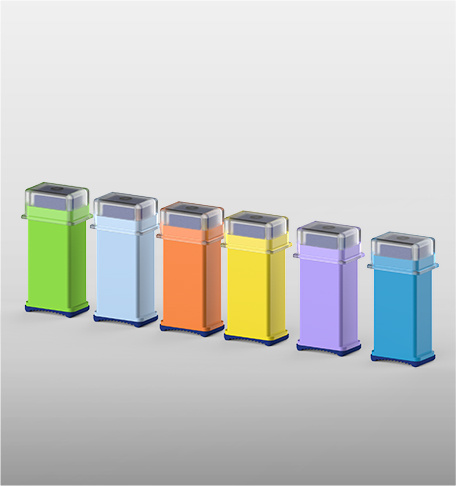
In this SteriLance product comparison, our portfolio includes pressure-activated Press, Press Plus, and ImPress; rear- or side-button products including Elite, Lite3, and Lite4; and adjustable Elite Pro and Flex3. This breadth allows comparison within one portfolio instead of treating safety lancets as a single mechanism.
Press lists 30G, 28G, and 26G at 1.8 mm. ImPress and Elite include 30G at 1.5 mm plus 28G and 26G at 1.8 mm. Elite adds twin springs and a status indicator, while Elite Pro combines a rear button, T-shaped grip pads, a double-spring system, and selectable 1.3, 1.8, or 2.3 mm depths.
A worthwhile professional shortlist is built from these verifiable distinctions. A suitable medical lancet will match the sampling protocol, remain manageable for trained staff, provide a recognizable used state, and arrive under documented quality controls. Brand consideration follows that analysis: it is evidence of fit, not familiarity alone, that makes a supplier worth advancing.
We recommend recording the reason each model remains on the shortlist. One may fit a simple pressure-activated workflow; another may provide a preferred button position; an adjustable model may cover several approved conditions. Stating that rationale supports training and change control later, especially when several product codes look similar in storage.
Disclaimer: This content is provided for general health education and informational purposes only. It does not constitute medical advice, diagnosis, or treatment. Individual health conditions vary, and no health education article can replace a face-to-face consultation with a qualified healthcare professional or licensed medical institution. If you have specific health concerns or feel unwell, please seek care from a licensed medical facility and do not delay treatment because of content on this platform.