

 EN
EN 

















The word better has no useful meaning until the professional workflow is defined. A self-contained safety lancet and a standard disposable lancet used with a reusable lancing device can both create a fingertip puncture, but they distribute preparation, activation, depth control, equipment handling, and inventory across different components.
The staff sequence provides the comparison framework; a single feature score would obscure how the two architectures allocate tasks. Patient population, sample need, protocol standardization, throughput, device management, training, and purchasing model determine which approach fits a particular service. Neither category is automatically superior across all professional settings.
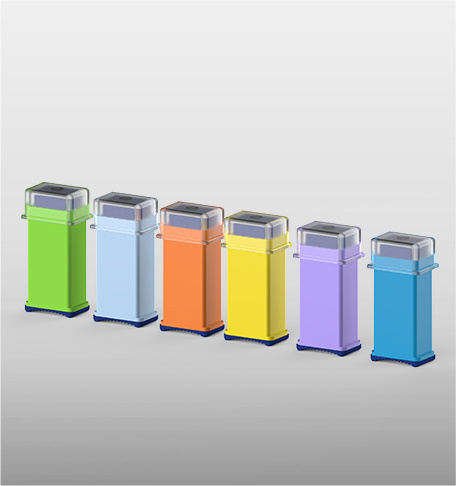
One-Piece and Two-Part Workflows Allocate Tasks Differently
A self-contained product brings the lancet body, trigger, and specified puncture characteristics into one disposable unit. In that format, pressure-activated safety lancets combine skin contact and activation in a direct sequence, whereas button-triggered or adjustable safety products introduce different controls within the same one-piece format.
Standard lancets rely on a reusable lancing device for activation and, where available, depth adjustment. Staff load the disposable component, prepare the holder, use the selected position, and manage the reusable equipment according to its instructions. We count every step and component because workflow burden is not visible from the disposable lancet alone.
The comparison changes with scale. A standardized single-use format may reduce variation in one setting, while an established reusable-device program may already have compatible consumables, training, and cleaning or handling procedures in place. Actual process conditions are the starting point; fewer components are not assumed to produce a better result.
A process map can expose hidden work around each architecture. We note where products are stored, how staff identify the approved configuration, whether a holder must be available, and which item is replenished after use. Those observations translate an abstract device comparison into operational requirements that can be reviewed by clinical, procurement, and training teams.
Locate Depth Control in the Correct Component
Fixed-depth safety models place the puncture depth in the disposable device specification. Adjustable safety designs provide selectable positions on the unit itself. With standard lancets, depth control generally belongs to the reusable lancing device, so the disposable gauge and holder setting must be read together.
Professional use of pressure-activated safety lancets may favor a documented gauge-depth combination when a protocol seeks one predefined configuration. A reusable system can offer more adjustment positions through the holder. Flexibility has value only where the approved procedure explains how those choices are managed.
Gauge still describes needle diameter in either architecture. The comparison avoids comparing a safety model's gauge-depth pair with a standard lancet's gauge alone, because the missing holder setting changes the meaning. Representative samples and current instructions should show the full configuration under evaluation.
Account for Staff Handling and Inventory Structure
Professional departments repeat small actions many times. Trigger location, grip, loading, adjustment, recognition of device state, and disposal can affect training and storage organization. We observe the complete sequence with representative users while keeping conclusions within the product's stated intended use.
Inventory follows the architecture. Programs built around pressure-activated safety lancets order self-contained units by model, gauge, depth, and package quantity. A standard-lancet program tracks both reusable lancing devices and recurring disposable stock, including compatibility and gauge. The commercial comparison extends beyond a piece price to the inventory structure behind it.
Both architectures appear in our portfolio at SteriLance, where we offer self-contained and reusable-device options. Press, Press Plus, and ImPress use pressure activation; Elite uses a rear button; Lite3 and Lite4 use side buttons; Elite Pro and Flex3 provide adjustable depth. Soft and SoftSure in our standard range are sterile lancets designed to pair with LDE4 and most mainstream reusable lancing devices.
Staff handling review should also cover what happens before and after the puncture, not only the trigger moment. Opening, loading where applicable, positioning, activation, removal, segregation of reusable equipment, and disposal create the full sequence. Within the present framework, we compare these steps without claiming that one architecture eliminates the need for training or proper sharps procedures.
Use the Portfolio to Answer the Professional Question
The safety range we maintain at SteriLance lists Press at 30G, 28G, or 26G with 1.8 mm penetration and Elite at 30G × 1.5 mm or 28G/26G × 1.8 mm. Elite Pro provides 28G, 26G, and 23G options at 1.3, 1.8, or 2.3 mm, while Flex3 offers the same three depth settings.
Soft and SoftSure list 33G, 30G, 28G, and 26G. LDE4 supplies nine adjustable depths and uses patented SSC technology intended to stabilize the needle during launch. These facts show where depth adjustment and gauge selection reside in each system without declaring a universal winner.
Pressure-activated safety lancets may be better where a self-contained, predefined puncture workflow matches the protocol. Standard lancets may be better where a managed reusable platform and its broader depth adjustment are already preferred. The professional answer is the architecture that fits the approved sequence, staffing model, inventory plan, and required sampling conditions.
Cost comparison must follow the same boundary. A self-contained safety lancet is purchased as a complete disposable unit; a standard lancet is used with a reusable lancing device. We account for holder acquisition and management, consumable volume, pack quantities, compatibility, and staff process before deciding which model offers better operational value.
Disclaimer: This content is provided for general health education and informational purposes only. It does not constitute medical advice, diagnosis, or treatment. Individual health conditions vary, and no health education article can replace a face-to-face consultation with a qualified healthcare professional or licensed medical institution. If you have specific health concerns or feel unwell, please seek care from a licensed medical facility and do not delay treatment because of content on this platform.