

 EN
EN 

















Tip geometry, cannula construction, hub fit, protective architecture, and pack identity define an insulin pen needle before supplier reputation enters the comparison. Needle gauge and length describe only part of the product. Hub stability, bevel configuration, wall design, lubrication, sterilization, protective features, packaging, and manufacturer controls all influence whether a listed model belongs in a buyer's qualification process.
We approach manufacturer selection from the skin-facing tip outward to the production system. That sequence keeps technical facts connected to their function and separates measurable features from broad comfort or quality claims. Compatibility and individual-use questions still need to follow the pen system's instructions and appropriate healthcare guidance.
Read Size and Tip Design in Context
Gauge refers to needle diameter, while millimeter length describes another dimension. A comparison of insulin pen needles needs both values, because a 32G × 4 mm product and a 31G × 6 mm product are not simply larger and smaller versions of the same specification. Intended use and compatibility remain essential boundaries.
Bevel geometry shapes the needle tip and can differ within the same nominal size. When both are offered, three-bevel and five-bevel configurations need separate product codes or equally clear descriptions. The qualification record identifies the exact configuration evaluated, so one sample cannot stand for every version in a series.
Wall construction also affects how the internal pathway is designed. An extra-thin-walled description concerns cannula structure and conveys information beyond nominal gauge. Gauge, length, wall design, bevel, and coating information must align across specifications, packaging, and instructions.
Dimensional labeling also needs a stable commercial reference. Gauge and length should appear consistently on the product code, box, case, specification, and quotation. We flag any mismatch before sample approval, because a correct technical discussion can still lead to the wrong item if order records identify a different size or bevel option.
Examine the Hub and Skin-Contact Interface
The hub transfers handling forces between the pen and needle assembly. A broader hub may be designed to improve lateral stability during injection, but that design intent should be verified against the manufacturer's product information. For insulin pen needles, that claim should be examined through the stated design, representative samples, and the manufacturer's supporting product information.
Skin-contact platforms introduce another geometric feature. A larger platform may form part of a design intended to control penetration depth, yet its significance depends on the complete device and intended instructions. This method avoids converting a size comparison into a universal clinical outcome or assuming that a larger surface is preferable in every situation.
Cap design affects preparation before use. Enlarged inner and outer caps may provide an easier gripping surface, especially when fine components are handled. Following the attachment and removal sequence reveals whether the sample, packaging illustration, and instructions present the same arrangement.
Hub evaluation should extend to connection and removal from the named pen system. Lateral stability does not by itself establish compatibility, and compatibility does not establish an individual treatment choice. This approach keeps mechanical observation, published design intent, and professional-use guidance in separate evidence fields so one conclusion is not stretched beyond its basis.
Separate Safety Features from General Quality
A safety pen needle addresses a specific handling concern, without serving as a generic premium category. A shielded hub can be designed to reduce needlestick risk from either end of the needle. We review the protective mechanism, activation sequence, product size, and instructions without presenting risk reduction as an absolute guarantee.
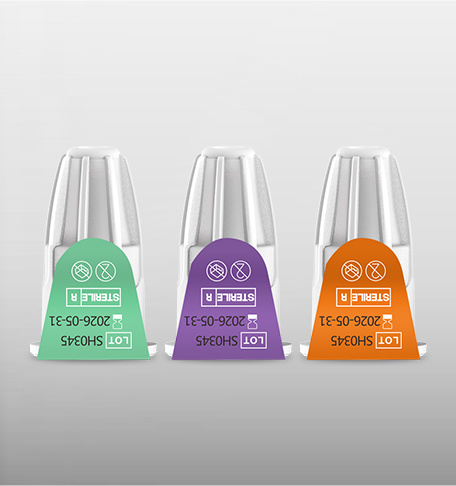
Manufacturing evidence covers a different layer of insulin pen needles. Sterilization method, cannula geometry, silicone coating, package integrity, traceability, inspection, and release controls need their own records. A safety feature does not replace these controls, and a quality-system certificate does not explain how an individual mechanism operates.
In the SteriLance configurations examined here, we manufacture Plus, Safety, and Classic pen-needle lines. Our Plus Series uses Hextra Tech with a broader hub and a skin-contact platform described by the manufacturer as 12 times larger than that of a standard pen needle. The listed 32G × 4 mm version comes in three-bevel and five-bevel configurations.
Confirm the Exact Series Behind the Manufacturer Name
The Safety line we document at SteriLance lists 31G × 5 mm, 30G × 8 mm, and 30G × 5 mm sizes. The Classic Series uses extra-thin-wall tubing, cobalt-60 gamma sterilization, an ultra-sharp cannula with optimized bevel geometry, and medical-grade silicone coating on both needle ends; listed sizes include 32G × 4 mm, 31G × 5 mm, and 31G × 6 mm.
Plus 32G × 4 mm products are packed 100 pieces per box and 2,000 per case. Packaging quantities must be connected to the exact series and size, not generalized across the portfolio. We also examine product codes, label fields, samples, and destination-market documentation before commercial approval.
We were founded in 1993, support OEM/ODM projects, and document EN ISO 13485:2016, MDSAP, applicable China NMPA registrations, applicable U.S. FDA 510(k) clearances, and CE marking for applicable products under the EU MDR. A reputable manufacturer is identified in practice by agreement among design facts, the supplied configuration, production evidence, and continuing documentation—not by reputation alone.
Final review of insulin pen needles also covers lot traceability, sterilization information, shelf-life information, case counts, and change communication. OEM/ODM work can alter branding or configuration, so approved artwork and samples need to remain tied to the technical file. Our release decision follows the exact series, not a general manufacturer endorsement.
Disclaimer: This content is provided for general health education and informational purposes only. It does not constitute medical advice, diagnosis, or treatment. Individual health conditions vary, and no health education article can replace a face-to-face consultation with a qualified healthcare professional or licensed medical institution. If you have specific health concerns or feel unwell, please seek care from a licensed medical facility and do not delay treatment because of content on this platform.